

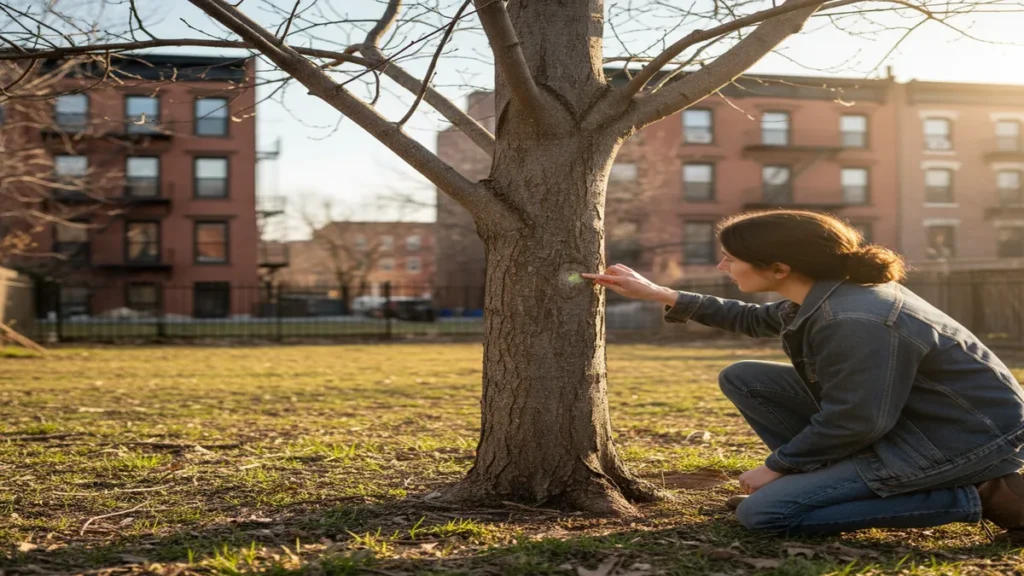
Every spring, Brooklyn homeowners stand in their backyards staring at the same tree with the same question: is it dead, or is it just slow to wake up? The difference matters. A dormant tree needs nothing from you. A dead tree next to your home is a liability. And the problem is, both look exactly the same in March. If you are already worried about it, a quick call to a local Brooklyn arborist can settle it fast – but these three tests cost you nothing and take five minutes.
Why this matters more than you think
Most dead trees do not announce themselves. They drop their leaves in fall, go quiet all winter, and still look like they are sleeping in early spring. By May, the difference is obvious. But waiting until May costs you months of planning time if the tree does need to come out.
There is also the liability angle. In Brooklyn, a dead tree that falls on a fence, a car, or a neighbor is on you. NYC DOT regularly holds homeowners responsible for damage from trees on private property. If your tree is dead and a storm brings it down, your insurance company will ask whether you knew. The answer “I thought it was just dormant” does not hold up.
The other reason to check early: dormant trees sometimes have a few dead branches in an otherwise healthy canopy. Those branches come off cleanly in spring. Waiting until summer when everything looks the same makes it harder to sort out what needs to go.
The scratch test: your first check
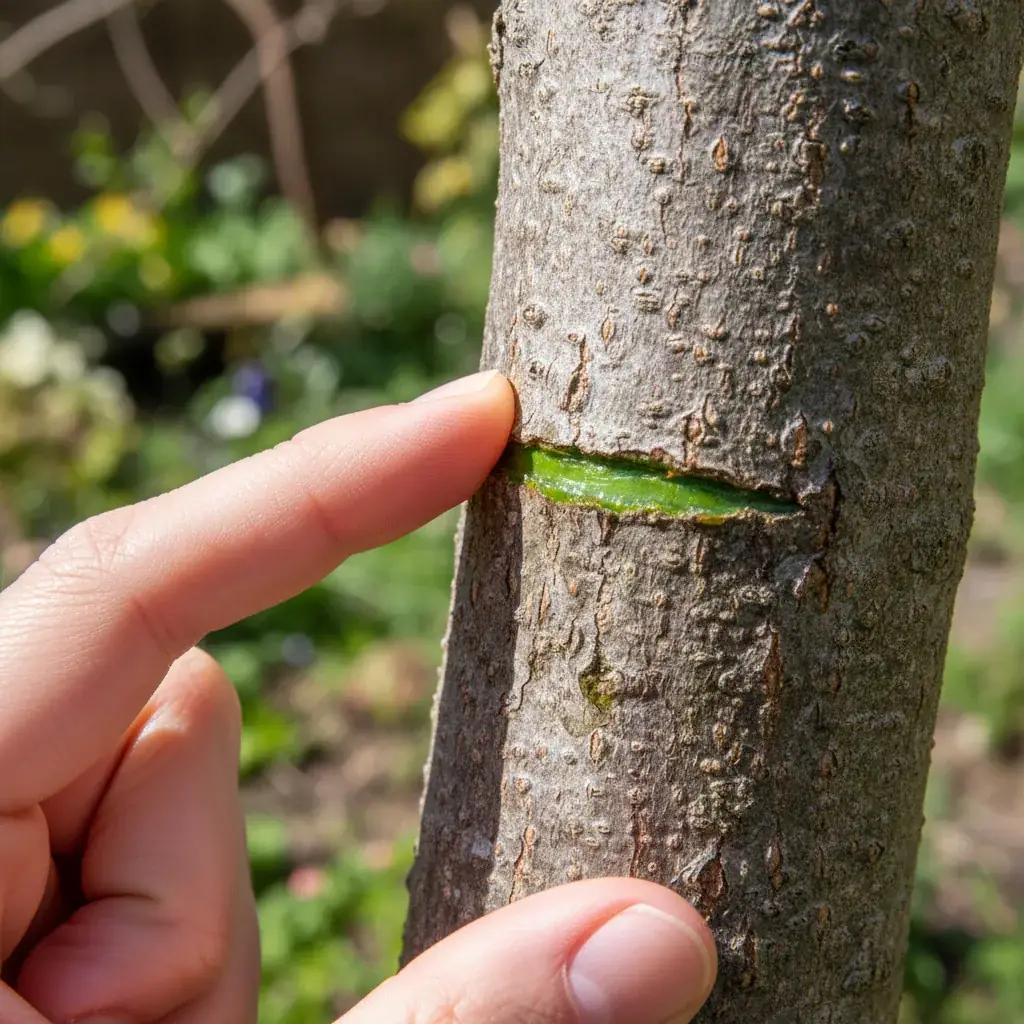
This is the fastest and most reliable test. Find a branch roughly the diameter of a pencil. Use your fingernail or a small pocket knife to scratch away a thin sliver of outer bark. What you see underneath tells you almost everything.
- Green or light white-green tissue: The cambium layer is alive. The tree is dormant, not dead. Stop worrying.
- Brown, dry, or hollow: That branch is dead. Test three or four other branches at different heights before drawing any conclusion about the whole tree.
The key is to test multiple spots. A tree can have three dead branches at the top and still be fundamentally alive below. If most branches show green cambium, the tree will leaf out. If the majority are brown and dry including branches near the base, the tree is most likely dead.
Reading the buds
Buds are the tree’s version of a promise. A living tree locks in next season’s growth before winter hits. Walk to the end of a branch and look at the tip.
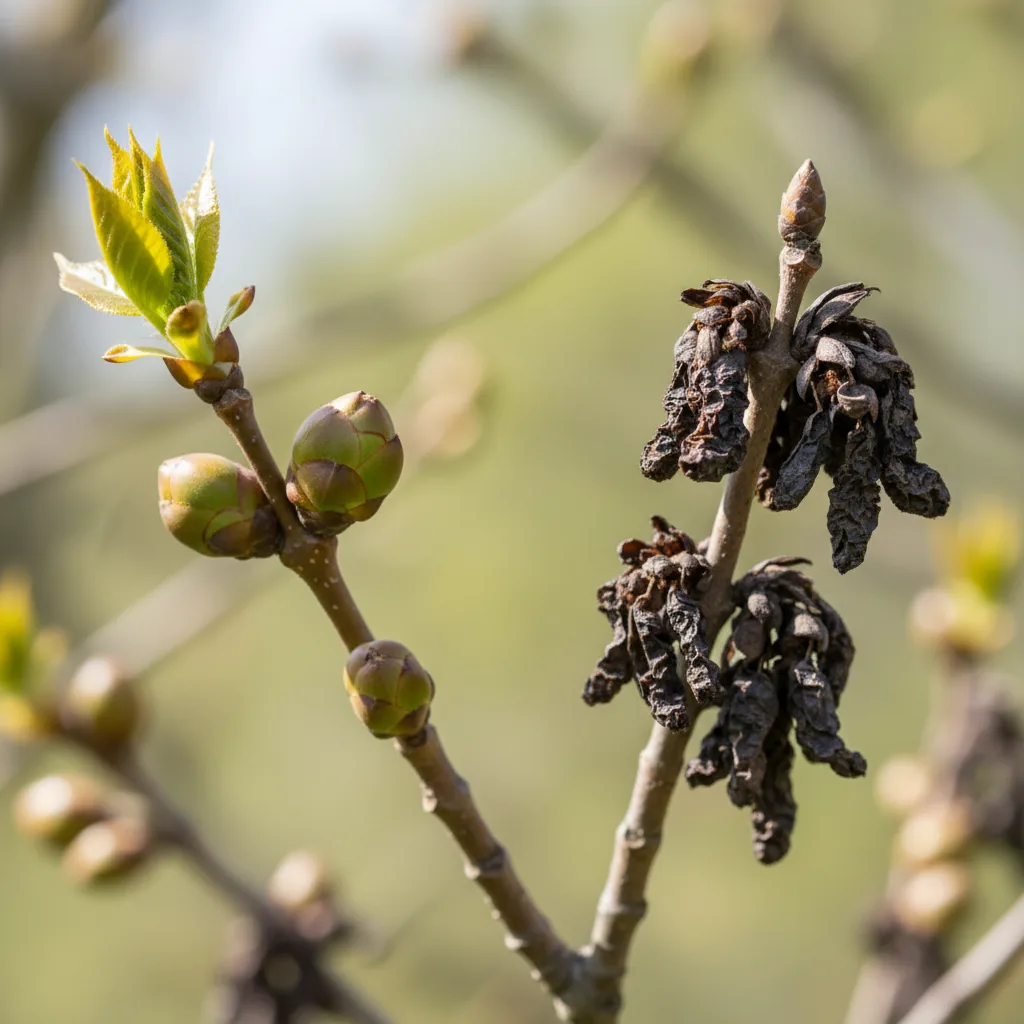
Healthy dormant buds are firm, slightly waxy, and organized. They might be tiny, but they are there. Run your thumbnail across one – it will not disintegrate. Dead buds crumble when pressed. Some dead branches have zero buds at all.
One thing worth knowing: some NYC trees – certain oaks and zelkovas in particular – bud out late. Do not write off a tree in early March. Give it until mid-April before drawing conclusions. The NYC Parks Department Urban Forestry division notes that late-budding species get prematurely removed by homeowners who do not know to wait.
The bend test for branches
Grab a thin branch and bend it slowly. A living branch bends with some resistance. It might snap after a while, but when it does, the inside is light-colored or greenish – moist wood with some life still in it. A dead branch is brittle. It breaks with almost no effort and makes a dry crack. Inside, the wood is uniformly brown or grey with no contrast between layers.
Other signs your tree is struggling
The three tests above cover most situations. A few additional signs are worth knowing:
- Fungal growth at the base: Shelf mushrooms or bracket fungi growing from the trunk indicate decay inside the wood. Not always fatal, but worth a professional look.
- Peeling bark that does not regrow: Trees shed outer bark and replace it. If you see large sections of bare wood with no bark regenerating after a full season, that section is likely dead.
- Trunk cracks running vertically: A frost crack from winter is usually cosmetic. Deep cracks that open and do not close by summer signal structural weakness.
- Leaning after a storm: If your tree developed a noticeable lean after a storm, the root system may be compromised. That is a different problem from dormancy.
What to do once you know
If your tree passes all three tests – green cambium, live buds, flexible branches – give it time. A slow-budding tree is just a slow tree. Come back in mid-April and you will have your answer.
If one section fails but most of the tree passes, you are dealing with a partially dead tree. Dead branches can be removed without touching the rest. This is standard crown cleaning work, and timing it in spring or fall gives the tree the best recovery window.
If the tree fails across the board – brown cambium throughout, no buds anywhere, branches snapping dry – it is dead. A dead tree near your house, driveway, or a fence is a structural concern. Deadwood gets lighter and more brittle over time, which makes it more dangerous in a storm. An arborist in Brooklyn can confirm your findings, assess the risk level, and walk you through your options before anything comes down.
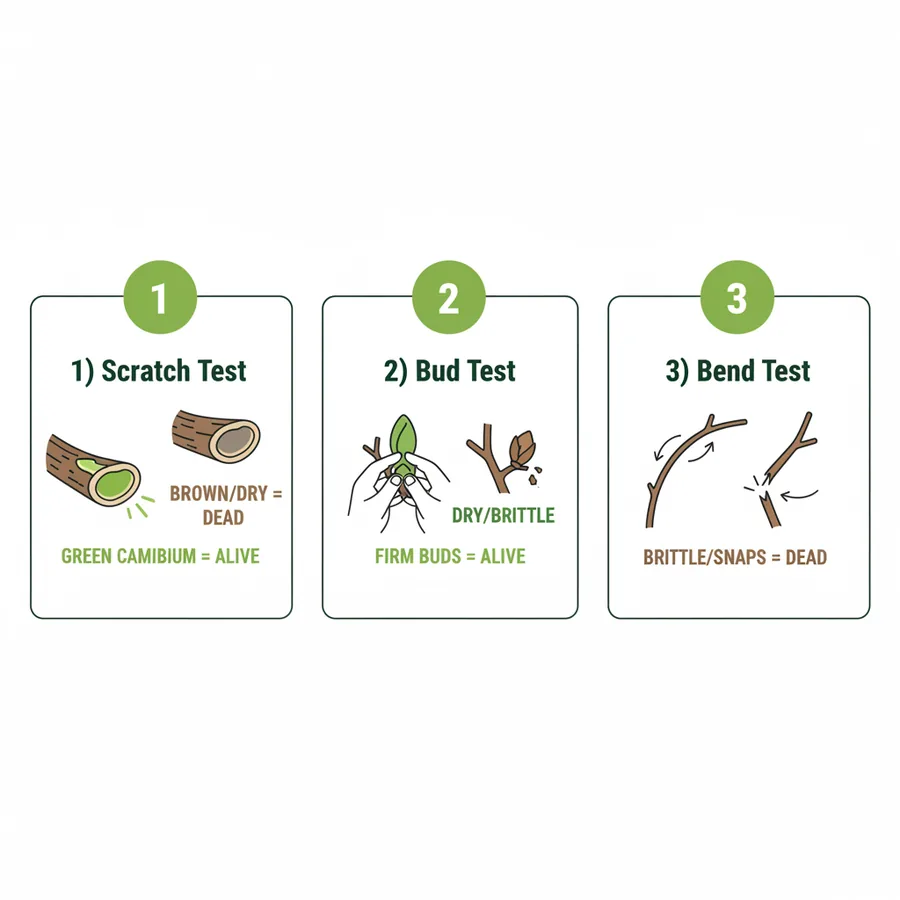
Print this quick-reference guide and take it to your backyard.
Download PDF GuideCommon questions
Can a tree be dead on top but alive at the bottom?
Yes. This is called crown dieback and it is fairly common after a harsh winter, a drought year, or root damage. The cambium near the base may still be green while upper branches are dead. Test multiple spots throughout the tree. A tree with 30 to 40 percent dead crown can sometimes recover with proper pruning and care.
My tree has no leaves in May. Is it definitely dead?
By mid-May in Brooklyn, most deciduous trees should be leafing out. If there are no leaves at all, run all three tests. A tree with no leaves but green cambium and live buds may be under severe stress but still alive. A tree with no leaves, brown cambium throughout, and brittle branches is almost certainly dead.
Should I water a dormant tree in early spring?
If March and April are dry, a deep watering once every two weeks around the drip line helps. Brooklyn soil tends to dry out faster near pavement and buildings. Water slowly at the base, not on the trunk.
How much does it cost to have a dead tree taken down in Brooklyn?
In Brooklyn, having a dead tree taken down typically runs from $500 to $3,000 depending on size, location, and access. A tree close to a structure or utility line costs more because of the rigging involved. Stump grinding is usually a separate cost.
Not sure what you are looking at? The Greenleaf team serves Brooklyn and the surrounding NYC area for tree assessments, pruning, and removal when needed. A quick look costs you nothing and tells you exactly where you stand.