

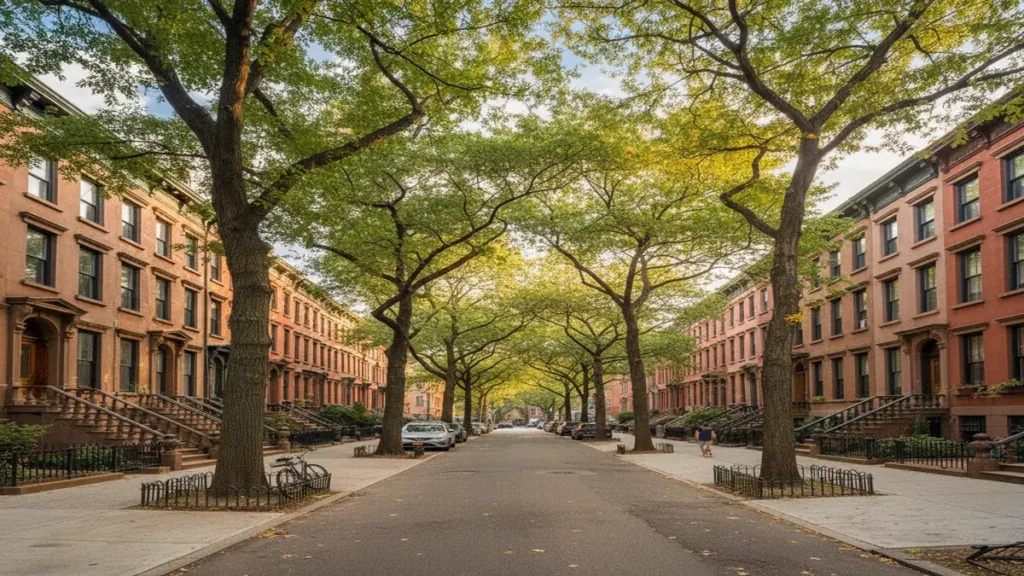
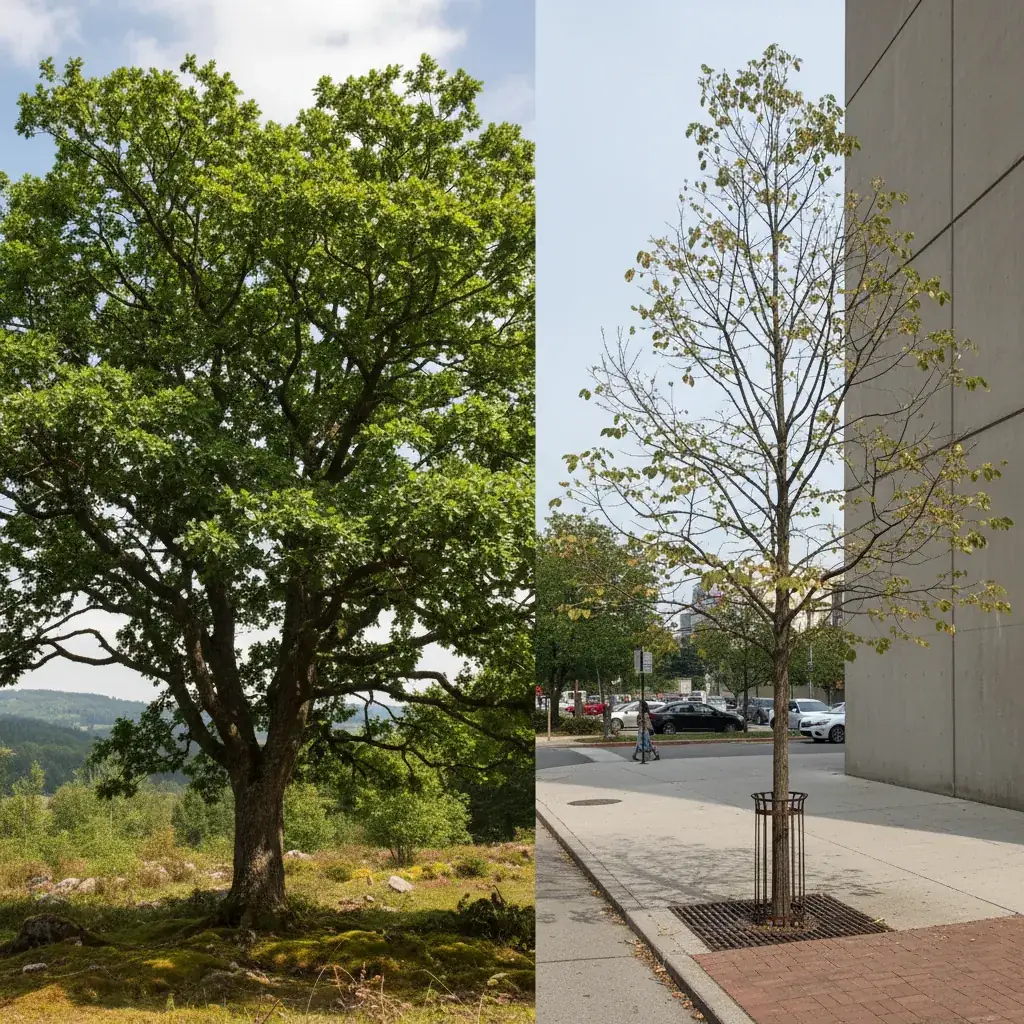
The oak tree in Prospect Park and the oak tree lining your Brooklyn block are almost certainly the same species. One could live 300 years. The other has maybe 20 good ones ahead of it, if it is lucky. City trees die younger, weaker, and faster than their rural counterparts – and the reasons have nothing to do with the tree itself. If you have noticed a tree on your block declining and want to understand why, or if you want to know what can actually be done, an arborist familiar with Brooklyn trees sees this pattern every day.
The Lifespan Gap is Real
Studies from urban forestry programs at multiple US universities have put average street tree lifespan at 10 to 15 years in dense urban environments. In a healthy forest, the same species can hit 100 to 500 years. The gap is not a small rounding error. It is a fundamental difference in growing conditions.
New York City loses thousands of street trees every year and plants thousands more to keep up. Most do not make it past their first decade without significant intervention. Private trees on residential lots do somewhat better – more soil access, less pavement – but they face many of the same pressures as their sidewalk cousins.
Soil Compaction: The Silent Killer
In a forest, soil is loose and aerated, alive with microbial activity and earthworm tunnels. In Brooklyn, soil is compressed by decades of foot traffic, car weight, utility work, and pavement above it. That compression changes everything a root can do.
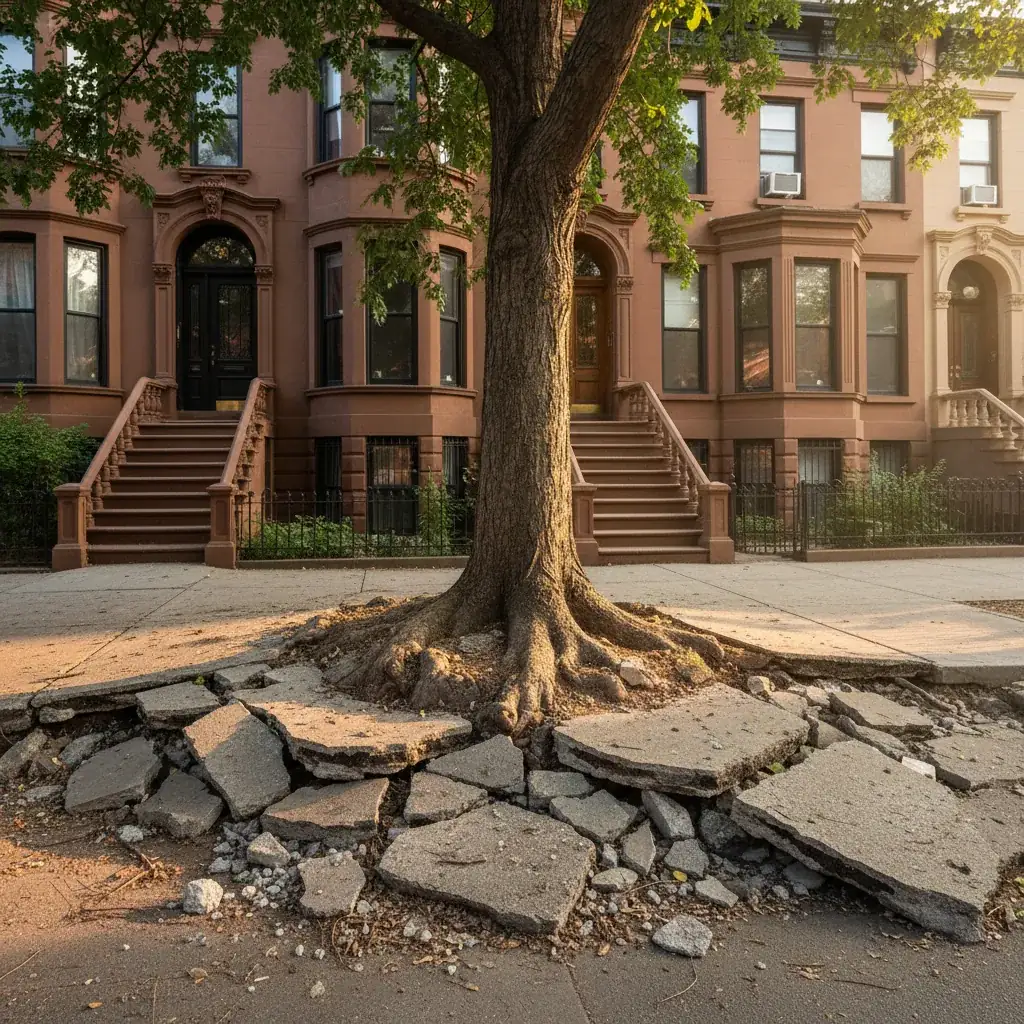
Roots need two things to function: water and oxygen. Compacted soil holds water poorly – it runs off or sits on the surface instead of soaking in. And it holds almost no air. Roots in compacted soil suffocate slowly, becoming weaker and more shallow over time. The tree responds by growing roots toward the surface where there is more oxygen, which is why you see Brooklyn sidewalks heaved up around tree pits.
A tree with compromised roots is a tree under permanent stress. It grows slower, leafs out thinner, and has far less energy to fight off insects and disease. That chronic weakness is what accelerates decline.
Urban Heat and Drought Stress
Brooklyn in July runs 5 to 10 degrees Fahrenheit hotter than surrounding rural areas. This is the urban heat island effect: dark pavement and rooftops absorb solar radiation all day and radiate heat at night. There is no overnight recovery.
Trees handle heat by transpiring – essentially sweating – through their leaves. That process requires water. City trees have limited soil volume, so they exhaust available moisture faster than forest trees. Once the soil dries out, the tree starts pulling water from its own tissues. Leaves curl, wilt, and drop early. Some branches die back by late summer. This is not disease. It is drought stress compounded by heat.
A street tree in a narrow pit gets maybe 10 to 20 square feet of open soil. A healthy forest tree might have access to 1,000 square feet of root zone. That water deficit is a structural disadvantage the city tree can never fully compensate for.
What Road Salt Actually Does
Every winter, New York City applies millions of pounds of road salt. It melts ice. It also migrates into soil and accumulates season over season. Salt changes the chemistry of the soil in ways that are genuinely hostile to tree roots.
High soil sodium interferes with roots absorbing water – a counterintuitive condition where the soil around the root is wetter than the root itself, causing the root to lose moisture rather than gain it. Salt also directly damages root cell membranes. The result looks like drought stress on one side of the tree, because that is the side facing the road: leaf scorch, early drop, branch dieback concentrated on the windward or roadward side.
There is no quick fix for salt-damaged soil. Deep watering in spring helps dilute the accumulated sodium. Some municipalities have moved toward calcium magnesium acetate instead of sodium chloride, but standard rock salt remains the norm across most of NYC.
No Room to Grow
A mature oak in a forest extends its root system outward as far as 100 feet from the trunk. The roots follow water, oxygen, and nutrient gradients in every direction. A street tree in Brooklyn has a sidewalk on one side, a building foundation on another, and utility conduits beneath. The root system has nowhere to go.
Constrained roots mean constrained canopy. A tree can only grow as large above ground as its root system can support below. Brooklyn street trees in standard pits tend to stay small, with thin crowns and limited leaf area. That smaller leaf area means less photosynthesis, less sugar production, and less energy for growth and immune response.
This is also why construction is so damaging to nearby trees. Cutting roots for utility installation or foundation work during renovation can kill a tree within 2 to 5 years, long after anyone connects the decline to the construction that caused it.
Air Pollution and Blocked Stomata
Trees breathe through microscopic pores in their leaves called stomata. In Brooklyn, vehicle exhaust, particulate matter, and ozone coat leaf surfaces and clog those pores. The result is reduced photosynthesis efficiency – the tree is working harder to accomplish less.
Particulate buildup on leaves also reduces the amount of sunlight reaching the chloroplasts beneath the surface. City trees in dense traffic corridors often show smaller leaves than rural specimens of the same species – the plant is producing less leaf tissue because each leaf has reduced photosynthetic capacity.
Ozone is a particular problem. Ground-level ozone – distinct from the protective ozone layer high in the atmosphere – is a byproduct of sunlight reacting with vehicle exhaust. It directly damages leaf cells, causing premature browning and drop. NYC air quality has improved significantly over the last 30 years, but street-level ozone remains well above what forest trees experience.
What You Can Actually Do
Most of the structural problems – soil compaction, root constraints, heat island effects – are beyond what any individual homeowner can fix completely. But some interventions genuinely help.
- Mulch the base properly. A 2 to 4 inch layer of organic mulch in a ring around the tree (keep it away from the trunk) improves soil moisture retention, moderates soil temperature, and slowly adds organic matter back into compacted soil. This is the single highest-impact thing a homeowner can do for a struggling city tree.
- Water during droughts. City trees rarely get watered once they are established, on the assumption that rain handles it. During dry stretches in July and August, a slow deep watering at the drip line once a week makes a measurable difference.
- Avoid soil disturbance near the roots. Digging, tilling, or compacting soil within 10 feet of the trunk during construction or landscaping directly damages the root system. This is the most common preventable cause of urban tree decline.
- Watch for early warning signs. Thinner canopy than two years ago, early leaf drop, dead branches appearing in the crown – these show up months or years before a tree is in real trouble. Catching them early means options. Waiting until the tree is structurally compromised means fewer.
When a tree is showing moderate to serious decline, a professional assessment is the next step. An arborist in Brooklyn can determine whether the tree can be stabilized with treatment, whether structural work is needed, or whether it has reached the point where removal is the right call. Sometimes a tree that looks nearly dead can be saved with targeted intervention. And sometimes what looks like a minor lean is actually a structural failure in progress. The difference matters.
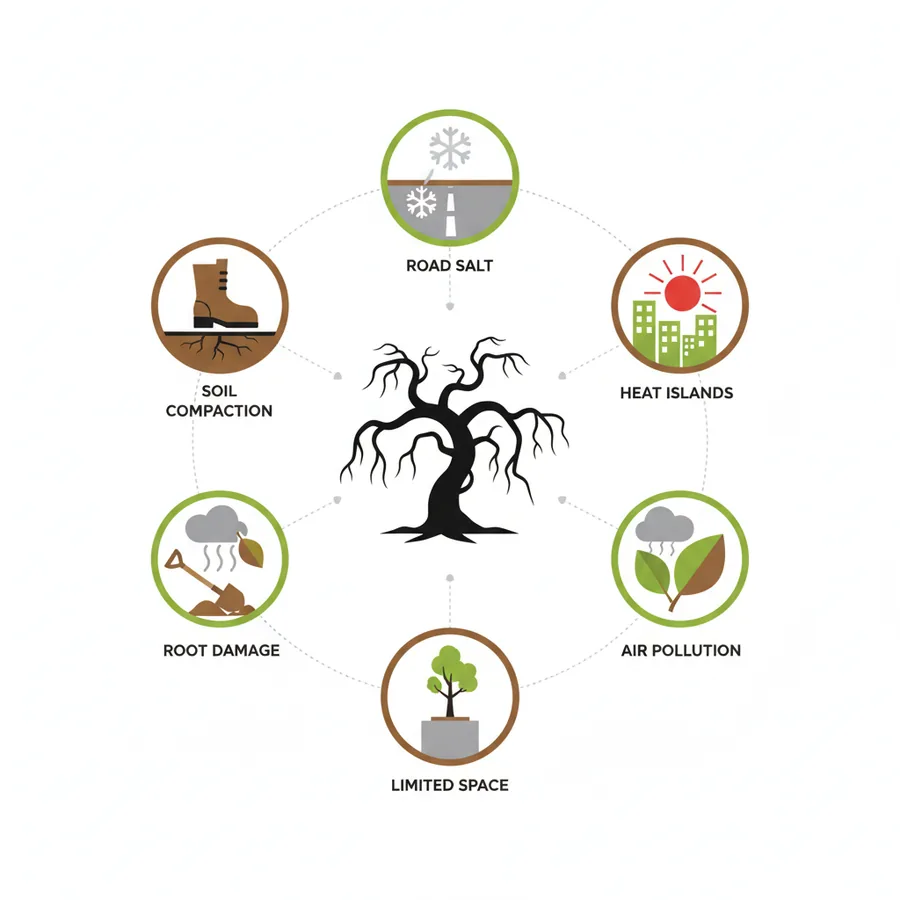
Six stress factors explained, plus warning signs to watch for each season.
Download PDF GuideCommon Questions
How long do street trees in Brooklyn actually live?
Studies from urban forestry programs put average street tree lifespan at 10 to 15 years in dense urban environments. Private yard trees do better – often 30 to 50 years – because they have more soil access and less pavement. Compare that to 100 to 300 or more years for the same species in a natural setting.
Can a declining urban tree be saved?
Sometimes yes, depending on what is causing the decline and how far along it is. Trees showing early stress symptoms – thin canopy, smaller leaves, slow growth – often respond to mulching, improved watering, and removing competing stress factors. Trees with advanced root rot, severe structural damage, or extensive crown dieback are harder to turn around. A professional assessment is the fastest way to know which situation you are dealing with.
Does mulching a tree in the city actually help?
Yes, consistently. Mulch moderates soil temperature, retains moisture, and slowly improves compacted soil as it decomposes. The key rules: keep mulch 3 to 4 inches thick, extend it to the drip line if possible, and keep it away from the trunk. Mulch piled against the bark creates rot and pest habitat, which makes things worse.
My neighbor is doing construction next door. Could it hurt my tree?
Yes, and the effects are often delayed. Root damage from excavation or soil compaction during construction shows up as crown dieback 2 to 5 years later, when most people have forgotten the construction entirely. If work is planned near a tree you care about, document the tree’s current condition and flag the root zone for protection before work begins.
A tree that has been declining for years can sometimes be stabilized. But the window closes. If you are seeing warning signs on a tree near your home, the Greenleaf team serves Brooklyn and the surrounding NYC boroughs and can tell you what you are actually dealing with.