

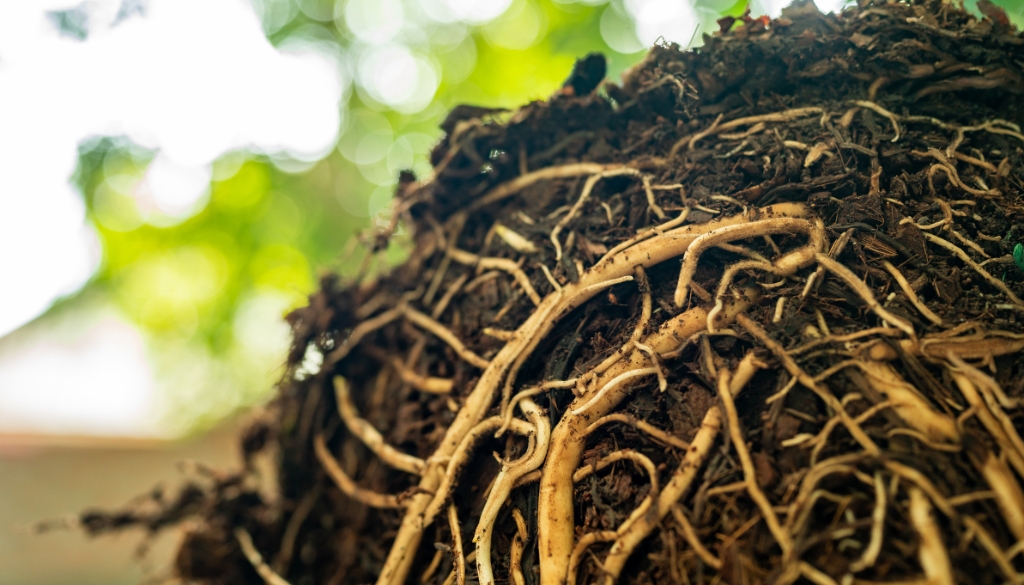
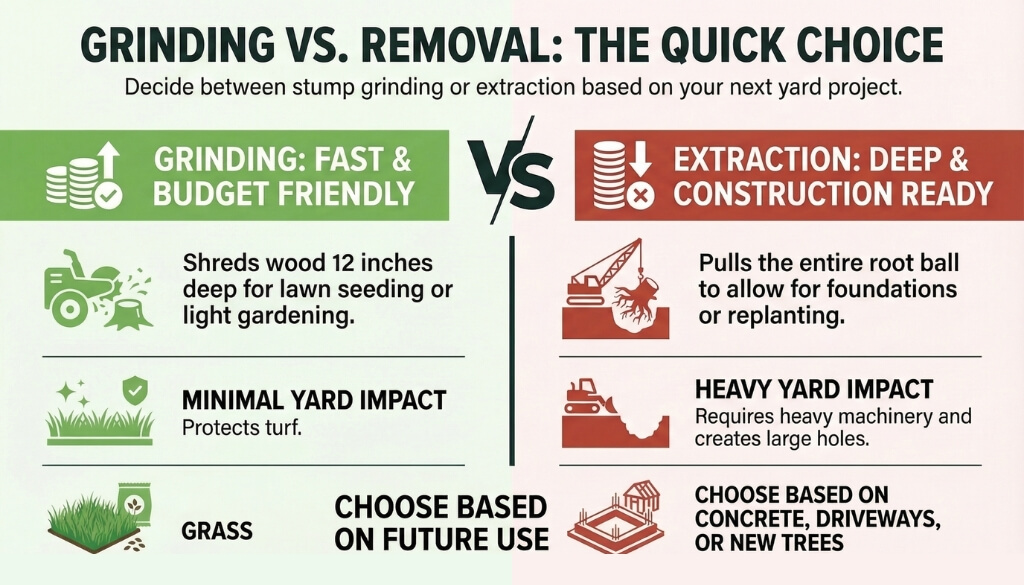
When comparing Stump Grinding vs Stump Removal, your choice depends entirely on future landscaping plans. Grinding shreds the visible wood up to 12 inches below ground level and is highly cost-effective. Total extraction pulls the entire root ball out of the earth, which is absolutely mandatory if you plan to pour concrete foundations or plant a new tree in the exact same spot.
What is the difference between grinding and extracting a tree stump?
Getting rid of a tree stump involves two completely different mechanical processes. Both clear the surface hazard, but they leave your yard in drastically different conditions below the soil.
Core Process Comparison:
| Feature | The Shredding Method | The Extraction Method |
|---|---|---|
| Primary Machine | Carbide-tipped wheel grinder | Backhoe or skid steer |
| Depth Achieved | 6 to 12 inches below soil | Complete root ball depth |
| Hole Size Left | Small and shallow | Massive and deep |
| Byproduct | Usable wood chips | Giant wooden root mass |

How deep do tree roots go and will they grow back?
One of the biggest questions homeowners ask when choosing between stump grinding and stump removal is what happens to the remaining roots. Despite concerns about leaving them, the fact is that most root systems spread incredibly wide rather than deep
Here is what you need to know about extracting tree roots:
- Massive Spread: According to the United States Forest Service, mature tree roots can extend outwards two to three times the radius of the original canopy.
- Natural Decay: Once the main trunk is shredded, disconnected roots will rot naturally over five to ten years.
- Soil Enrichment: Decaying roots slowly add organic nutrients back into your lawn.
- Sprout Prevention: Invasive species might require a safe herbicide application to stop epicormic shoots from popping up.
How much does it cost to get rid of a tree stump?
Budget is almost always the deciding factor. These two stump eradication methods have vastly different price tags and labor requirements.
Cost and Impact Breakdown:
| Factor | Stump Grinding | Stump Removal |
|---|---|---|
| Average Price | Much lower (Billed by diameter inch) | Much higher (Billed hourly or flat rate) |
| Time on Site | 1 to 2 hours | Half a day to a full day |
| Lawn Damage | Very minimal | Heavy machine track damage |
| Debris Disposal | Leave chips as mulch | Requires hauling fees for the base |
Which stump eradication method is best for replanting or hardscaping?
Your upcoming backyard projects dictate exactly which service you need to book. You cannot build heavy structures over decaying wood because the ground will eventually sink.
Choose the shredding approach if you want to:
- Plant grass seed over the old spot.
- Install lightweight, raised garden beds.
- Save money and protect your existing turf from heavy machinery.
- Avoid underground utilities located dangerously close to the tree.
Choose complete extraction if you want to:
- Pour a concrete driveway, patio, or home foundation.
- Plant a brand new sapling directly in the old hole.
- Clear leftover stumps entirely to pass strict building code inspections.
- Eradicate a highly contagious fungal infection from the soil.
If you are dealing with a massive specimen, we highly recommend reading our guide on digging out stumps to understand the heavy equipment required.
Are you ready to clear out those tripping hazards?
Decaying wood acts as a magnet for termites, carpenter ants, and unsightly fungal growth. You do not have to navigate around these awkward wooden obstacles every time you mow the lawn.
Our local GreenLeaf crew has the exact machinery needed to handle either project safely. Reach out to our team today to discuss our stump removal services and get your property back to looking its best!