


Are you getting bored with where your tree is standing? You might’ve considered moving it, and yes, it is possible to move a tree without damaging its root system! However, it takes careful planning, patience, and the right method. Ideally, this process is performed by an expert and never on your own to guarantee safety. To give you peace of mind, we’ll explain everything you need to know about moving a tree without damaging roots, step by step.
What is Tree Transplanting?
This is the technical name for moving a tree while keeping it alive! Tree transplanting is the process of relocating a living tree from one location to another, making sure it remains healthy during and after the move. People choose to transplant trees for many reasons, sometimes it’s to protect a tree from being damaged by nearby construction, or to move it into a better spot for sunlight, airflow, or overall spacing. In other cases, a homeowner might want to bring a sentimental tree along when moving properties, or simply update the layout of their yard without giving up their beautiful tree.
But unlike small garden plants that can be dug up and replanted with ease, trees have wide, deep, and complicated root systems that don’t handle disruption well. They can go into shock if they lose too many roots or if the process is rushed. This is why moving a tree without killing it takes lots of planning and a clear understanding of how a tree’s root system works. If a tree does die in the process, tree cutting professionals can take care of your tree so you can start anew!
Remember: The goal with tree transplanting isn’t just to get the tree from point A to point B, it’s to help it thrive in its new home long after the move, and know when it’s ready to let go if the worst-case scenario occurs.
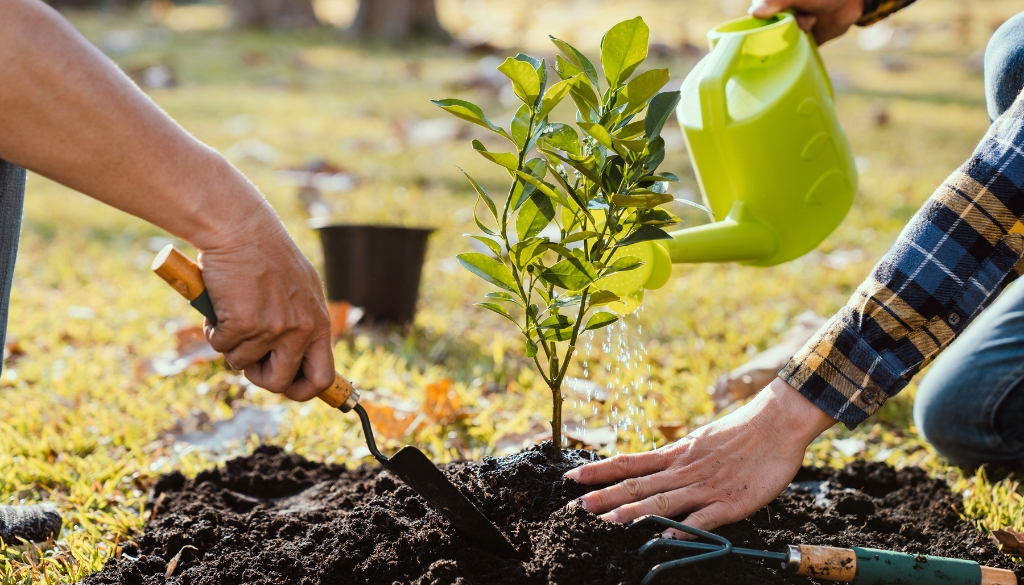
How Tree Transplanting Can Be Done Safely
From our experience as a licensed arborist in New York City, the safest way to move a tree without damaging roots comes down to five key stages. Each stage plays a role in keeping the tree healthy before, during, and after the move.
Site Evaluation
Before doing anything else, it’s best to take a look at what we’re dealing with. You should have a long look at your tree and really understand it. This is what you should check for:
- Size and age of the tree: Younger trees (under 10 years old) transplant better because their root system is smaller, less complex, and not as established as an older, more mature tree.
- Species: Some trees handle moves better than others. For example, shallow-rooted species (for example, maple, birch, or willows) tend to be more adaptable.
- Health: A weak or diseased tree is more likely to struggle after a move.
- Soil conditions: Is the soil compacted? Too dry? Too sandy? Good soil is key for a successful transplant.
- New location: Make sure the new spot gets proper sunlight, drainage, and space so that your tree can still grow in its new spot.
If all signs point to “go,” then we can move on to root preparation!
Root Pruning the Tree
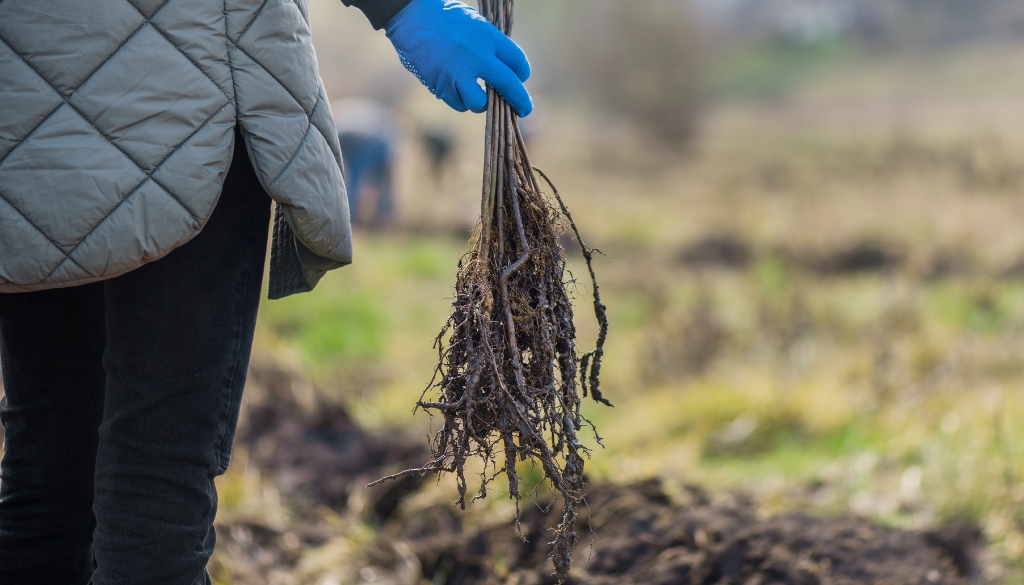
This step is done several months before the actual move (usually in fall or early spring). Trees grow many small roots far from their trunk. When digging up a tree, many of those outer roots will be lost. So it’s best to gradually train the tree to live with a smaller root ball by pruning the roots ahead of time.
A root ball is the mass of roots and surrounding soil that’s dug up along with a tree or plant when it’s being moved or transplanted. Think of it like this: instead of pulling a tree out by the trunk, you dig around the base and carefully lift the whole bundle of roots, soil, and sometimes organic matter that’s clinging to the roots. This helps protect the roots during the move and reduces transplant shock. This is the general procedure to prune the roots for your tree transplant:
- Mark the safe pruning distance: Use the formula below to calculate how far out from the trunk we can safely prune.
- Dig a trench around the tree: We cut cleanly through roots using a sharp spade or saw.
- Let the tree recover: Over the next few months, new roots begin forming closer to the trunk, which is within the safe zone we’ve created.
Root Pruning Measurement Table
| Tree Trunk Diameter | Safe Root Pruning Distance (Minimum – Maximum) |
|---|---|
| 1 foot | 3 to 5 feet from trunk |
| 2 feet | 6 to 10 feet from trunk |
| 3 feet | 9 to 15 feet from trunk |
| 4 feet | 12 to 20 feet from trunk |
General rule of thumb: To find your tree’s diameter, measure around the trunk (about 4 feet up from the ground), then divide by 3.14.
Will Cutting Tree Roots Kill My Tree?
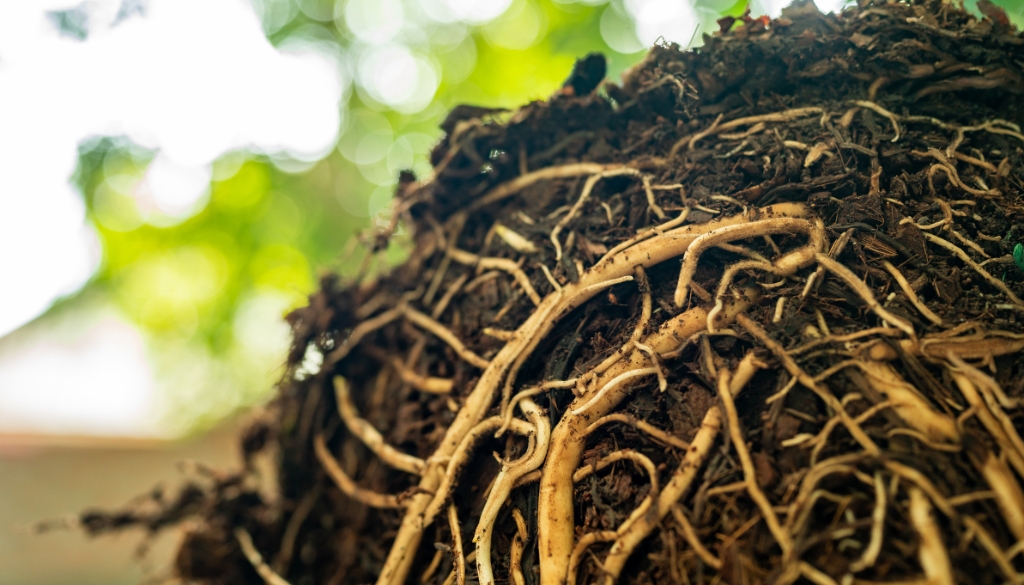
It could. Unless you’re doing it properly! It’s not a news flash that roots are the tree’s life support system. They bring in the water and nutrients, help anchor the tree in place, and store energy for survival. If you remove too many roots or cut too close to the base of the tree, that can throw off the tree’s natural function and kill the tree over time. All of this can be avoided if you choose to transplant your tree professionally.
When done properly, root pruning can prepare the tree for transplanting without putting its life at risk. It’s all part of the process of moving a tree without damaging the roots safely.
Digging and Lifting the Tree
Once the root pruning period is done, it’s time for the digging:
- Water the tree the day before to the soil, and hydrate the tree.
- Dig a wide circle around the tree, well beyond the pruned root zone.
- Create a root ball which is the rounded mass of soil that keeps the roots cozy during the move.
- Wrap the root ball in burlap or a tarp to keep it protected and moist.
- Use lifting straps or equipment (for larger trees) to gently lift the tree from its original hole without force.
This is a delicate stage. Even with good root pruning, the root ball is heavy and fragile.
Transplanting the Tree
With the tree out of its original hole, we move it to its new home. Here’s how the tree is planted again:
- Hole size: The new hole should be twice as wide as the root ball and the same depth as the original hole.
- Placement: The tree must sit at the same level it did before; burying it too deep can lead to rot. You can use biodegradable tape, chalk, or a light scratch on the tree directly to make sure the tree is planted at the same depth as before.
- Backfill: Add soil in the tree’s new home while avoiding air pockets, then water the soil thoroughly.
- Staking may be necessary for added support, especially in windy areas.
Post-Transplant Care
After transplanting, you already know that the tree will need that extra TLC. Here’s what we recommend:
- Water regularly (maybe a little more than usual): Daily for the first week, then taper to weekly as the tree gets used to its new home.
- Mulch: Spread mulch 2 to 3 inches deep, but don’t pile it against the trunk so you don’t suffocate the tree.
- No fertilizing for the first year: Let the tree focus on growing roots instead of leaves.
- Monitor for stress: Wilting, yellowing, or leaf drop are signs the tree may need extra help.
This phase is where moving a tree without killing it is truly tested. Ongoing care can make or break the transplant.
How Long Will It Take For The Roots to Grow Back?
The great thing about trees is that they know themselves best. They can take a lot of what’s thrown at them and learn to recover on their own. After being moved, the tree knows that it should start regrowing its feeder roots. These are the thin, hair-like roots that absorb water and nutrients from the soil. These begin forming within a few weeks of transplanting if the conditions are favorable. But, to grow back to its full root potential, it’ll take way more time.
Often, it can take one to three years for the roots to fully recover and support the tree like they used to. The exact timeline depends on the tree’s age, species, overall health, and how well the site was chosen and prepared. During this time, the tree is more sensitive to drought, heat, and physical stress, which makes post-transplant care absolutely necessary. That’s why we recommend consistent watering, proper mulching, and no fertilizing for the first year. With time, patience, and the right care, the tree will reestablish itself and continue to grow as if it had never been moved!
Move Your Tree the Right Way
Moving a tree without damaging roots is possible, but it needs a lot of attention for the best outcome. If you’re not sure where to start, always reach out to a professional who knows how to care for trees at every stage of their life so you avoid any tree casualties.