

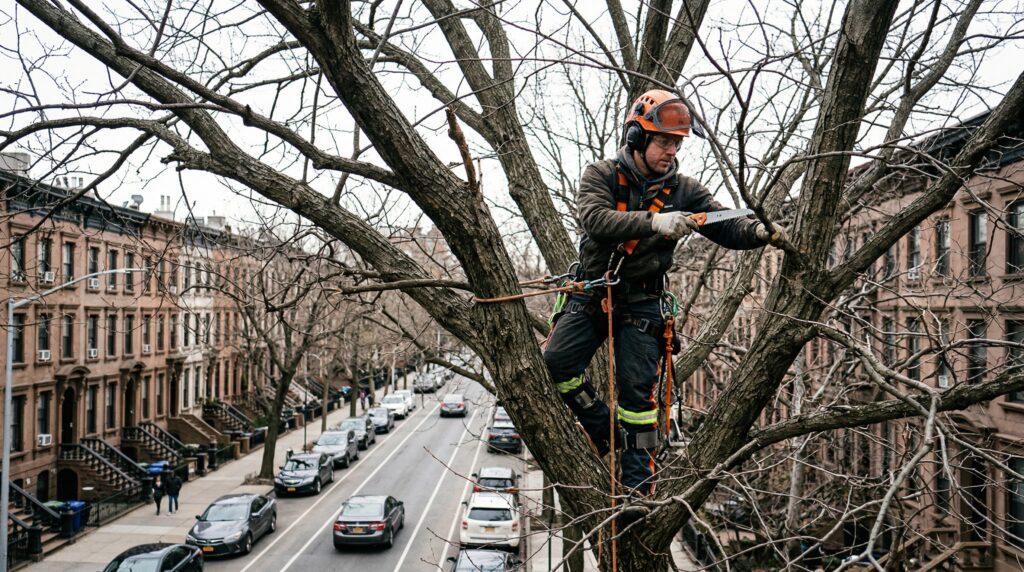
Every March and April we get the same call from NYC homeowners and co-op boards: “Is it safe to prune the tree in front of the building right now?” The answer is almost always yes, with three big exceptions that catch people off guard every single year. If you are planning a tree pruning this spring on a Brooklyn brownstone street tree, a Queens backyard maple, or a co-op courtyard oak, the timing matters as much as who holds the saw. Here is the plain-English NYC spring pruning calendar for 2026.
Why Late Winter and Early Spring is the Best Window
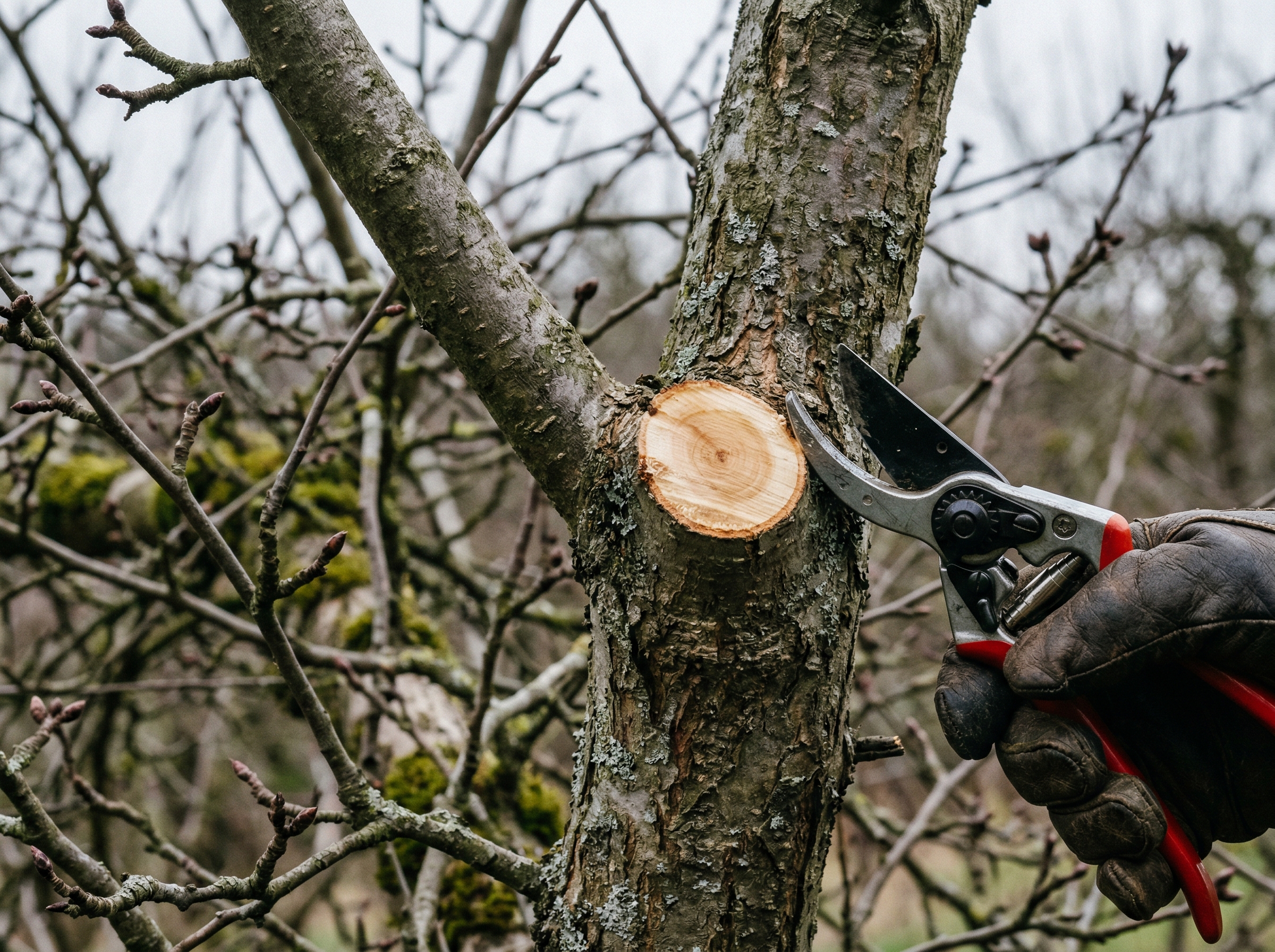
Most deciduous trees in the New York City climate zone (USDA 7a–7b) sit in dormancy from roughly mid-November through mid-March. Late dormancy, the few weeks just before bud break, is the ideal pruning window for the majority of species because:
- The tree’s structure is fully visible without leaves, so the arborist can see crossing branches, deadwood, and crown imbalance.
- Stored energy reserves are highest, which means the tree heals faster when growth resumes.
- Insect and disease pressure is at its lowest. Most fungal spores and pest vectors are not active yet.
- The crew can work without damaging spring perennials, ground cover, or new growth underneath.
For most NYC trees, the cleanest window is roughly mid-February through the third week of March, before sap begins flowing heavily and before buds break. By the second week of April most species in the five boroughs are leafing out and the optimal window has closed for the year.
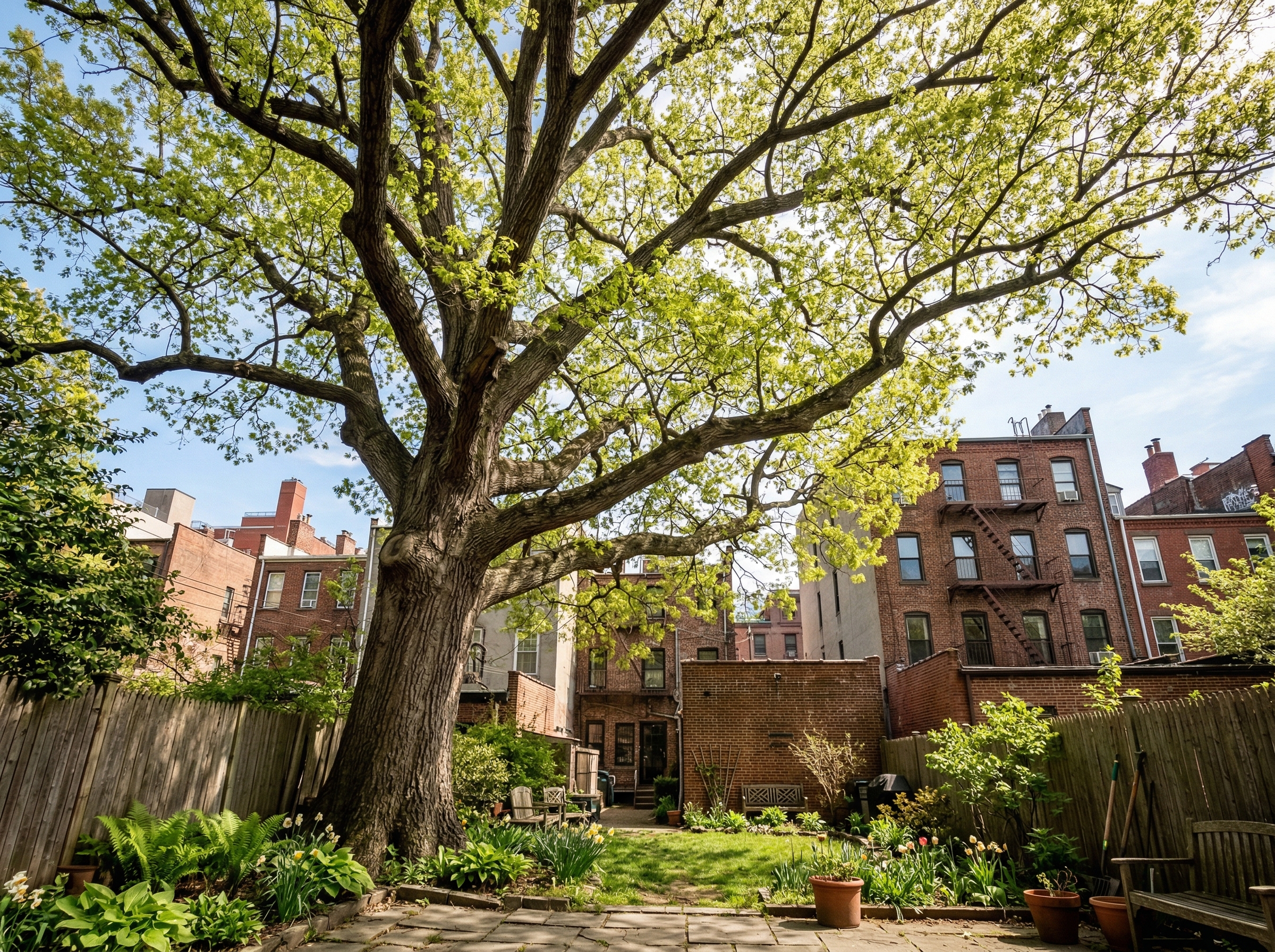 oak tree in a NYC backyard with leafing-out buds in mid-April with sunlight through new leaves” />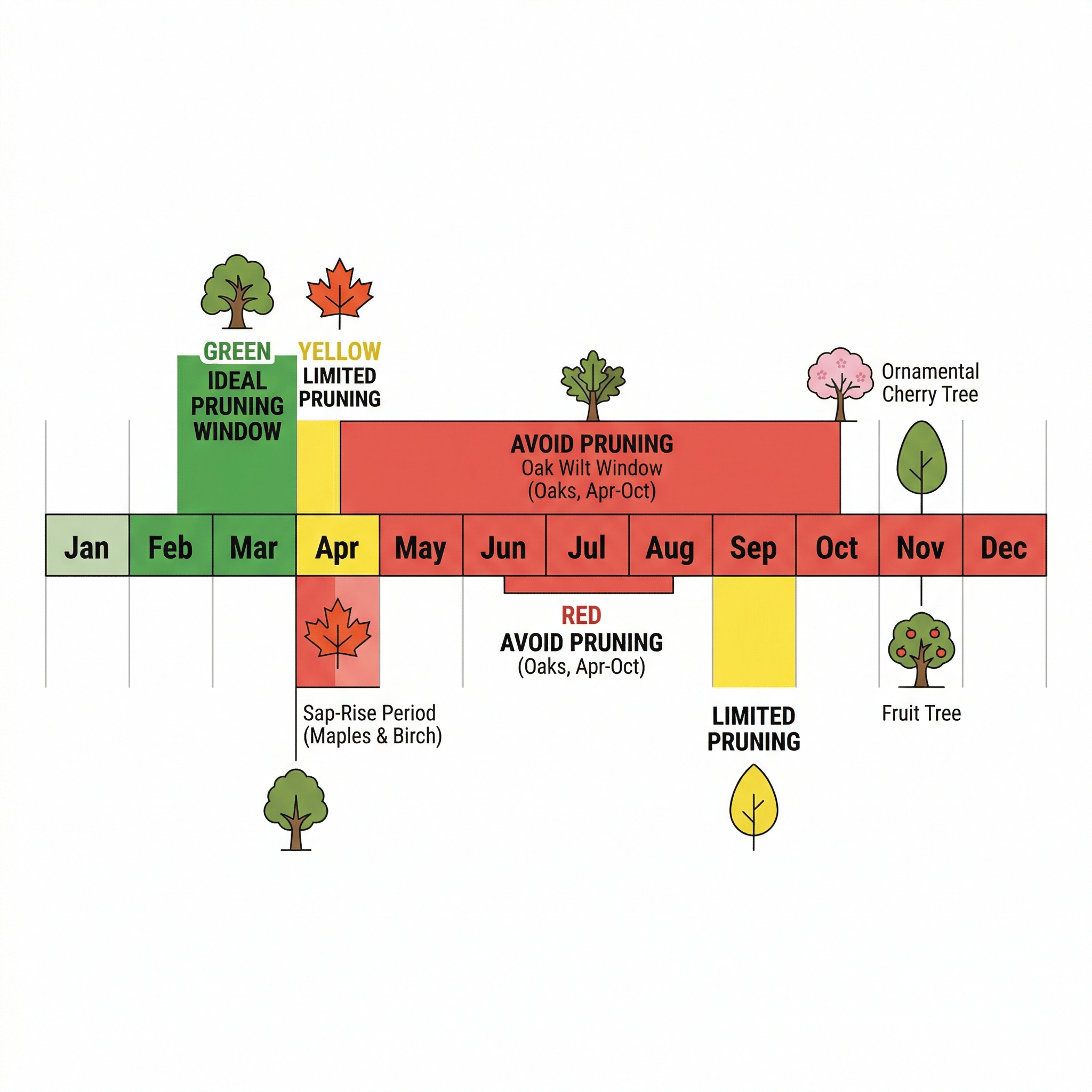
What to Prune in March
March is the prime month for structural pruning on the following common NYC trees:
- Honey locust. Extremely common as a NYC street tree. Tolerates dormant pruning very well.
- London plane. The classic Brooklyn and Manhattan street tree. Pollarding and crown reduction are best done in late winter.
- Pin oak and red oak. Late winter pruning avoids the oak wilt risk window (more on this below).
- Linden. Common in Queens and Brooklyn. Dormant pruning is ideal.
- Norway maple and silver maple. Late February to early March, before sap rises.
- Ginkgo. Tolerates pruning year-round but late winter is cleanest.
- Zelkova. Increasingly common in NYC plantings since the elm decline. Late winter is ideal.
For evergreens like NYC’s older Norway spruce and pines, light pruning is fine through March, but heavy reductions should wait until early summer after the new growth (called the “candles”) has hardened off.
What to Prune in April
By April, most NYC trees have begun bud break and sap flow. April pruning should be limited to:
- Deadwood removal, which can be done any time of year.
- Hazard reduction on storm-damaged limbs.
- Light corrective cuts on already-pruned trees.
- Spring-flowering ornamentals immediately AFTER they finish blooming (cherries, magnolias, crabapples, dogwoods). Pruning these before bloom removes the flower buds you wanted to see.
Heavy structural cuts in April force the tree to redirect energy at exactly the moment it is investing in new leaves. The result is slower healing, more sap bleed, and a higher risk of stress-induced pest pressure.
The Three Trees You Must Not Prune in Spring
1. Oaks (March 1 to October 31, no pruning)
This is the big one. Oak wilt is a fatal fungal disease spread by sap beetles that are attracted to fresh oak wounds. The disease is now confirmed in parts of New York State. Best practice from the NYS Department of Environmental Conservation and the International Society of Arboriculture is to avoid all non-emergency oak pruning between April 1 and October 31. Some arborists extend the no-prune window to March 1 to be safe. If you must prune an oak for emergency reasons during this window, every wound should be sealed with wound paint immediately after cutting (one of the only situations where wound sealing is recommended modern practice).
2. Maples (heavy bleeders)
Sugar, silver, Norway, and red maples bleed sap heavily if pruned in late February through April when sap is rising. The bleed is not technically harmful to the tree, but it looks alarming, attracts insects, and can stain anything below the cut. Best window for heavy maple pruning in NYC is late November through early February (true dormancy) or mid-summer after leaves have fully hardened off.
3. Birch and walnut
Both species bleed heavily in spring just like maples and for the same reason. Push pruning to summer.
Spring Pruning for Fruit Trees in NYC Backyards
Many older Queens, Staten Island, and Brooklyn yards have apple, pear, plum, or peach trees. Fruit tree pruning has its own calendar:
- Apple and pear: Late winter (February to early March) before bud break. Standard practice.
- Peach and nectarine: Just before bud break, typically mid-March in NYC. Earlier pruning increases winter dieback risk on these less hardy stone fruits.
- Cherry and plum: Best pruned in summer after harvest, NOT in spring. Spring pruning of stone fruits in NYC’s humid climate increases the risk of bacterial canker and silver leaf disease.
Pruning Street Trees in Spring
Remember that street trees in NYC require a DPR permit regardless of season. Spring is the busiest time for permit applications, which means timelines can stretch to the upper end of the 2 to 6 week window. If you want spring work done on a street tree, the contractor should submit the permit in late January or February.
How Much Should You Prune at a Time?
Industry standard from the International Society of Arboriculture is to remove no more than 25 percent of a tree’s live crown in a single year, and on mature trees over 50 years old, no more than 10 to 15 percent. Aggressive over-pruning, sometimes called “topping” or “lion-tailing,” is one of the most damaging things you can do to a NYC tree. It looks tidy at first, then causes long-term decline, water sprout regrowth, and structural failure.
Book Before the Calendar Closes
The NYC spring pruning window is short and the permit queue for street trees fills up fast. GreenLeaf Tree Care schedules spring pruning across all five boroughs from mid-February through early April, with ISA-certified arborists and DPR-licensed crews. Request a free quote and we will get a certified arborist on a video call or site visit to walk through your tree before the window closes.