

Last updated: August 15, 2026
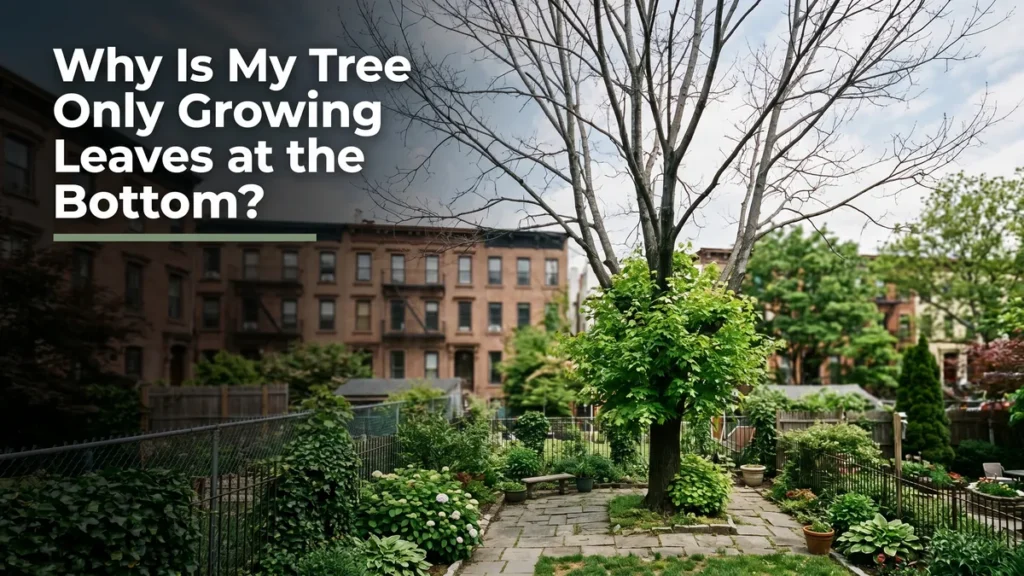
Picture a homeowner in Queens standing on the back patio in late spring, looking up at a maple that leafed out beautifully near the ground but stayed bare and gray up top. It is one of the most common calls we get, and the question is always the same: why is my tree only growing leaves at the bottom? The short version is that the lower growth is the tree trying to keep itself alive while something higher up is failing. If your tree is showing this pattern, a quick professional tree risk assessment can tell you whether it is a problem you can fix or a hazard you need to deal with.
It is easy to look at all that green at the base and feel reassured. Honestly, that bottom growth is usually the opposite of good news. Below is what the symptom means, the likely causes in the New York City area, what to check yourself, and when to bring in a certified arborist.
In this article
What This Growth Pattern Means
When a tree leafs out only along the lower trunk and large limbs but the upper canopy stays bare, you are usually looking at one of two things. Either the top of the tree is dead or dying back, or the tree is under so much stress that it has pushed out emergency growth low on the trunk. Arborists call these low shoots epicormic growth, and they sprout from dormant buds the tree keeps in reserve for exactly this kind of trouble.
Think of it as the tree triaging itself. When the canopy is compromised, the tree falls back on the buds nearest its root reserves, which is why the green appears at the bottom first.
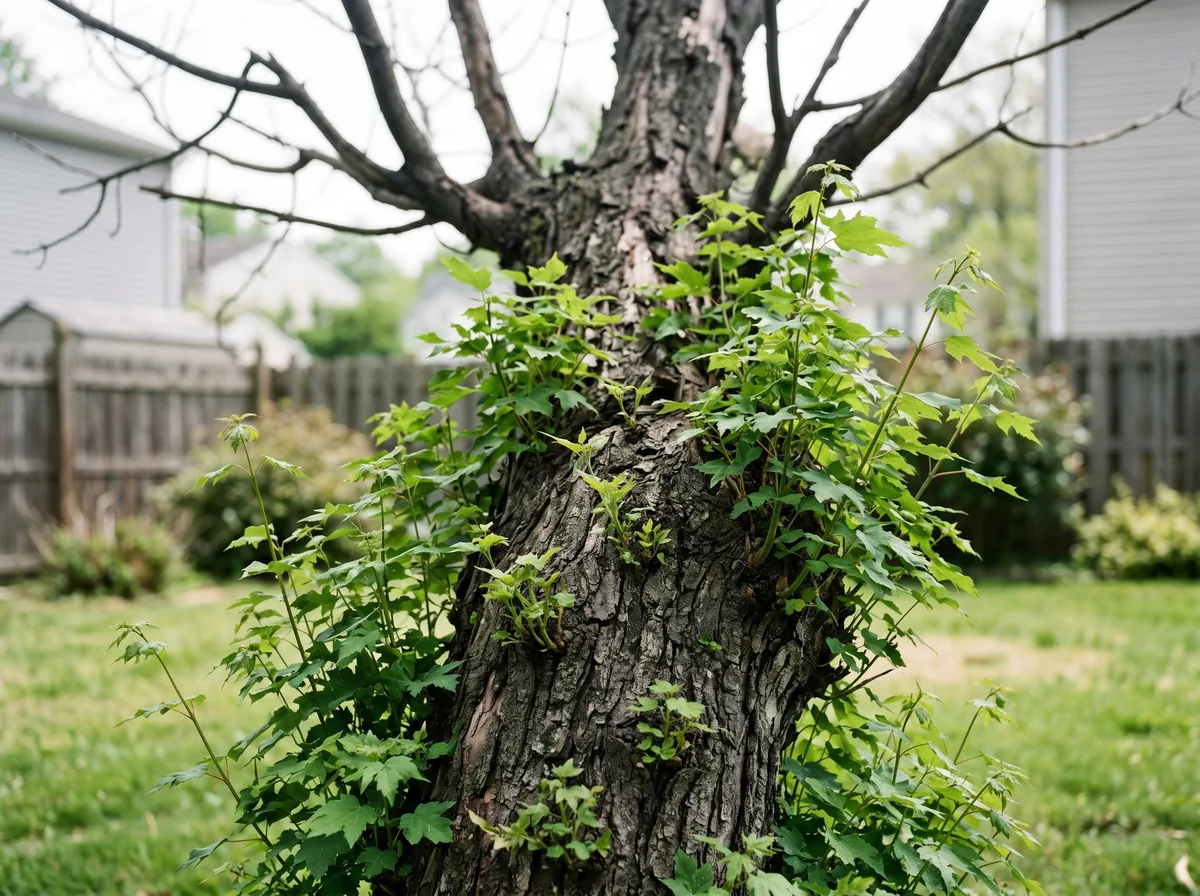
Did you know: those low sprouts have a name. The shoots growing straight out of the trunk are called epicormic shoots or water sprouts. They come from buds that sat dormant under the bark, sometimes for years, until stress woke them up. A burst of them is one of the clearest signals an arborist looks for that a tree is fighting to recover from damage above.
Why it Happens: The Most Common Causes
There is rarely a single villain. Across the five boroughs and Long Island, a few causes show up again and again. Here are the ones worth ruling out first.
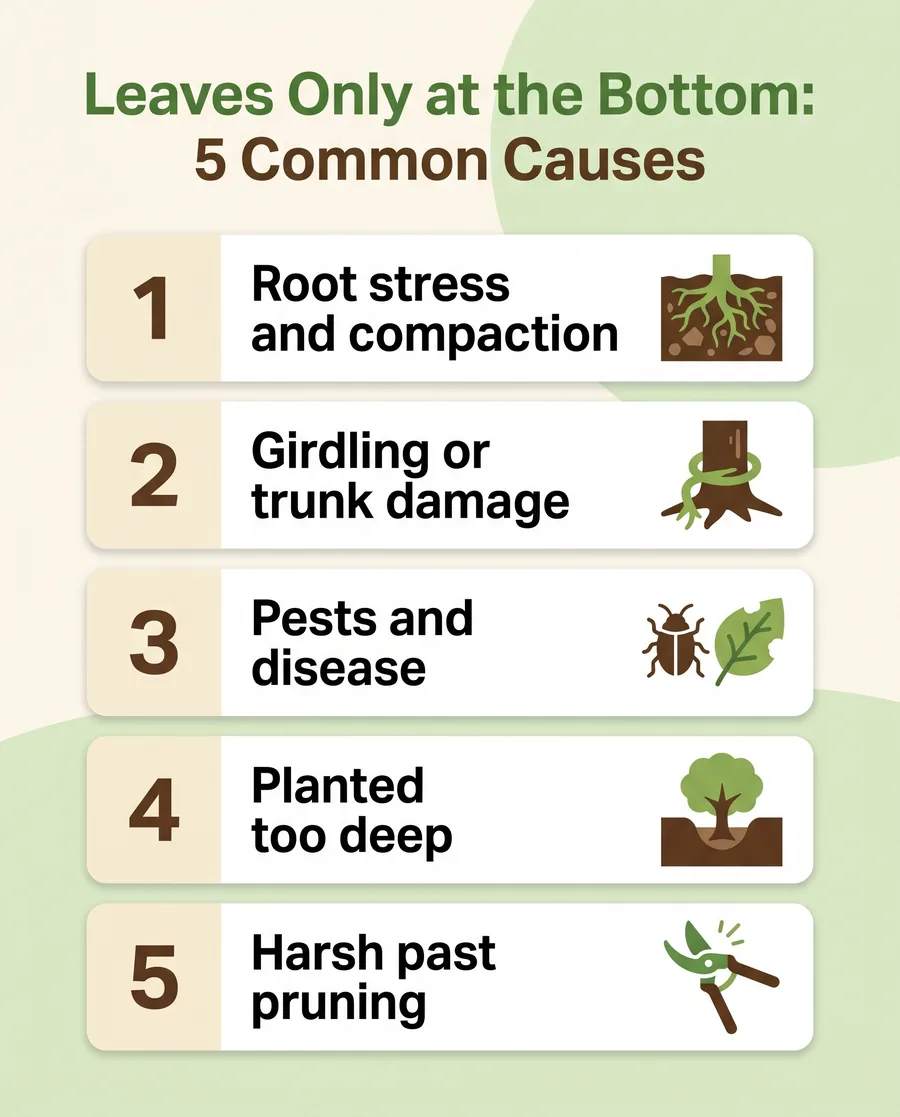
- Crown dieback from stress. Drought, compacted soil from foot traffic or parked cars, road salt, and root damage from construction starve the upper canopy first. The top thins, then the tree sprouts low.
- Girdling or trunk damage. A root circling the base, a stake tie left on too long, or a mower wound can choke the flow of water up the trunk, so growth above the injury fails while growth below survives.
- Pests and disease. Borers, fungal cankers, and root rot can kill the upper structure while the base hangs on. Ash trees are especially vulnerable to the emerald ash borer, which is established across New York.
- Deep planting or harsh past pruning. A tree buried above its root flare, or one that was topped or over-thinned, often struggles up top while throwing low sprouts to replace lost canopy.
Red flag: bare canopy plus other warning signs means stop and call a pro. A bare upper canopy on its own is a concern. A bare canopy combined with mushrooms at the base, a soft or hollow sound when you tap the trunk, bark falling off in sheets, or a tree that has started to lean is a different story. Those point to internal decay or root failure, which can make a tree unstable. Do not climb it, do not cut large limbs yourself, and keep people and cars clear. Arrange an assessment right away.
What to Check Before You Call Anyone
Safety note: The tips here are for general guidance only. Green Leaf Tree Care is not responsible for any injury, property damage, or cost resulting from action taken based on this content. Tree work is one of the most dangerous jobs there is. Always engage a certified, insured arborist for large-limb removal, climbing, or any cut you are not fully comfortable making from the ground. Never attempt work near power lines. If a branch is touching or close to a utility line, stop and call your power company or us.
You can gather useful clues from the ground in about fifteen minutes, no climbing or cutting required, just a careful look and your phone for photos.
- Scratch test the branches you can reach. Scrape a small spot of bark with a thumbnail. Green and moist underneath means alive; brown and dry means dead. This shows how far the dieback has spread.
- Look at the root flare. The trunk should widen into the ground like a wine bottle. If it goes straight in like a telephone pole, the tree may be planted or mulched too deep.
- Check for a circling root or old ties. Clear mulch and grass at the base and look for roots wrapping the trunk or any wire, rope, or strap left from staking.
- Inspect the bark and base. Photograph any cracks, oozing, sawdust-like frass, exit holes, fungus, or soft spots. These details help an arborist diagnose faster.
People often ask: Should I just cut off the sprouts at the bottom? Not yet, and not on your own. Those low sprouts may be the only healthy growth the tree has left, and removing them before you understand the cause can push an already stressed tree over the edge. On a young, lightly damaged tree, some sprouts can be thinned later as part of a recovery plan. On a declining tree, the right move might be corrective pruning or removal. Let a certified arborist decide the order of operations.
When to Call an Arborist
Some cases clearly require do-it-yourself watering and patience. Others are safety issues. Reach out to a certified, insured arborist when any of these are true.
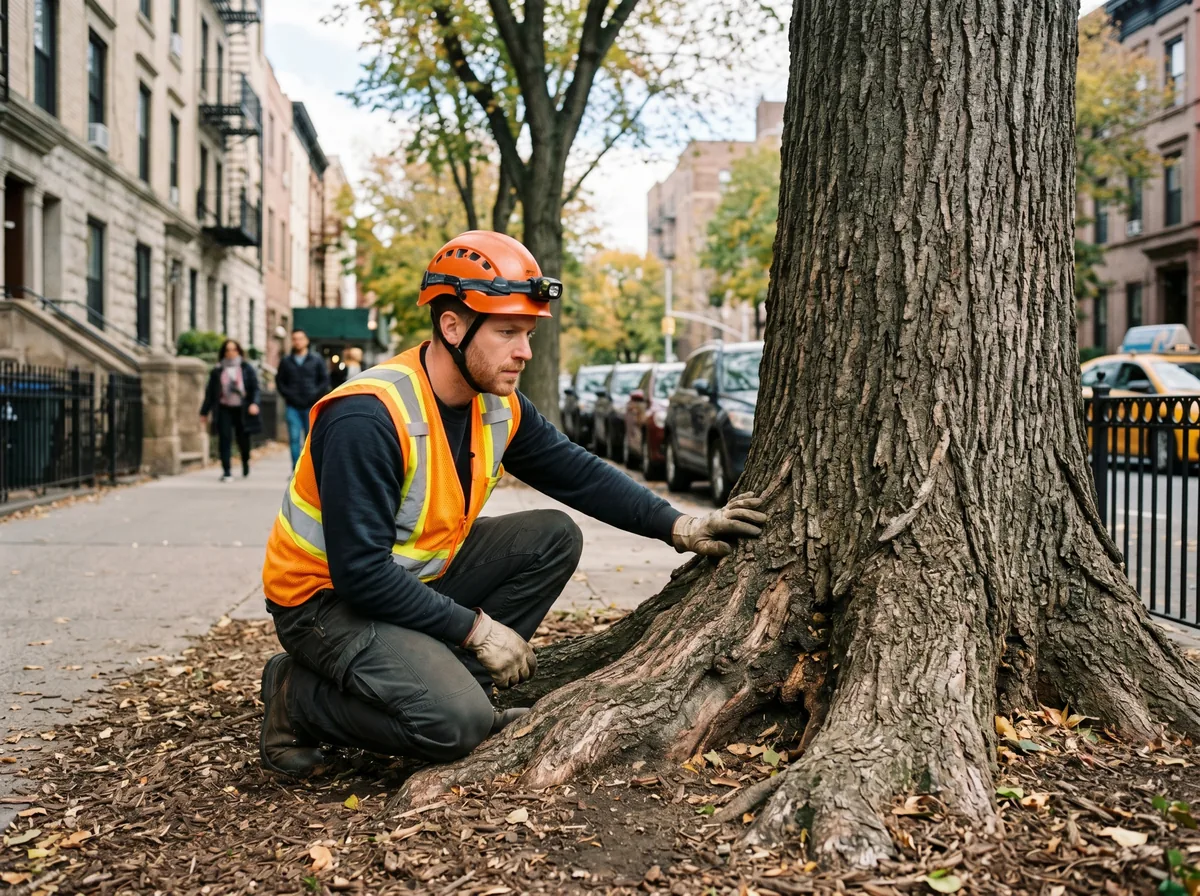
A ground-level inspection by a certified arborist pinpoints the cause and the safest next step.
- More than the lower third of the tree is bare or showing dead branches.
- You found mushrooms, soft wood, a hollow sound, peeling bark, or a new lean.
- The tree is large, overhangs your home, a sidewalk, a driveway, or a power line.
- You suspect borers or disease and the tree is an ash, an elm, or another high-value species.
- It is a street tree or sits on city property, which often means special rules apply.
A qualified arborist can also tell you whether other nearby issues, like roots lifting a driveway or sidewalk or a tree that has started to lean, are connected to the same underlying root stress.
How to Keep it From Happening Again
Whether you save this tree or plant a new one, the same habits keep a canopy full from the top down. Most decline traces back to the roots, so that is where good care starts.
- Mulch wide and shallow, never against the trunk. A two- to three-inch ring out to the drip line holds moisture; keep it a few inches off the bark to avoid rot.
- Water deeply during dry spells. A long, slow soak once a week beats frequent light sprinkling, especially for trees planted in the last few years.
- Protect the root zone. Avoid parking, paving, or piling soil over roots, and keep mowers and trimmers away from the trunk.
- Plant at the right depth. Set the root flare at or just above grade, and choose species suited to your USDA hardiness zone.
- Schedule routine checkups. A periodic look from a pro, plus sensible landscape and property maintenance, catches stress while it is reversible.
Sources and further reading
- New York State Department of Environmental Conservation, Forests and Trees (tree health and forest stewardship guidance).
- New York State DEC, Emerald Ash Borer (pest established across New York).
- NYC Parks, Trees and the urban forest (city tree care and rules).
- USDA, Plant Hardiness Zone Map (matching species to your zone).
- International Society of Arboriculture, Tree Owner Resources (consumer tree care).
- GreenLeaf Tree Care, field observations across the five boroughs and surrounding counties.
FAQs
Is a tree growing leaves only at the bottom dying?
Not always, but it is a serious warning sign. Lower-only growth usually means the upper canopy is stressed or dying back while the tree pushes emergency shoots from buds near its roots. Some trees recover once the cause, such as drought, deep planting, or a girdling root, is corrected. Others are too far gone. The only reliable way to know is a ground inspection by a certified arborist, who reads the canopy, trunk, and roots together.
What are the sprouts growing out of the bottom of my tree trunk?
Those are epicormic shoots, sometimes called water sprouts. They grow from buds that stayed dormant under the bark until stress or injury triggered them, and a burst of them is the tree trying to replace canopy it has lost higher up. They are a symptom, not the disease, so cutting them off without fixing the cause rarely helps and can harm an already weak tree. An arborist will find out why they appeared first.
Can I save a tree that has lost its upper canopy?
Sometimes, if you act early and the cause is correctable. If the dieback is limited and the roots are healthy, fixing drainage, easing compaction, removing a girdling root, watering well, and selective pruning can bring a tree back over a few seasons. If more than half the canopy is dead, the trunk is decayed, or the tree is leaning, recovery is unlikely and the tree may become a hazard. A certified arborist will give you an honest assessment.
Could the emerald ash borer be why my ash tree is bare on top?
It is a real possibility in New York City. The emerald ash borer is established statewide and kills ash trees from the top down, producing exactly this pattern: a thinning upper canopy and a flush of sprouts lower on the trunk. Look for D-shaped exit holes, S-shaped tunnels under the bark, and heavy woodpecker activity. If you suspect it, have the tree checked promptly, because infested ash becomes brittle and dangerous to remove.
Quick Recap
- Leaves only at the bottom usually mean the upper canopy is failing, not that the tree is healthy.
- Common causes are root stress, girdling, pests and disease, deep planting, and harsh past pruning.
- Do a quick ground check, then stop and call a certified arborist for any decay, lean, or overhang.
Download the free quick guide
Grab our printable ground-check guide so you know exactly what to look at before you call an arborist.
Sparse leaf growth can be a pruning or health issue – our tree pruning team can correct structural problems, and a tree risk assessment can rule out a bigger issue.