

In this article
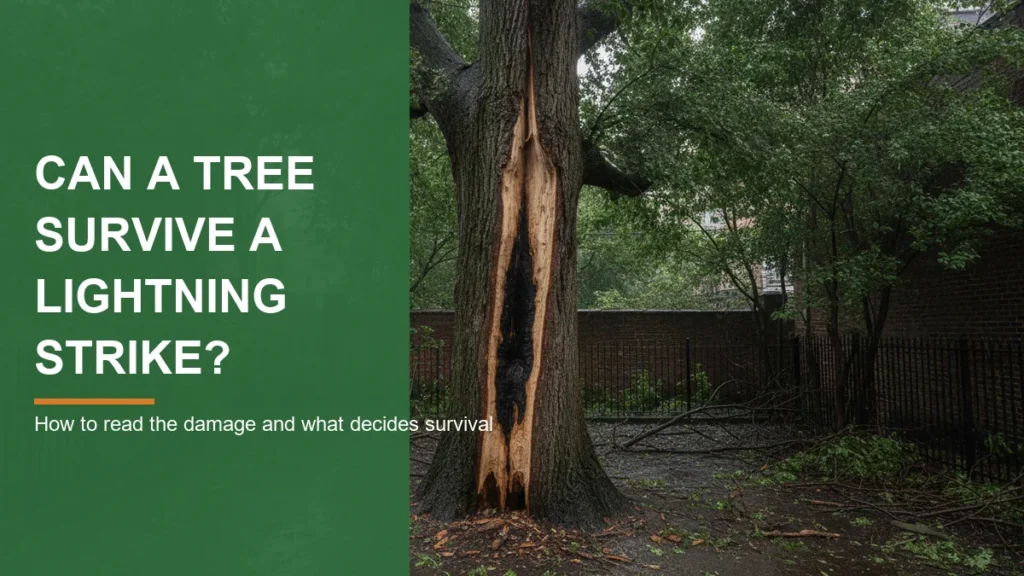
A summer storm rolls over the five boroughs, a flash lights the block, and the next morning there is a long strip of bark peeled off the old oak in the backyard. The first question almost every homeowner asks is simple: is the tree finished? The honest answer is, it depends, and a surprising number of lightning-struck trees pull through. Whether yours does comes down to where the bolt traveled inside the wood, and the smartest first move is a calm look rather than a chainsaw. If the damage looks serious or the tree threatens the house, that is the moment to call an emergency tree service rather than guess. Lightning is not rare in New York City. Tall street and yard trees are often the highest point on a block, which is exactly what a bolt looks for. This guide walks through what a strike does inside a tree, how to read the marks it leaves, what really decides survival, and the steps that give a damaged tree its best shot.
The Short Answer
Yes, a tree can absolutely survive a lightning strike, and plenty do. The damage that kills a tree is rarely the dramatic scar you see on the outside. It is the hidden injury to the thin layer of living tissue just under the bark, the cambium, that the current can literally “cook” as it passes through. If the bolt ran mostly along wet outer bark, the tree often recovers. If it drove through the moist inner wood and killed the cambium all the way around the trunk, the tree usually cannot move water and nutrients anymore, and it declines.
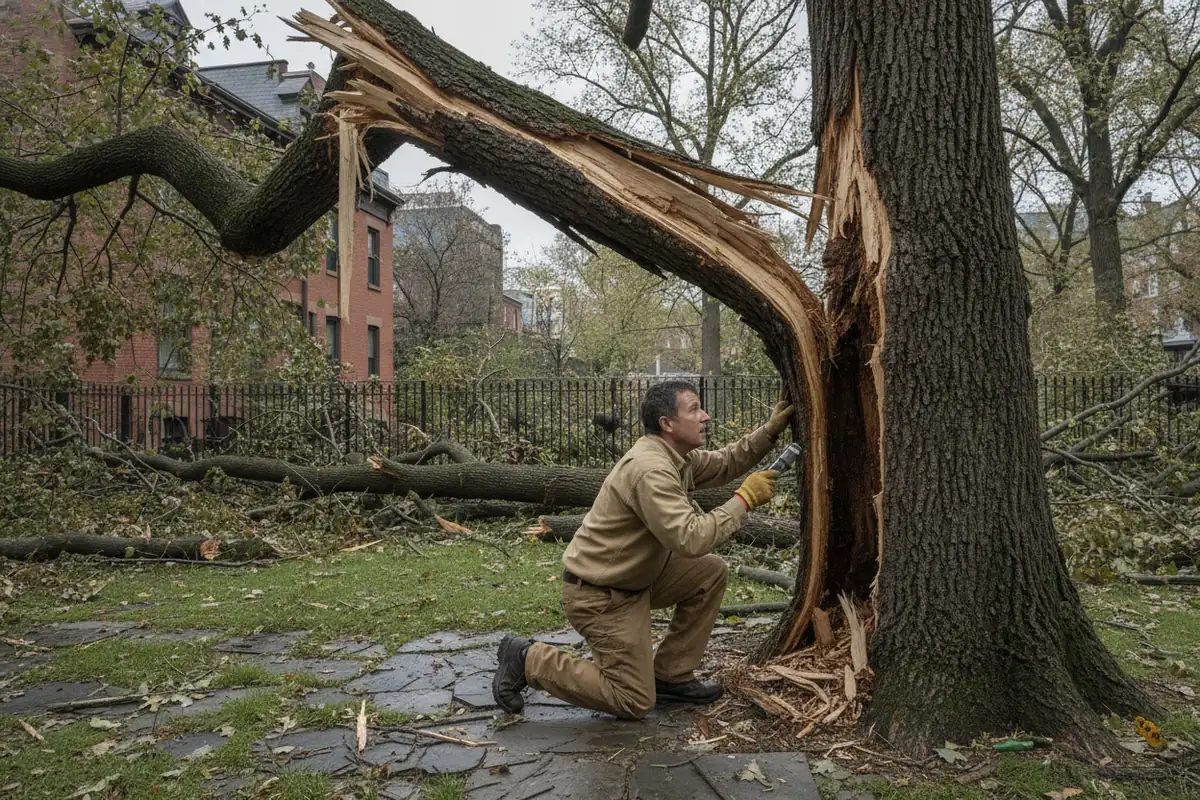
So a tree with a single scorched stripe and a full, green canopy is often a survivor. A tree that was split, that has cracks circling the trunk, or that browns out within days is in far more trouble. The trick is knowing the difference, and that is what the rest of this article is for.
Did you know?
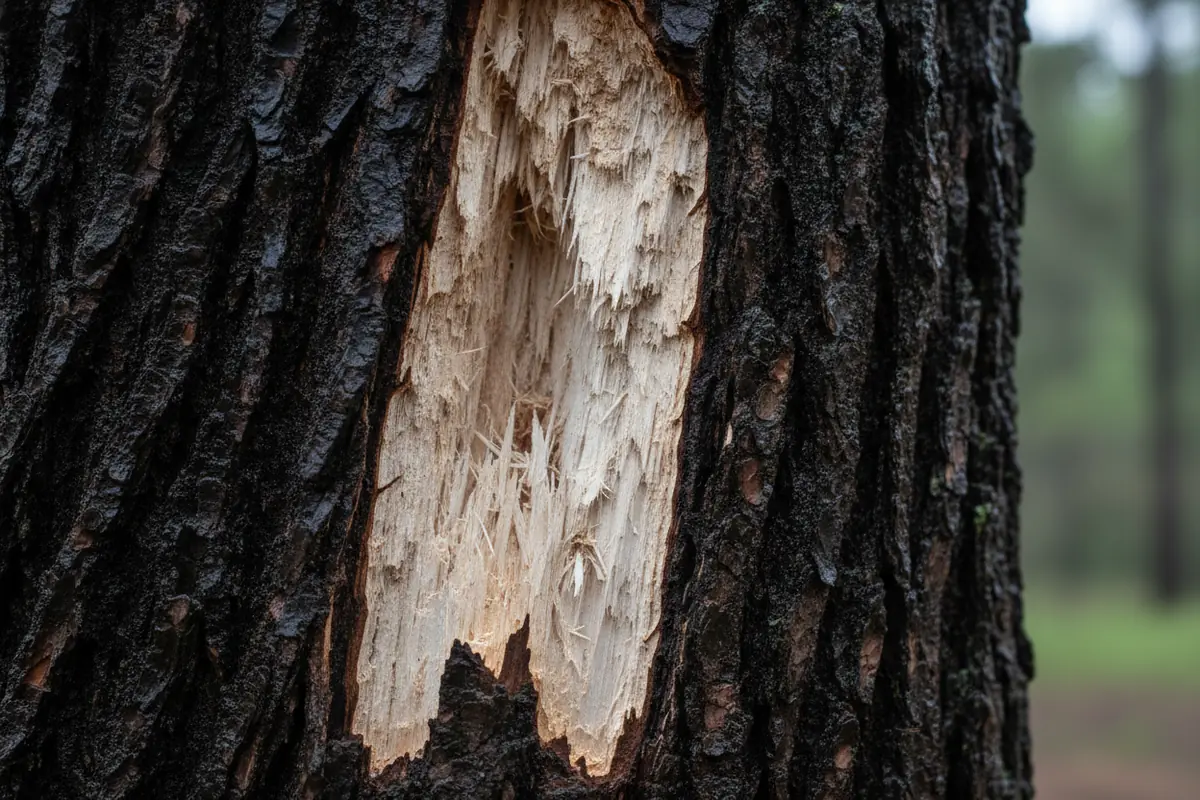
Lightning often follows the path of least resistance, which on a tree is the film of water on the bark and the wet sapwood just beneath it. That is why a strike can blow off a long ribbon of bark and yet leave a tree alive. The water flashes to steam and the pressure tears the bark free, but the explosion travels along the surface instead of frying the whole trunk.
What Lightning Does to a Tree
A lightning channel carries an enormous amount of energy in a fraction of a second. When it reaches a tree, the moisture in the bark and outer wood superheats and flashes to steam almost instantly. That sudden pressure is what splits bark, throws splinters, and gouges the long furrows you often see running down a struck trunk. The US Forest Service notes that the violence of a strike is as much a steam explosion as it is an electrical burn.
Underground, the charge keeps going. It spreads through the wet soil around the roots, which can crack or heave the ground near the base and injure the root system you cannot see. That hidden root damage is one reason a tree that looks survivable at first can still slip into decline months later. The whole event, from crown to soil, takes less time than a blink.
People often ask: why did the tree next door get hit and not mine?
Lightning favors the tallest, most isolated, and often the wettest targets. A lone oak or tulip tree standing above the rest of a yard, a tree on a high spot, or one with deep roots reaching damp soil can all be more likely to take a strike. Species with high moisture content and rough bark tend to be hit more visibly. It is rarely about a single tree being unlucky and more about geometry and water.
How to Read the Damage
Most lightning damage announces itself on the trunk. Walk the tree slowly and look for a continuous crack or a strip where the bark has been blown clean off, often spiraling from high in the canopy down to where the current entered the ground. You may find splintered wood, scorched edges, or a deep furrow. A clean, healthy tree pruning cut looks nothing like the ragged, torn wounds lightning leaves behind.
Then check the canopy and the base. Leaves that wilt, curl, or brown within a week or two point to serious internal injury. Cracked or upheaved soil near the roots is a sign the charge grounded out there. Note whether the damage runs down one side only or appears to circle the trunk, because a wound that wraps all the way around is far more dangerous to the tree than one long stripe on a single face.
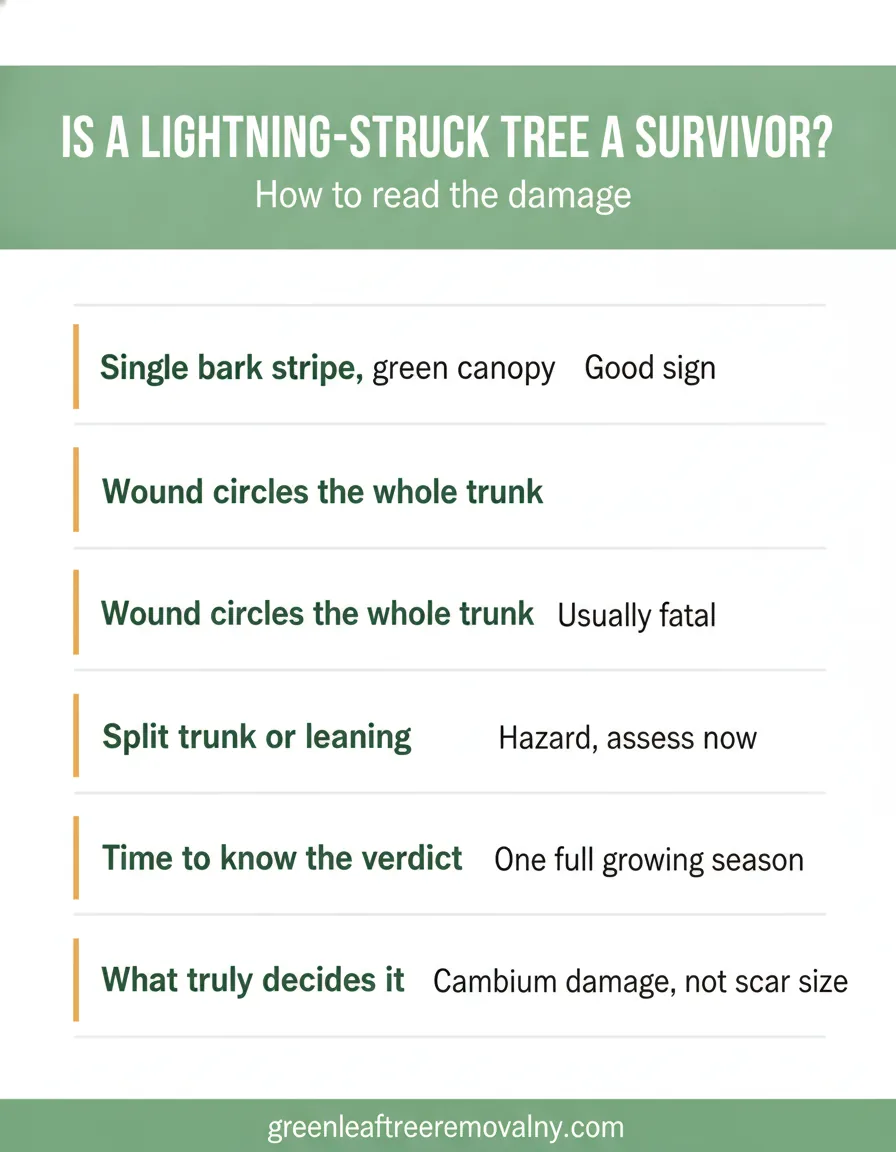
Some strikes leave almost no mark at all, especially when the bolt traveled through wet inner wood without blowing off bark. If a healthy tree suddenly starts to fade in the days after a storm, treat that decline itself as a symptom and consider a professional tree risk assessment before you assume it is something else.
What Decides Whether it Lives
A handful of factors separate the trees that bounce back from the ones that do not. None of them is about the size of the visible scar, which surprises most people. It is the combination underneath that matters.
- How far the cambium was injured. Damage on one face can heal over. A burn that circles the whole trunk cuts off the tree’s plumbing and is usually fatal.
- Where the bolt traveled. A surface strike along wet bark is survivable. One that drove through the inner sapwood does far more hidden harm.
- The tree’s health before the strike. A vigorous tree has the reserves to wall off wounds and push new growth. A stressed or diseased one often does not.
- Species and age. Some trees compartmentalize damage better than others, and a mature specimen in good shape often outlasts a young or already-struggling tree.
- Aftercare. Watering through dry spells, careful cleanup of broken limbs, and watching for pests give a damaged tree its best chance to recover.
Researchers at Michigan State University Extension make the same point: the verdict on a struck tree is best delivered over a full growing season, not in the first panicked week. A tree that leafs out normally the following spring and holds steady bark color has likely made it. One that keeps declining or sheds bark in widening patches has not.
Pro tip: Resist the urge to do anything drastic in the first few days. Do not start cutting into the trunk, sealing wounds with paint or tar, or fertilizing heavily to force growth. Wound dressings can trap moisture and feed decay, and a heavy feed stresses a tree that is already trying to survive. Clean up obviously broken and hanging limbs for safety, keep the tree watered, and give it time to show you what it is going to do.
What to Do in the Weeks After a Strike
Once the storm passes and the tree is safe to approach, a measured routine gives it the best odds. The goal is to reduce stress, remove hazards, and watch closely without overreacting.
- Make it safe first. Keep people away from hanging or cracked limbs and from any branch resting on a wire. Damage near power lines is never a do-it-yourself job.
- Remove broken limbs cleanly. Shattered branches invite pests and decay. Have them pruned back to sound wood rather than torn off.
- Water through dry weather. A struck tree is working hard to recover. Steady deep watering during summer dry spells supports the roots and canopy.
- Hold off on heavy feeding and wound paint. Let the tree set its own pace. Skip the fertilizer push and skip sealing the wounds.
- Watch for pests and decay. Wounded bark and stressed wood attract borers and fungus. Catching an infestation early can be the difference.
- Get a professional opinion. If the trunk is split, the wound circles the tree, or it stands over a building, have it assessed before the next storm.
When the assessment shows the tree cannot be saved, or it has become a hazard leaning over a home or sidewalk, removal is the responsible step. A dead or structurally compromised tree is far more dangerous in the next storm than a sound one.
Please note: This article is general information only and is not a substitute for an on-site inspection. Work on large or storm-damaged trees, and any tree touching or near power lines, should be left to a qualified professional. For a street tree in New York City, a permit from NYC Parks is required before any pruning or removal. GreenLeaf Tree Care is not liable for outcomes from actions taken based on this content. Always confirm requirements with a licensed professional and your local authority.
Download the free quick guide
Save this as a PDF to keep on hand.
Lightning-Struck Tree Checklist (PDF)Frequently asked questions
Sources and references
- International Society of Arboriculture – Lightning protection for trees (Trees Are Good)
- Michigan State University Extension – Lightning and trees
- US Forest Service – Learn about trees
What to do next: if a storm left a tree cracked, scorched, or quietly fading, do not guess at it from the ground. Make the area safe, hold off on cutting, and have the trunk and roots looked at by someone who reads this damage every season. GreenLeaf Tree Care assesses storm and lightning damage across New York City’s five boroughs and surrounding counties. Get in touch for an inspection and we will tell you honestly whether your tree can be saved or should come down.