

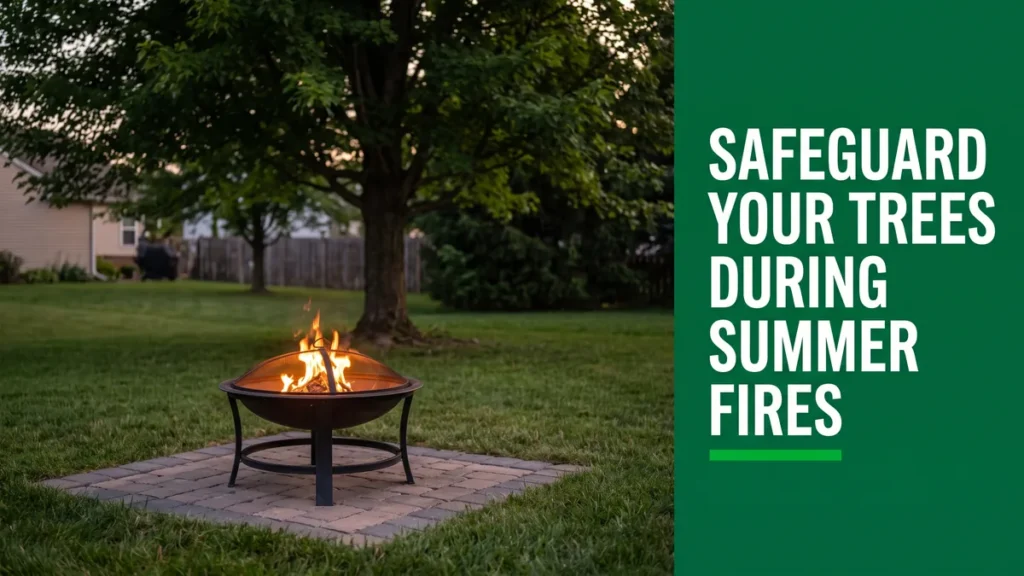
Nothing says summer in the backyard like a grill going and a fire pit crackling after dark. What most people never think about is the tall, leafy neighbor standing right over all of it. To protect trees from heat and fire, the single most important move is distance: keep open flame and radiant heat far enough from trunks, low branches, and roots that the tree never feels it. A scorched canopy or a smoldering root can turn into a genuine hazard, and by the time you notice, you may be calling for emergency tree service instead of enjoying the weekend.
This is not a warning to give up the fire pit. It is a quick guide to setting things up so your grill, chiminea, and bonfire can coexist with the big shade trees that make a New York City backyard worth sitting in. Here is how fire and heat actually damage trees, the safe distances to keep, and how to spot trouble early.
How Heat and Fire Actually Hurt a Tree
You do not need flames touching a tree to injure it. When you want to protect trees from heat and fire, it helps to know that damage comes in a few different forms, and some are sneakier than a scorched branch.
- Radiant heat. A fire pit or grill throws heat sideways and upward. Leaves and thin bark within a few feet can scorch, brown, and die even without direct contact.
- Direct flame and embers. Low-hanging branches over a fire, or drifting sparks, can ignite dry foliage. A dead or drought-stressed tree is especially flammable.
- Soil and root heat. A fire pit set directly over the root zone bakes the soil and can damage or kill the shallow feeder roots that keep the tree fed and watered.
- Trunk scorch. Heat against the base of a trunk kills patches of living tissue under the bark, leaving wounds that invite decay and insects for years afterward.
Quick take: Fire hurts trees three ways: radiant heat scorches leaves and bark, flames and embers can ignite dry foliage, and heat in the soil cooks the roots. Distance and a proper fire base solve all three.
Safe Distances for Grills, Fire Pits, and Chimineas
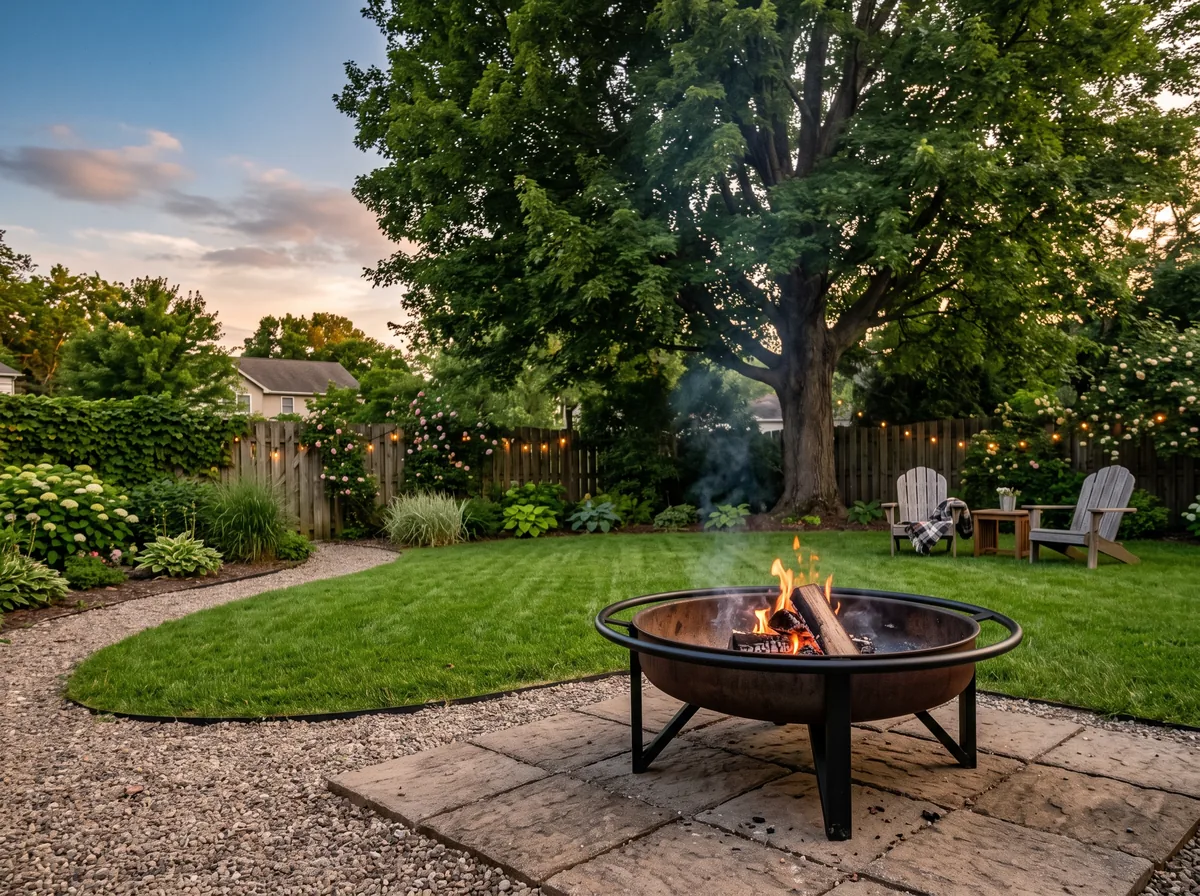
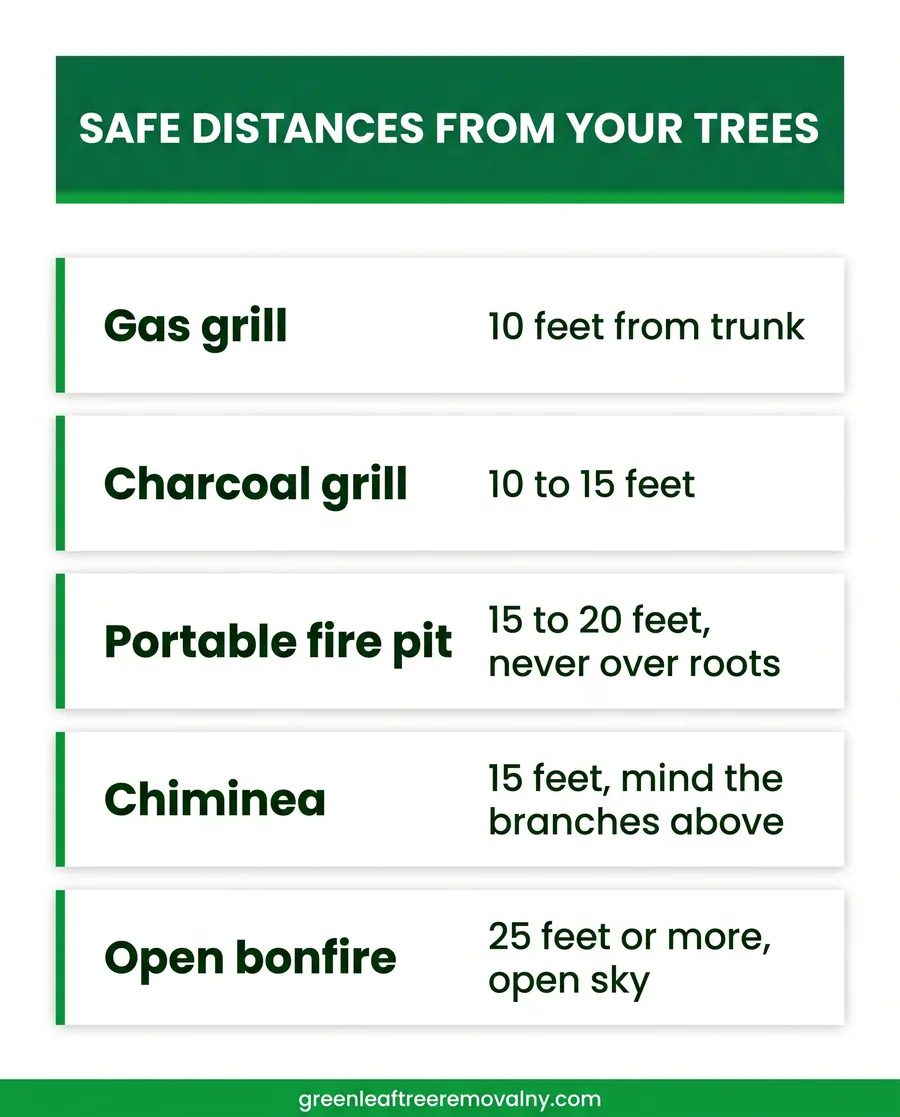
There is no single magic number, because a small tabletop grill and a roaring bonfire are very different animals. But these are sensible minimums for a healthy tree in a typical backyard. When in doubt, more distance is always better, and always check your local fire code, which may set stricter rules.
| Heat source | Minimum from trunk | Minimum below branches | Extra caution |
|---|---|---|---|
| Gas grill | 10 feet | 10 feet of clearance | Watch for grease flare-ups under low limbs |
| Charcoal grill | 10 to 15 feet | 12 feet of clearance | Embers can drift; keep a lid and spark screen |
| Portable fire pit | 15 to 20 feet | 15 feet of clearance | Never place over the root zone; use a heat shield |
| Chiminea | 15 feet | 15 feet of clearance | Directs heat upward, so overhead branches matter most |
| Open bonfire | 25 feet or more | Wide open sky above | Highest risk; keep well clear of any canopy |
Notice that the clearance below branches often matters as much as the distance from the trunk. Heat rises, so a fire pit tucked under a low canopy can scorch leaves fifteen feet up even if the trunk is a safe distance away. If low limbs are in the way, a light, professional pruning is safer than moving the fire under them, and if a tree is already dead or dangerously close, planning a proper tree removal across Brooklyn is the smart call before fire season.
Signs Your Tree Took Heat Damage
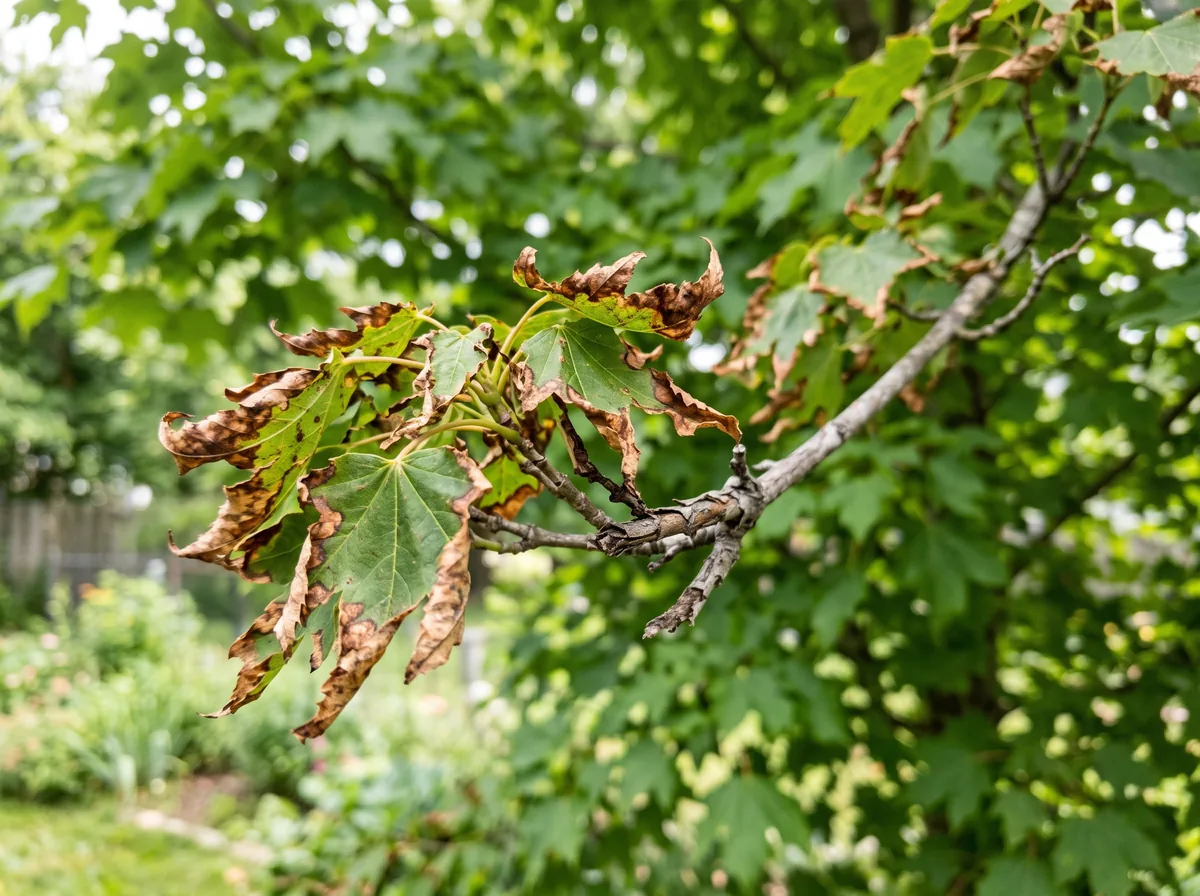
If the fire pit has been living under the maple all summer, look the tree over now rather than waiting for next spring. Heat damage tends to show up on the side facing the heat source first. Watch for:
- Browned, crispy, or curled leaves concentrated on the side nearest the fire or grill.
- Scorched or cracked bark low on the trunk, sometimes with a discolored patch.
- Leaves dropping early on just one side of the canopy.
- Dead or brittle low branches that were green earlier in the season.
Red flag: a fire near a stressed tree
A tree that is already drought-stressed, diseased, or partly dead is both more likely to be harmed by heat and far more likely to catch fire. Dead limbs and dry, dead foliage are essentially kindling hanging over your gathering. If a tree over your fire area looks unhealthy, get it assessed before you light anything.
Minor leaf scorch on an otherwise healthy tree is usually survivable, and the tree will push new growth. Bark and root damage is more serious and harder to see. For solid, non-commercial guidance on how heat and drought stress trees and what helps them recover, the International Society of Arboriculture is a reliable place to start.
Setting Up a Tree-Safe Fire Zone
Open flame is dangerous, and fire safety rules vary by town and county. The guidance below is general and does not replace your local fire code or the manufacturer’s instructions for your grill or fire pit. Never leave a fire unattended, keep water or an extinguisher close, and if a tree near your fire area looks dead or hazardous, have a certified arborist evaluate it. GreenLeaf Tree Care is not liable for outcomes from actions taken based on this article.
- Pick the spot first. Choose an open area away from trunks, low branches, fences, and the house before you buy or place any fire feature.
- Measure the clearance. Use the distances above as minimums, and add more for larger fires or windy sites.
- Protect the ground. Set portable fire pits on a non-combustible base like pavers or a heat shield, never bare soil over roots or dry grass.
- Clear the overhead. Make sure there is open sky above the fire, with no branches reaching over it.
- Prune or remove hazards first. Deal with dead limbs and overhanging branches before fire season, using a professional for anything over your head.
- Mind the wind. Skip the fire on gusty evenings when embers can drift into a canopy or a neighbor’s yard.
- Keep water ready. A hose, bucket, or extinguisher within reach means a stray ember never becomes an emergency.
- Fully extinguish. Douse and stir the ashes until cold. A smoldering fire near roots or mulch can flare up hours later.
Pro tip
Keep a light garden hose coiled by the fire area all summer. It doubles as ember insurance and as an easy way to give a heat-stressed tree a deep, slow soak at the end of the night, which is exactly what a tree battling July heat wants.
Do Not Dismiss Plain Summer Heat
Fire is the dramatic threat, but the steady grind of a hot, dry New York City summer stresses trees just as much. Heat and drought shrink the canopy’s ability to cool itself, and a thirsty tree is more brittle, more flammable, and more prone to dropping limbs. Deep, infrequent watering beats frequent light sprinkling, and a ring of mulch over the root zone holds moisture and keeps soil temperatures down.
Save yourself the trouble
A few dollars of mulch and a weekly deep soak through July and August cost far less than removing a tree that died of combined heat and root stress. Prevention is almost always cheaper than replacement when it comes to mature shade trees.
“Had the fire pit right under the birch all summer. By August that whole side of the tree was brown and crispy. Moved the pit twenty feet out and the tree finally recovered the next year.”
Homeowner, Suffolk County
Download the free quick guide
A one-page checklist for enjoying summer fires without scorching your trees.