

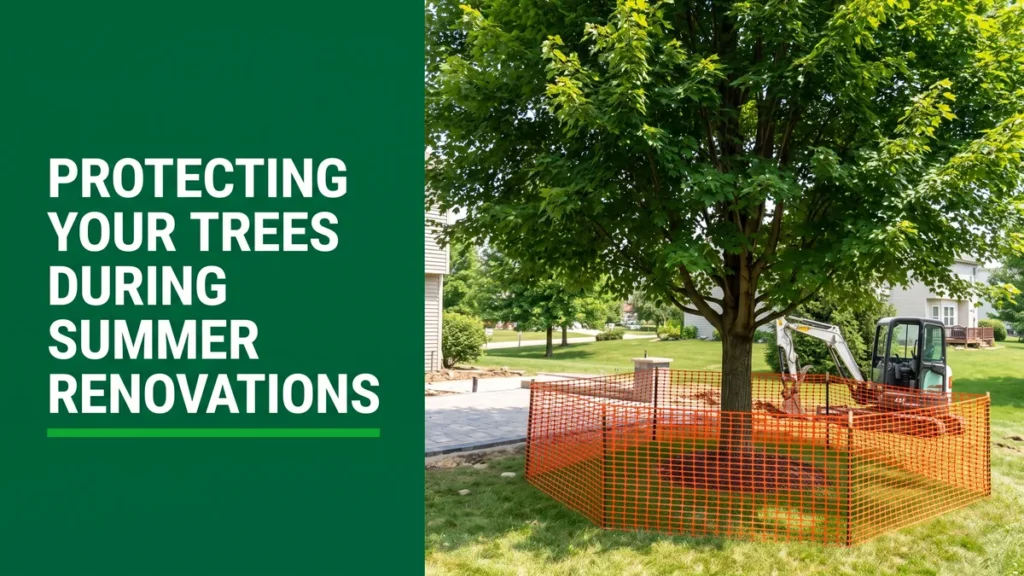
Here is the part most homeowners miss when the contractors show up: the biggest risk to your trees during a summer backyard project usually is not the saw or the excavator, it is what happens under the soil. Protecting trees during construction comes down to guarding the roots and the trunk from the day work starts, not patching up damage after the patio is poured. If a mature tree sits anywhere near your build zone, a quick tree risk assessment before the first shovel goes in is the cheapest insurance you can buy.
Summer is peak renovation season across Brooklyn, Queens, and the Long Island suburbs, and it is also when we get the most calls about trees that looked fine in June and started thinning out by the following spring. The damage is almost always avoidable. Below is exactly how construction hurts a tree, what a real protection zone looks like, and the mistakes that quietly kill trees months after the crew packs up.
How Construction Damages a Tree
A tree does not read a set of blueprints, so it has no idea a deck is coming. The reason protecting trees during construction matters so much is that the injuries are slow and mostly invisible. By the time the canopy shows stress, the real harm happened weeks or months earlier, underground. Four things do the vast majority of the damage:
- Soil compaction. Trucks, mini-excavators, and even repeated foot traffic press the soil into a hard pan that chokes off air and water to the roots. Most feeder roots sit in the top 12 to 18 inches of soil, exactly where the equipment rolls.
- Root severing. Trenching for footings, drainage, gas lines, or a pool can slice through major roots. Cut enough of them and the tree loses both its anchor and its water supply.
- Grade changes. Adding or scraping away even a few inches of soil over the root zone changes how much oxygen reaches the roots. Piling fill against the trunk is one of the fastest ways to rot the base.
- Trunk and bark wounds. A single scrape from a bucket or a load of lumber leaning on the bark opens the door to decay and insects that a healthy tree would normally shrug off.
Quick take
The roots you cannot see are the part that matters. Most construction damage happens in the top foot and a half of soil under the branches, so protecting that zone from compaction, cuts, and fill is the whole game.
Map the Tree Protection Zone Before Anyone Digs
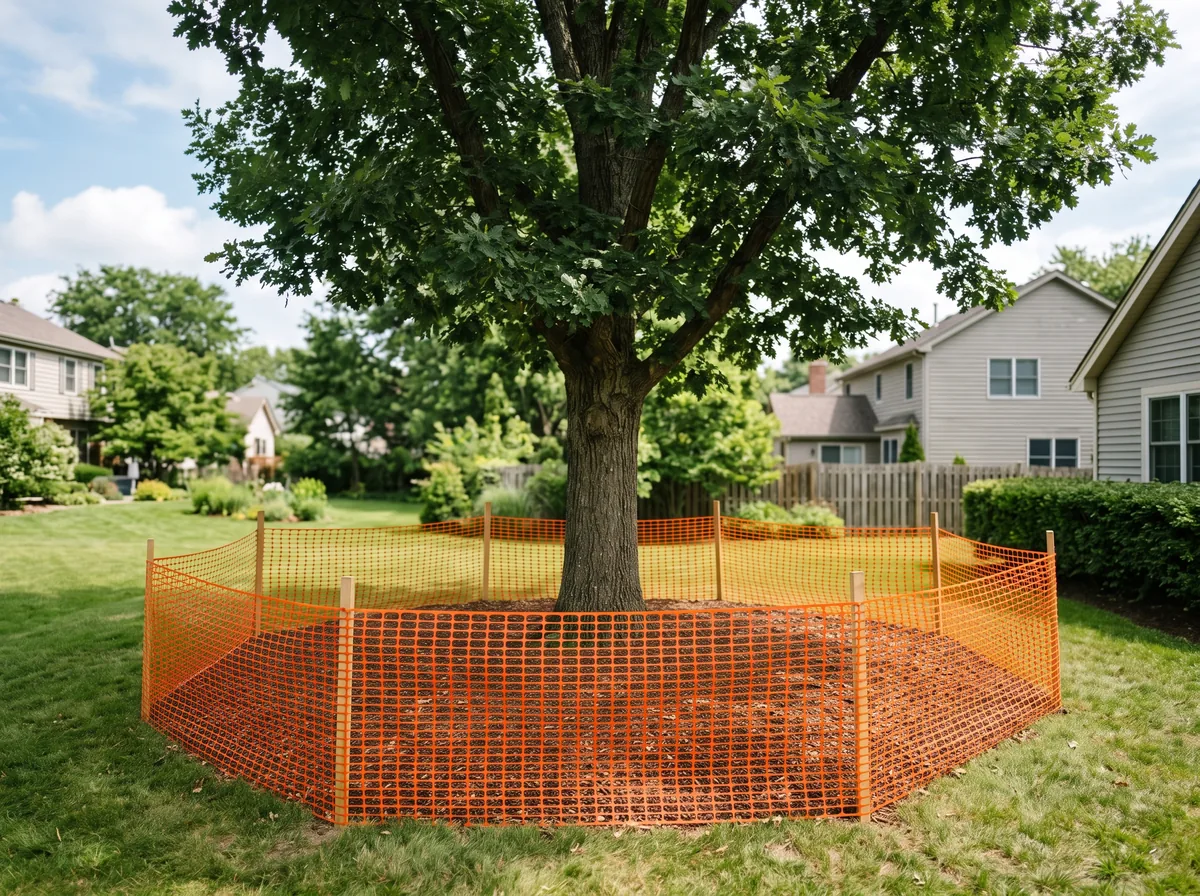
Arborists work off a simple idea called the critical root zone. A rough rule of thumb is one foot of radius for every inch of trunk diameter, measured at chest height. A tree with a 20-inch trunk needs roughly a 20-foot protected radius around it. Inside that circle, you want as little disturbance as possible.
The practical move is to fence it off. Before the project starts, set sturdy construction fencing at the dripline or wider, and treat everything inside as off limits. No parking, no material storage, no washing out concrete tools, no digging. It feels overprotective until you remember that a healthy shade tree adds real value to a home and takes decades to replace.
Pro tip: Put the tree protection zone in writing in your contractor agreement, with the fence line marked on the site plan. A crew that knows the boundary is contractual treats it very differently than a verbal ‘try to be careful.’ Spread a thick layer of wood-chip mulch inside the fence to cushion any traffic that truly cannot be avoided.
Which Renovations Put Trees Most at Risk
Not every project is equally dangerous. A lightweight paver walkway laid by hand is a world away from a pool excavation. Here is how the common summer backyard jobs stack up, and the single most useful protection for each.
| Renovation | Main threat to trees | Risk level | Key protection |
|---|---|---|---|
| Patio or paver install | Grading and light compaction | Moderate | Keep base prep outside the dripline; hand-dig near roots |
| Deck footings | Severed roots at post holes | Moderate to high | Locate posts to miss major roots; auger, don’t trench |
| Pool or large excavation | Massive root loss and grade change | High | Consult an arborist before design is finalized |
| Driveway or heavy paving | Deep compaction from trucks | High | Route equipment away from the root zone; use ground mats |
| Utility or drainage trench | Cutting roots in a straight line | High | Bore under the root zone instead of trenching through it |
| Shed or lightweight structure | Localized compaction | Low to moderate | Set it outside the protected circle |
If your plan lands in the high-risk rows, that is the moment to loop in a certified arborist. Sometimes the fix is as simple as shifting a footing two feet or boring under the roots instead of cutting through them. If a tree is already leaning, hollow, or too far gone to save, it is far better to schedule a planned tree takedown in Brooklyn before the build than to reroute the whole project around a tree that will not survive anyway.
The Mistakes That Show up Months Later
The frustrating thing about construction stress is the delay. A tree can look completely normal all summer, then decline the next year once its shrunken root system cannot keep up with the demands of a hot New York City July. Watch for these warning signs in the two seasons after any project:
- Smaller than normal leaves, or leaves that scorch and brown at the edges early.
- Thinning in the upper canopy, or whole branches that leaf out late or not at all.
- A sudden flush of sprouts along the trunk and lower limbs, which is often a stress response.
- Mushrooms or soft, dark areas at the base, a sign the root collar was buried or wounded.
Did you know
Trees along Long Island’s older streets and in Brooklyn backyards are frequently already living in compacted, restricted soil. That means they have far less margin for construction stress than a tree growing in an open yard in Suffolk County, so the same project can be riskier in the city than out east.
If you spot any of these signs, do not wait for the tree to ‘bounce back.’ Early attention, deep watering, mulch, and a professional evaluation give a stressed tree its best shot. For the science behind construction impacts, the International Society of Arboriculture and MSU Extension both publish clear, non-commercial guidance worth reading before you break ground.
A Homeowner’s Tree Protection Checklist
Tree work near an active construction site can be hazardous, and every property is different. The steps below are general guidance, not a substitute for advice from a certified arborist who has seen your specific trees and soil. Confirm any permit requirements with your local municipality before removal or major pruning, and never attempt work near power lines. GreenLeaf Tree Care is not liable for outcomes from actions taken based on this article.
- Identify the keepers early. Decide which trees are staying before the design is locked, not after the contractor is on site.
- Get a pre-construction evaluation. Have an arborist check the health and root zone of any tree near the work area.
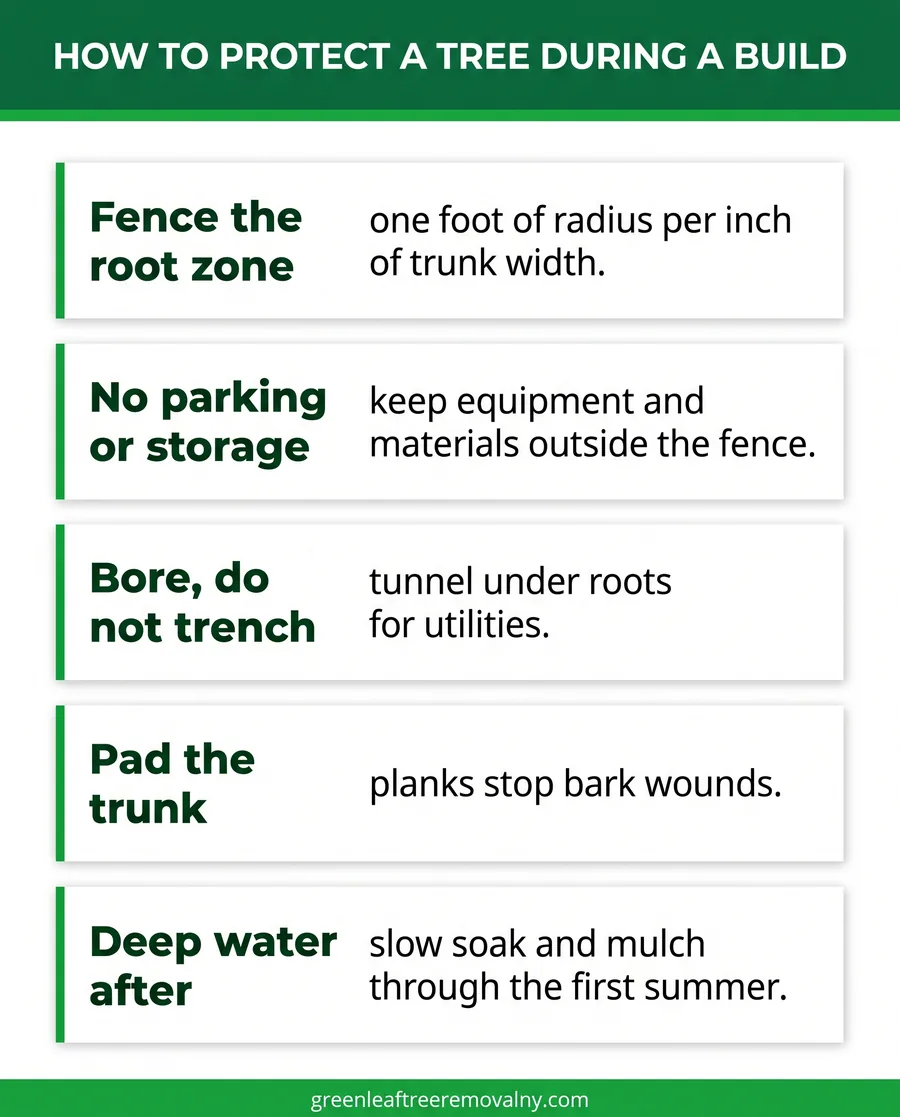
- Fence the protection zone. Set construction fencing at the dripline or wider, and keep it up for the whole project.
- Write it into the contract. Mark the fence line on the plan and make the no-go zone a written condition.
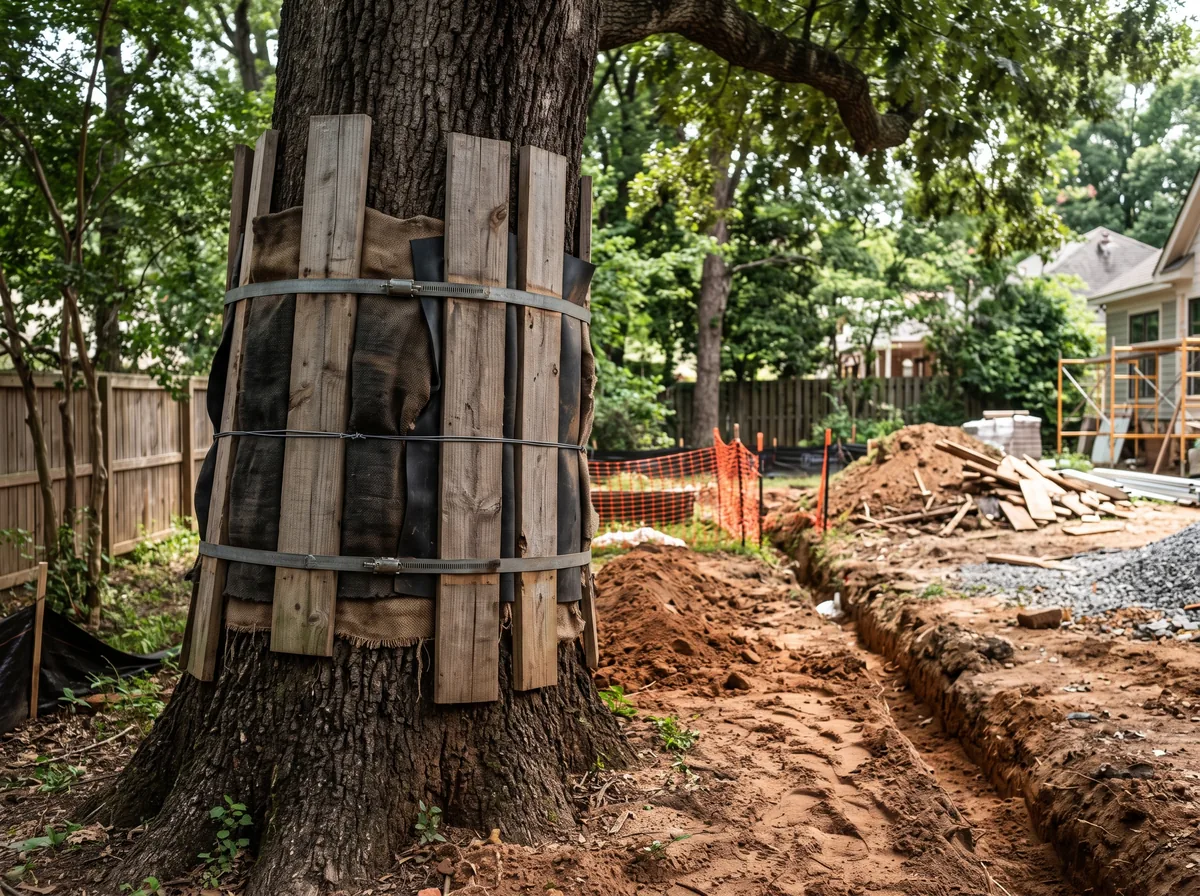
- Protect the trunk if it is close. Use planks or padding on trunks near tight work areas to prevent bark wounds.
- Route equipment and storage away. Keep vehicles, spoil piles, and material stacks off the root zone.
- Bore, don’t trench, near roots. For utilities and drainage, tunnel under the root zone whenever possible.
- Water deeply after the work. Give stressed trees a slow, deep soak through the first summer and mulch the root zone.
Pro tip: Photograph each tree and its root zone before work begins, then again a few weeks after. Dated photos make it far easier to catch early decline and to sort out responsibility with a contractor if a tree is damaged.
“Redid the backyard, added a patio, and the big maple looked perfect all summer. Next spring half the canopy never came back. Wish someone had told me to fence the roots off first.”
Homeowner, Nassau County
Download the free quick guide
A one-page checklist to keep your trees safe from the first shovel to the final cleanup.
Frequently Asked Questions
Planning a summer backyard project with a mature tree in the mix? GreenLeaf Tree Care can assess your trees, mark a protection zone, and handle any pruning or removal that has to happen first, from Queens and Staten Island to Nassau and Suffolk County. Get in touch before the crew arrives and keep your trees standing long after the renovation is done.