

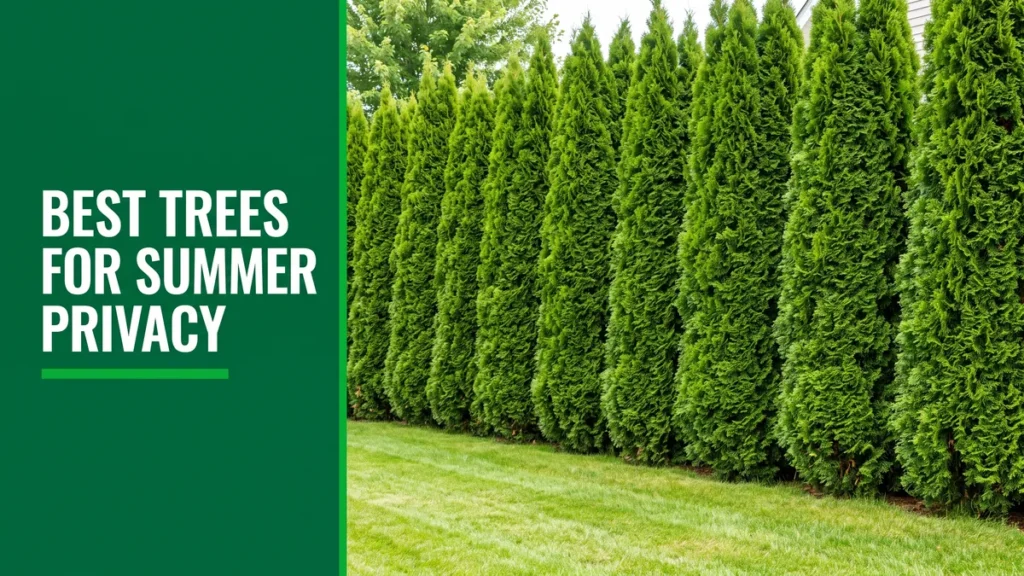
Summer is when you actually live in your backyard, and it is also when you notice exactly how much your neighbors can see of it. A living green screen beats a bare fence every time, and the best trees for privacy give you a tall, dense wall of foliage that softens noise, blocks sightlines, and looks good doing it. The catch is that the right choice depends on your space, your soil, and how patient you are, because a tree that screens a Long Island lot beautifully can overwhelm a small Brooklyn yard. A little planning now, and maybe some help from a landscaping and tree care team, saves you from ripping everything out in five years.
Below is a practical, New York City-specific rundown of the top privacy trees, how fast they grow, how big they get, and how to plant a screen that fills in without crowding your house or your property line. No hype, just what actually works in our climate.
What makes a good privacy tree
Before you fall for a photo of a perfect green wall, it helps to know what separates the best trees for privacy from the ones that disappoint. Five traits matter most:
- Evergreen foliage. Deciduous trees drop their leaves and your privacy with them every fall. For year-round screening, evergreens win.
- Density. You want branches that hold foliage all the way to the ground, not a bare trunk with a tuft on top.
- The right growth rate. Fast growth gets you cover sooner but often means weaker wood and a shorter life. Slower growers last.
- A mature size that fits. This is the one people ignore. A tree that tops out at 60 feet has no business four feet from a fence.
- Hardiness for our region. New York City and Long Island sit in USDA zones 6 to 7, with salt, wind, and clay to contend with near the coast.
Quick take
The best privacy tree is a dense evergreen whose mature size matches your space. Match the tree to the spot first, then worry about how fast it grows. Speed is worthless if the tree outgrows the yard.
The best trees for privacy in the New York City area
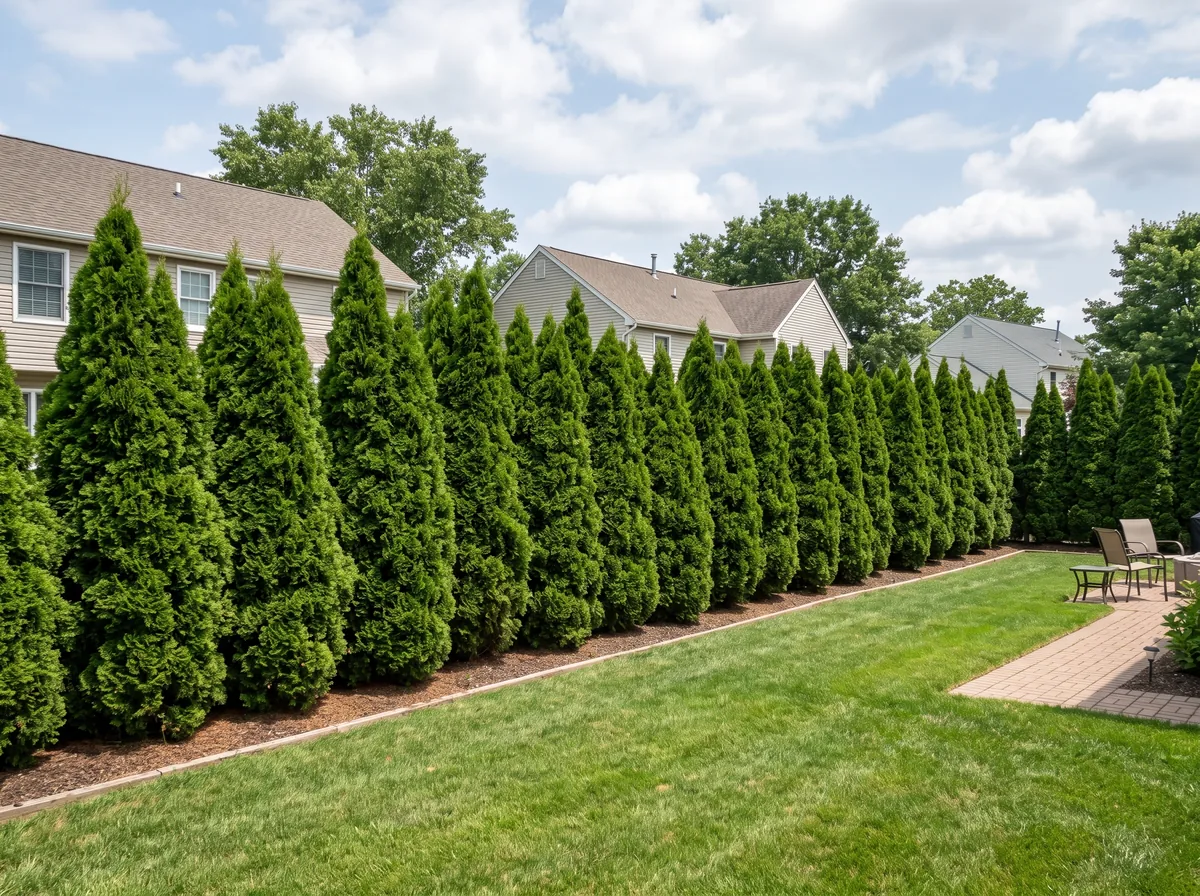
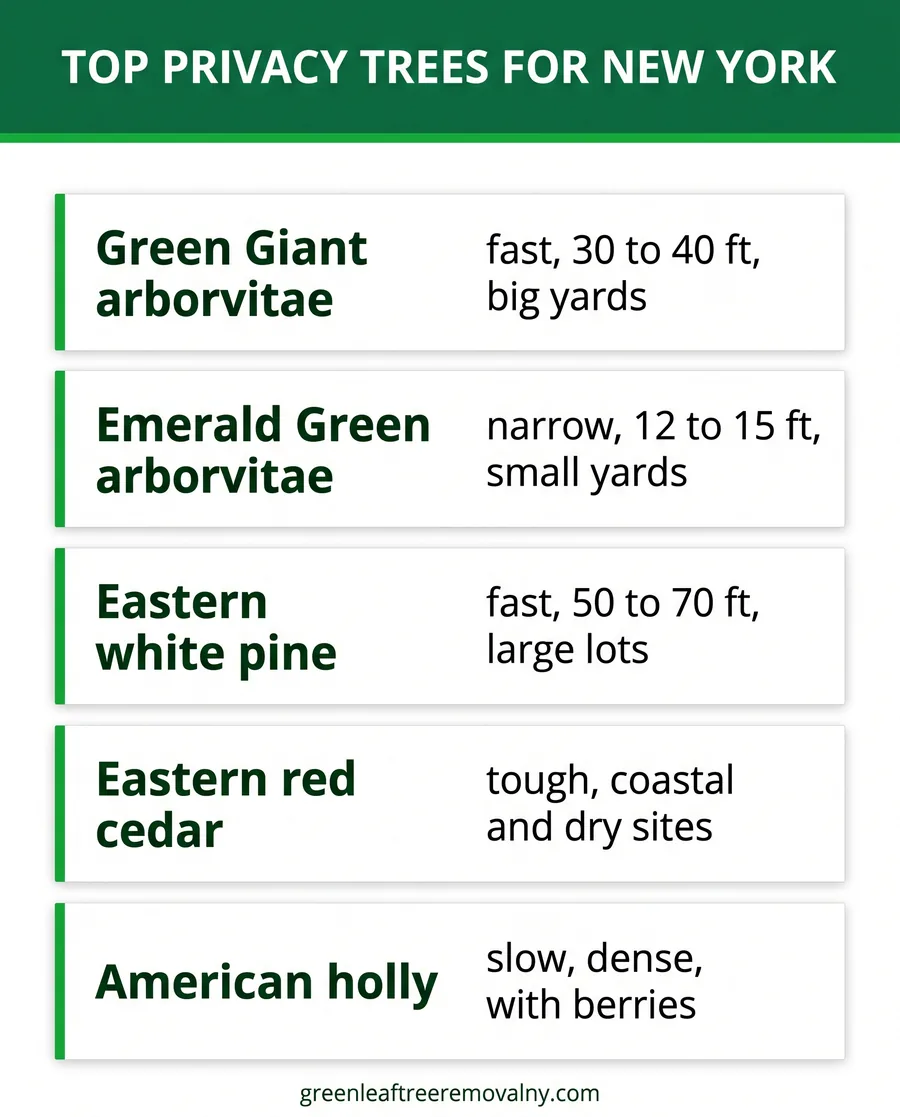
These are reliable performers for the NYC metro and Long Island. The right pick depends on how much room you have and how quickly you need cover. Heights are approximate mature sizes in our region.
| Tree | Evergreen? | Growth rate | Mature height | Best for |
|---|---|---|---|---|
| Green Giant arborvitae | Yes | Fast | 30 to 40 ft | Large yards needing quick, tall cover |
| Emerald Green arborvitae | Yes | Moderate | 12 to 15 ft | Narrow spaces and smaller yards |
| Eastern white pine | Yes | Fast | 50 to 70 ft | Big properties with lots of room |
| Norway spruce | Yes | Moderate to fast | 40 to 60 ft | Wide lots wanting a dense, formal wall |
| Eastern red cedar | Yes | Moderate | 30 to 40 ft | Tough, dry, or coastal Long Island sites |
| American holly | Yes | Slow | 15 to 30 ft | A dense, classic evergreen with berries |
| Skip laurel | Yes (shrub) | Moderate | 10 to 18 ft | Lower screens along a patio or fence |
For most suburban lots in Nassau and Suffolk, Green Giant arborvitae is the go-to for fast, tall cover, while Emerald Green is the darling of tighter city and inner-suburb yards. On dry, sandy, or salt-exposed coastal sites, Eastern red cedar shrugs off conditions that make fussier trees sulk. If you want a next read on trees suited to our soils and winters, our guide to native New York City trees pairs well with this one.
Fast growers, slow growers, and the arborvitae trap
Everyone wants privacy yesterday, which is why fast-growing trees sell so well. Fast growth is not free, though. Quick-growing species like Leyland cypress and some hybrid poplars put on impressive height early, then tend toward weak wood, disease, and a shorter lifespan. A screen that shoots up in three years and starts failing in ten is a poor trade.
Red flag: Leyland cypress
Leyland cypress is the classic cautionary tale. It grows fast and looks great at first, then in our humid summers it is prone to bagworms and canker diseases that can brown out and kill whole sections. A dead gap in the middle of a privacy screen is nearly impossible to fill. Many arborists steer New York City homeowners toward Green Giant arborvitae instead, which offers similar speed with far fewer problems.
A smarter approach is to mix speed with staying power. Plant a fast grower for quick cover if you must, but lean on dependable, longer-lived evergreens for the backbone of the screen. For choosing a species matched to your exact conditions, the Arbor Day Foundation’s right-tree-right-place guidance and its tree planting tips are genuinely useful, non-commercial starting points.
How to plant a privacy screen that lasts
Planting near property lines, buildings, and utilities carries real considerations, from setback rules to underground and overhead lines. The guidance below is general and does not replace local ordinances or a site-specific plan. Always call 811 before you dig to have utilities marked, check local setback rules, and consult a certified arborist for large plantings. GreenLeaf Tree Care is not liable for outcomes from actions taken based on this article.
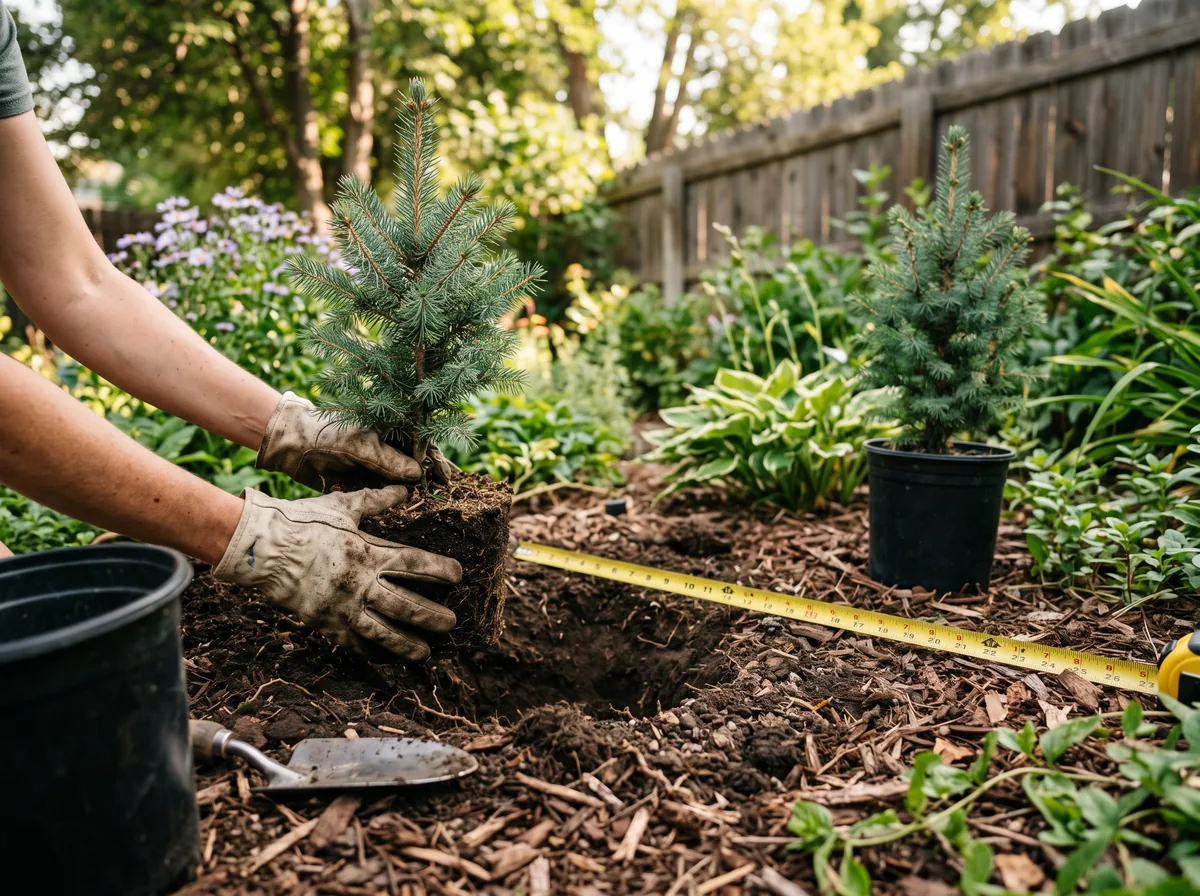
- Check the mature width, not the pot. Space trees so they will touch at maturity without crowding, often 5 to 8 feet apart for arborvitae, more for large evergreens.
- Mind the property line and setbacks. Plant far enough in that the mature tree will not overhang or root into a neighbor’s yard, and confirm local setback rules.
- Stay clear of the house and lines. Keep large species well away from the foundation, and never plant a future 60-foot tree under a power line.
- Call 811 first. Have underground utilities marked before you dig a single hole.
- Plant at the right depth. Set each tree so the root flare sits at or just above grade, never buried, in a hole two to three times the width of the root ball.
- Stagger for density. On a wider bed, a double, offset row fills in faster and screens better than a single straight line.
- Water and mulch. Soak new trees deeply and keep them watered through the first two summers, with a mulch ring kept off the trunks.
Pro tip
Lay a garden hose or string along your planned line and stand where you sit most, the deck or patio, to check the sightlines before you dig. It is a five-minute trick that keeps you from planting a screen that blocks the wrong view or leaves a gap right where the neighbor’s window faces yours.
Keeping your screen healthy for the long haul
A privacy screen is a living thing, not a fence you install and forget. Light annual pruning keeps evergreens dense and shaped, deep watering carries them through hot New York City summers, and a yearly once-over catches pests like bagworms or spider mites before they brown out a section. Healthy trees also resist the storm damage that can tear a gap in your screen overnight.
Now and then a privacy tree outgrows its spot, gets storm-damaged, or dies back, and it has to come out so the rest of the screen can be preserved or replanted. When that day comes, a clean, professional tree takedown across Brooklyn and the metro protects the neighboring trees and your property far better than a risky DIY attempt near a fence line.
Did you know
A well-placed row of evergreens does more than block sightlines. It cuts wind, muffles street and neighbor noise, provides cover for songbirds, and can even trim your cooling costs by shading the house. That is a lot of return from a single row of trees.
“Planted Green Giants along the back fence five years ago, spaced them six feet apart like the arborist said. Now it is a solid green wall and I never see the parking lot behind us. Best yard project we ever did.”
Homeowner, Queens
Download the free quick guide
A one-page guide to choosing, spacing, and planting a privacy screen that lasts.
Frequently Asked Questions
Thinking about a privacy screen but not sure which trees suit your yard, or need to clear space and prep the line before planting? GreenLeaf Tree Care helps homeowners plan, plant, and maintain healthy screens across Staten Island, Queens, and Westchester. Get in touch and let us help you build a green wall that lasts.