

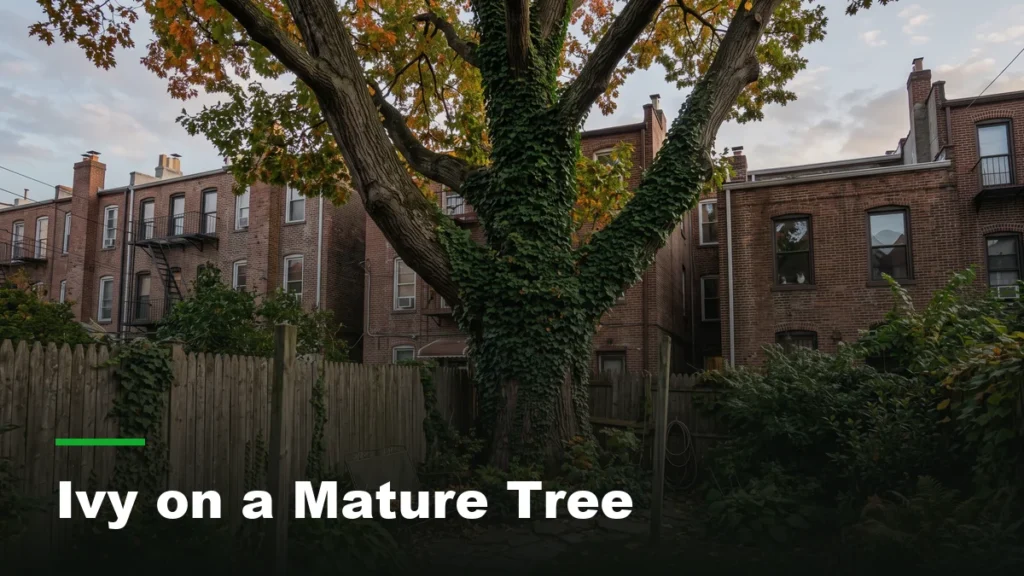
A homeowner in Bay Ridge spent three summers assuming the thick green blanket over her backyard maple was just a hardy vine doing what vines do, until an arborist stopping by for a professional tree risk assessment on a neighboring lot pointed at it and asked how long the ivy had been climbing. Ivy on a mature tree looks like extra greenery. What it often is, is a curtain hiding the trunk’s real condition, and by the time someone notices, the vine has usually had years to work.
None of this means every vine is an emergency. Plenty of mature trees carry a little ground ivy or a few strands of Virginia creeper for decades without issue. The difference is in how far the vine has climbed, how thick its stems have grown, and what it is doing to light, weight, and airflow once it reaches the canopy. Here is how to tell which kind of ivy on a mature tree you actually have.
What ivy and vines actually do to a mature tree
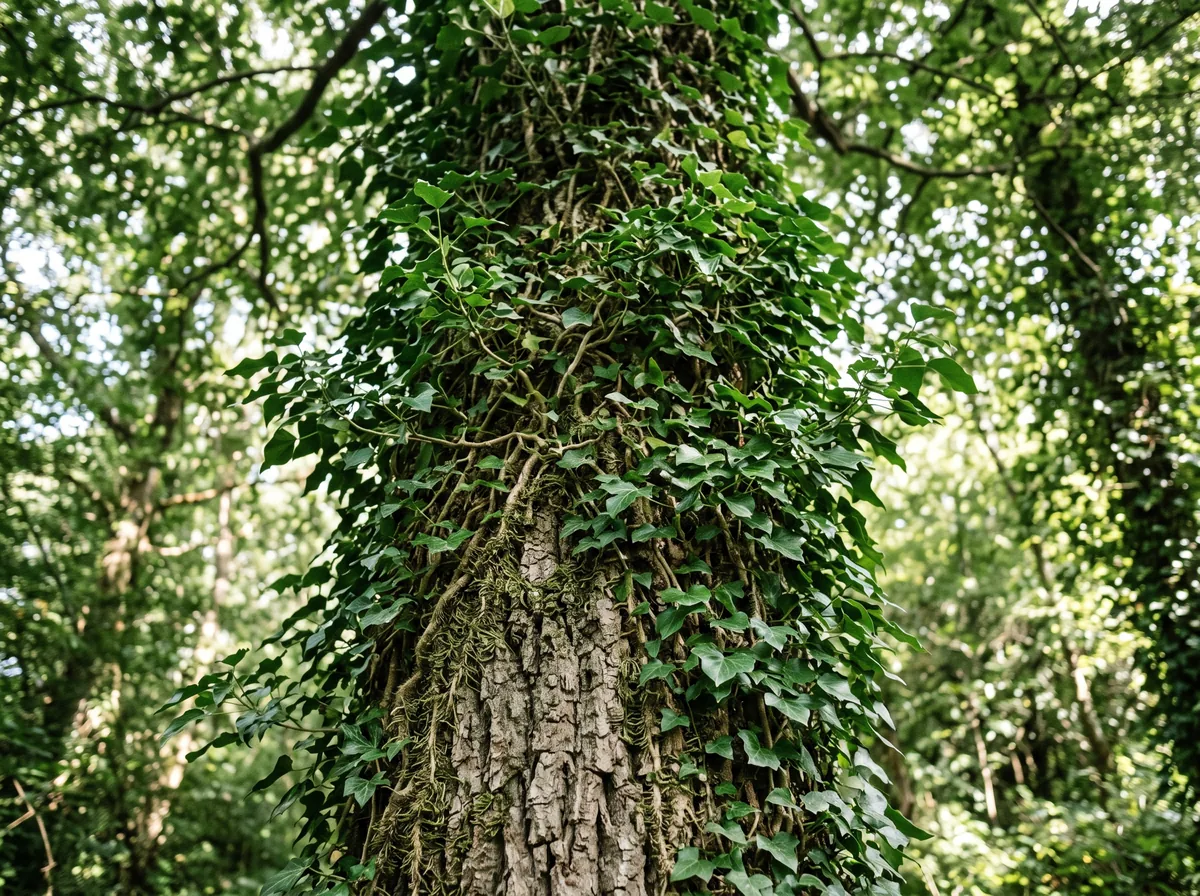
A vine like English ivy, Oriental bittersweet, or an aggressive wisteria does not feed on the tree the way a parasite does. It uses the trunk purely as a ladder, climbing toward sunlight with aerial rootlets or twining stems that grip the bark. The trouble starts once the vine reaches the upper canopy, where its own leaves begin competing directly with the tree’s leaves for light. A mature tree that has spent decades building a full crown suddenly has to share the sunlight it depends on with a plant that spreads fast and asks for nothing in return.
The added weight matters too. A dense vine covering can add hundreds of pounds of foliage and stem across a large canopy, concentrated in exactly the areas most exposed to wind. This is what makes ivy on a mature tree such a different situation from ivy on a young sapling or a low fence. The USDA Forest Service’s invasive species program tracks how aggressively climbing vines like these compete with native trees for light, moisture, and growing space once they establish, which is the same competition playing out one trunk at a time in a Brooklyn backyard.
Warning signs that ivy is taking over a mature tree
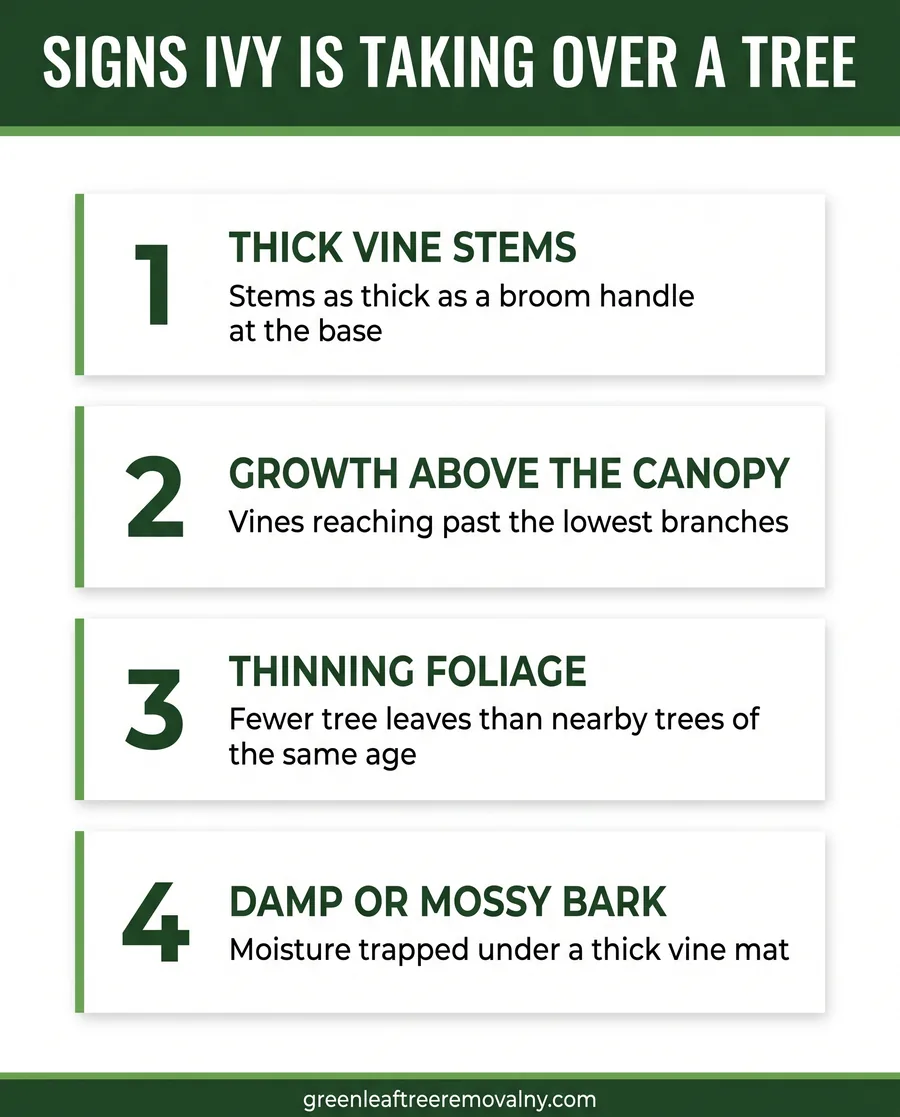
Walk around the base of the tree and look up before you decide the vine is harmless. These are the signs worth taking seriously, roughly in the order they tend to show up.
- Vine stems thicker than a broom handle at the base, which usually means the ivy has been established for several years rather than a single growing season.
- Vine growth visible above the lowest branches, meaning it has reached the canopy and started competing for light rather than sitting quietly on the trunk.
- A canopy that looks thinner or patchier than neighboring trees of the same species and age.
- Bark that stays damp or develops moss and fungus underneath a thick mat of vine growth, since the covering traps moisture against the trunk.
- New sprouts or seedlings of the same vine appearing in the surrounding soil, which signals the plant is mature enough to reproduce nearby.
- A visibly heavier, lopsided canopy on the side carrying the most vine growth, especially after a windy stretch.
Red flag
A trunk you can no longer see clearly because of vine growth is a trunk a certified arborist cannot inspect from the ground either. Cracks, cavities, and decay hide easily under a thick ivy mat, so ivy on a mature tree deserves a closer look rather than an assumption either way. Book a professional inspection before storm season rather than after.
When a vine crosses from cosmetic to a real problem
A single season of light ground cover climbing a few feet up the trunk is mostly a maintenance choice. The homeowner in Bay Ridge was not dealing with that. Her maple’s ivy had reached branches twenty feet up, and the extra foliage was dense enough that the tree’s own leaves toward the interior of the crown had started thinning out, starved of light by the vine sitting on top of them. That pattern, thinning native foliage paired with thick vine growth higher up, is what separates decorative ivy on a mature tree from real competition.
Weight and wind resistance change the calculation further. A vine-covered canopy catches more wind than a bare one, and the extra mass sits highest where the trunk and major limbs are already working hardest to stay upright. Whether that combination is a concern for a specific tree depends on species, root condition, and how the tree is already leaning or growing, which is exactly the kind of judgment call that belongs with a certified arborist rather than a guess from the sidewalk. If a tree is already showing signs of an unusual lean, vine weight is one more factor worth mentioning during that visit.
Pro tip
Cut vine stems at the base and again about waist height, then leave the upper growth to dry out and die in place rather than pulling it down right away. Yanking a mature, deeply rooted vine out of a canopy can tear bark and small branches loose with it, which does more damage to the tree than the vine was doing on its own.
Good to know
This article describes general warning signs, not an assessment of any specific tree. Whether a vine-covered tree needs pruning, vine removal, or a closer structural inspection depends on the species, its condition, and its surroundings. Have a certified arborist evaluate a tree with heavy vine growth before you decide how to proceed.
Download the free quick guide
A printable one-page guide to spotting ivy and vine problems on a mature tree, plus what to note before you call an arborist.
What to do next
Start by looking, not cutting. Walk the base of the tree, note how high the vine has climbed, how thick the stems are at the trunk, and whether the canopy looks thinner than it should. Compare that to how a genuinely dying tree tends to look, since vine cover and canopy decline can produce similar symptoms from the ground even though the underlying cause is completely different. If you cannot tell the two apart, that uncertainty is exactly the reason to bring in a professional set of eyes.
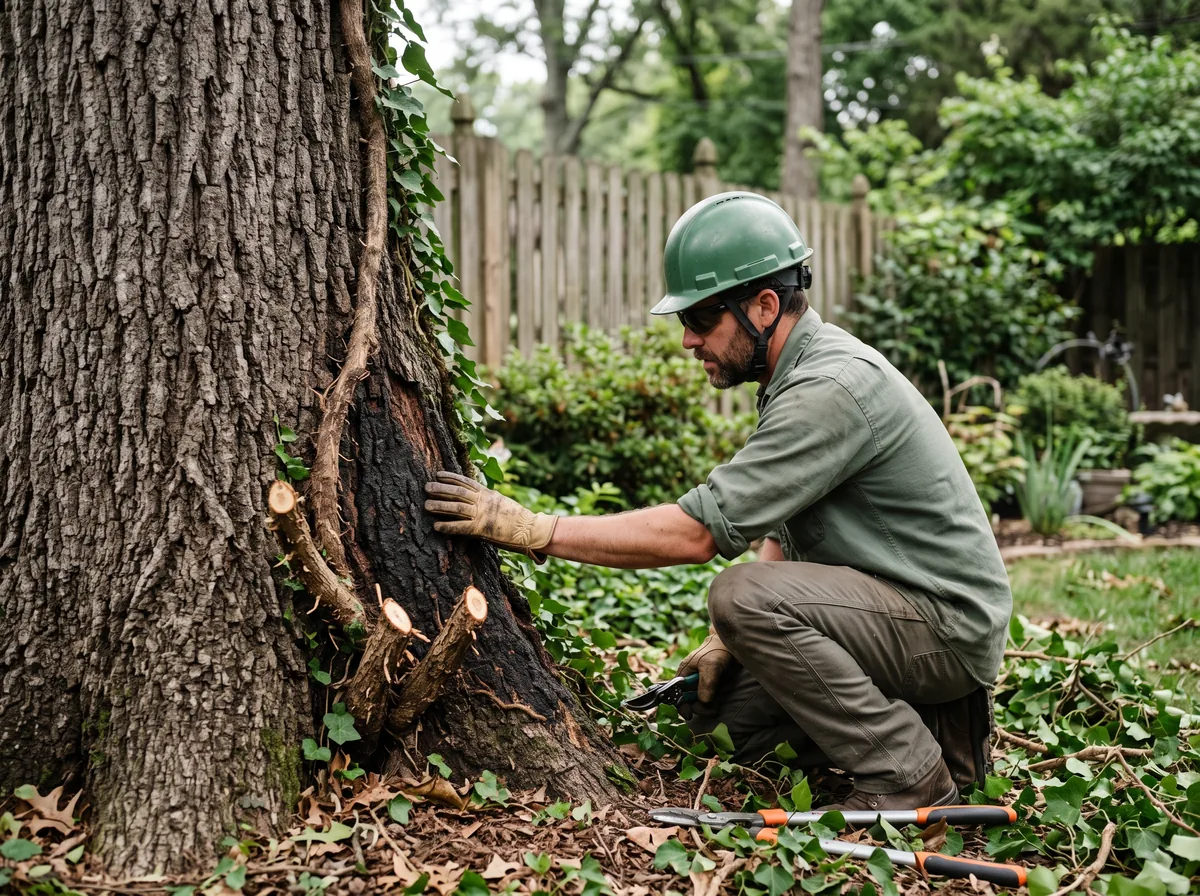
From there, cut the vine at the base, keep the surrounding soil clear of new sprouts through the season, and schedule a canopy pruning visit for the affected tree so a professional can open up the crown and check limb condition at the same time. For a tree that is heavily overgrown, tangled with a neighbor’s yard, or clearly under stress, a full evaluation of the tree’s options is worth having on the table alongside vine removal, so the decision is based on the whole tree rather than just the vine covering it. Treat ivy on a mature tree and the tree itself as one evaluation, not two separate problems.
Frequently asked questions
Does ivy actually kill a mature tree, or just make it look messy?
It depends on how far the vine has spread and how healthy the tree already is. A light covering rarely does lasting harm, but heavy growth that reaches the canopy competes with the tree for light and adds weight the tree has to support. Whether that leads to real decline for a specific tree is not something to guess from the ground. A certified arborist can look at the trunk, the canopy density, and the vine’s extent together and tell you where that particular tree sits on the spectrum.
How can I tell how long the ivy has been growing on my tree?
Stem thickness is the best rough guide. A vine with stems thinner than a pencil at the base is usually a season or two old. Stems thicker than a broom handle, with visible woody bark of their own, typically mean several years of uninterrupted growth. Height also matters: ivy that has only reached the first few feet of trunk is much newer than ivy already growing through the lower branches into the canopy.
Is it safe to just pull the vine down myself?
For light growth low on the trunk, cutting the stem at the base and letting the upper portion die back on its own is usually the simplest and safest approach. Pulling a thick, deeply attached vine down from a canopy by hand risks tearing bark and small branches loose along with it, and reaching high growth safely often means equipment a homeowner does not have on hand. For anything above reach from the ground, a professional crew is the safer route.
Will cutting the vine at the base kill it right away?
No, and that is expected. Once the stem is cut, the section still attached to the tree loses its water and nutrient supply and dries out gradually over weeks or months rather than dropping off immediately. Leave it in place while it dies back rather than trying to strip it out right after cutting, since the dead vine detaches from the bark far more easily once it has dried. Waiting matters because ivy on a mature tree only gets harder to remove safely the longer it sits, since older growth means thicker stems and deeper attachment to the bark.
Can vines spread from one tree to others in the yard?
Yes. Many of the vines that climb trees, English ivy and Oriental bittersweet especially, spread through both roots and seed, and a mature vine on one tree can send new growth toward neighboring trees, fences, and structures. Clearing new sprouts from the surrounding soil each season, not just cutting the vine on the tree you noticed first, is what actually keeps it from establishing elsewhere on the property.
If ivy or another vine has already reached the canopy of a mature tree on your property, book a visit from our arborists and we will walk the tree with you, section by section, before you cut anything.