

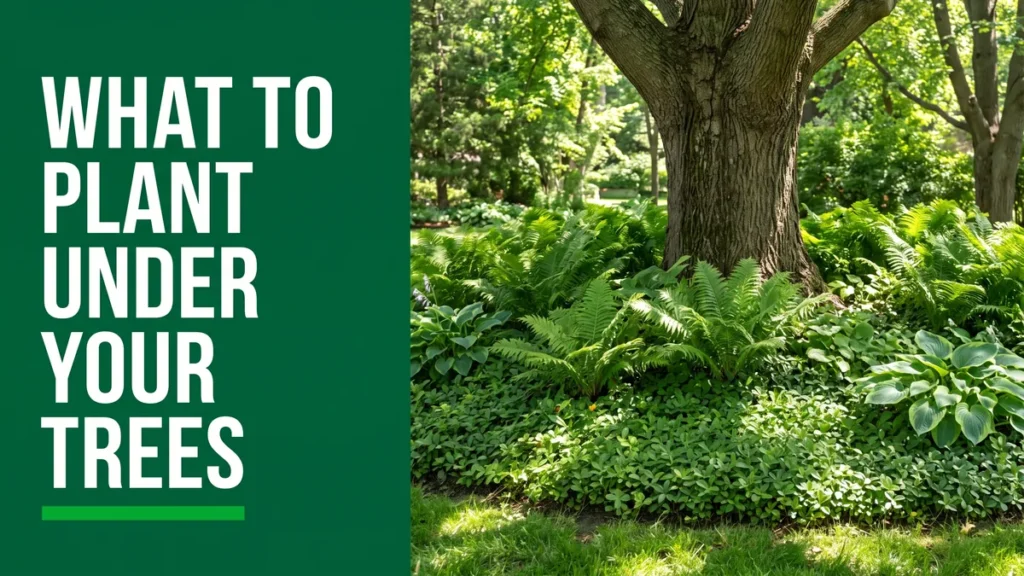
That bare, patchy circle of dirt under your big shade tree is one of the most common landscaping headaches we hear about across New York City yards, and the good news is you can fix it without hurting the tree. The trick to knowing what to plant under trees is working with the two things that make the spot difficult in the first place: deep shade and a dense mat of shallow roots that hog the water. Get those right, and even the space beneath a thick canopy, or one that a recent tree pruning has opened up to more light, can become the prettiest bed in the yard.
This is not about dumping a foot of topsoil over the roots and calling it done, which is a great way to suffocate a healthy tree. It is about choosing tough, shade-tolerant plants, planting them carefully around the roots, and giving them a season to settle in. Here is how to read the conditions under your tree and what actually thrives there.
Why the ground under a tree is so tricky
Before you decide what to plant under trees, it helps to understand why grass and most flowers give up there. Three things are working against you at once, and they all trace back to the tree doing its job well.
- Shade. A mature maple or oak blocks most of the sunlight, so anything below it has to be happy in dappled or full shade.
- Dry, hungry soil. The tree’s roots pull moisture and nutrients out of the top layer of soil faster than a small plant can compete for them.
- A crowded root zone. The soil under a tree is packed with roots, which means less room to dig and less loose soil for new plants to establish.
Quick take
The space under a tree is shady, dry, and root-filled. Pick plants built for those exact conditions, shade-loving and drought-tolerant, and you win. Fight the conditions with thirsty sun-lovers and you lose.
The golden rules of planting near roots
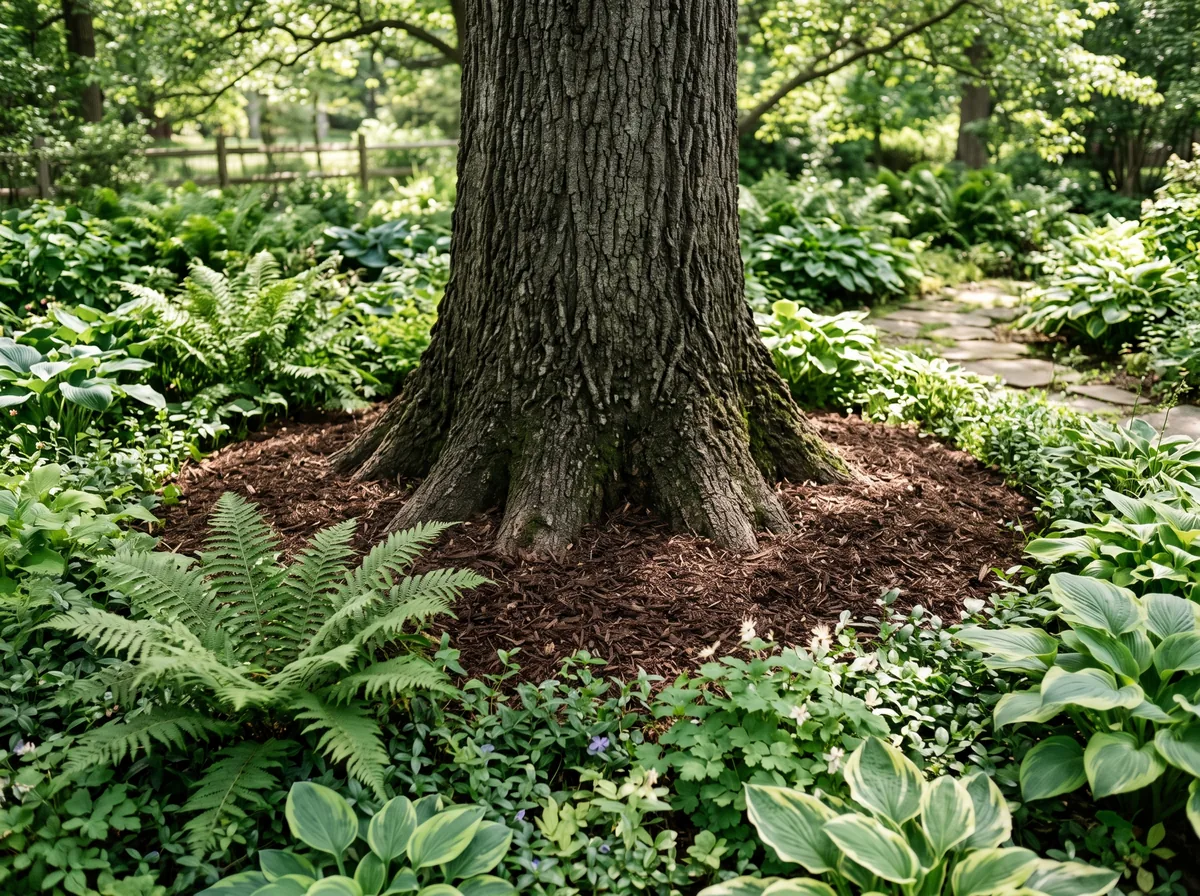
The number one rule of underplanting is simple: protect the tree first, decorate second. A gorgeous new garden bed is not worth losing a shade tree that took forty years to grow. Keep these non-negotiables in mind.
- Never pile soil over the root zone. Adding more than an inch or two of soil over the roots cuts off oxygen and can slowly kill the tree. Work with the existing grade.
- Keep everything off the trunk. Do not mound soil or mulch against the bark. Leave a clear few inches around the base so the root collar can breathe.
- Dig small, not deep. Plant small starter plants and plugs that need modest holes, rather than large specimens that force you to sever big roots.
- Do not cut major roots. If your shovel hits a root thicker than your thumb, move over and dig somewhere else. Small feeder roots will regrow; big structural roots will not.
- Plan for extra water at first. New plants under a tree are competing for moisture, so they need consistent watering through their first summer.
Red flag: the raised bed trap
It is tempting to build a raised bed or ring of soil around the trunk to make planting easier. Do not. Burying the root collar and lower trunk is one of the most common ways homeowners accidentally kill mature trees, and the decline often does not show for a year or two. If you need more root space, plant in shallow pockets between roots instead.
What to plant under trees that actually works
For the New York City region, the winners are shade-tolerant perennials and groundcovers that shrug off dry soil once established. Many are native, which means they support local pollinators and birds and handle our summers and winters without fuss. Here are reliable options grouped by what they do best.
| Plant | Type | Light | Why it works under a tree |
|---|---|---|---|
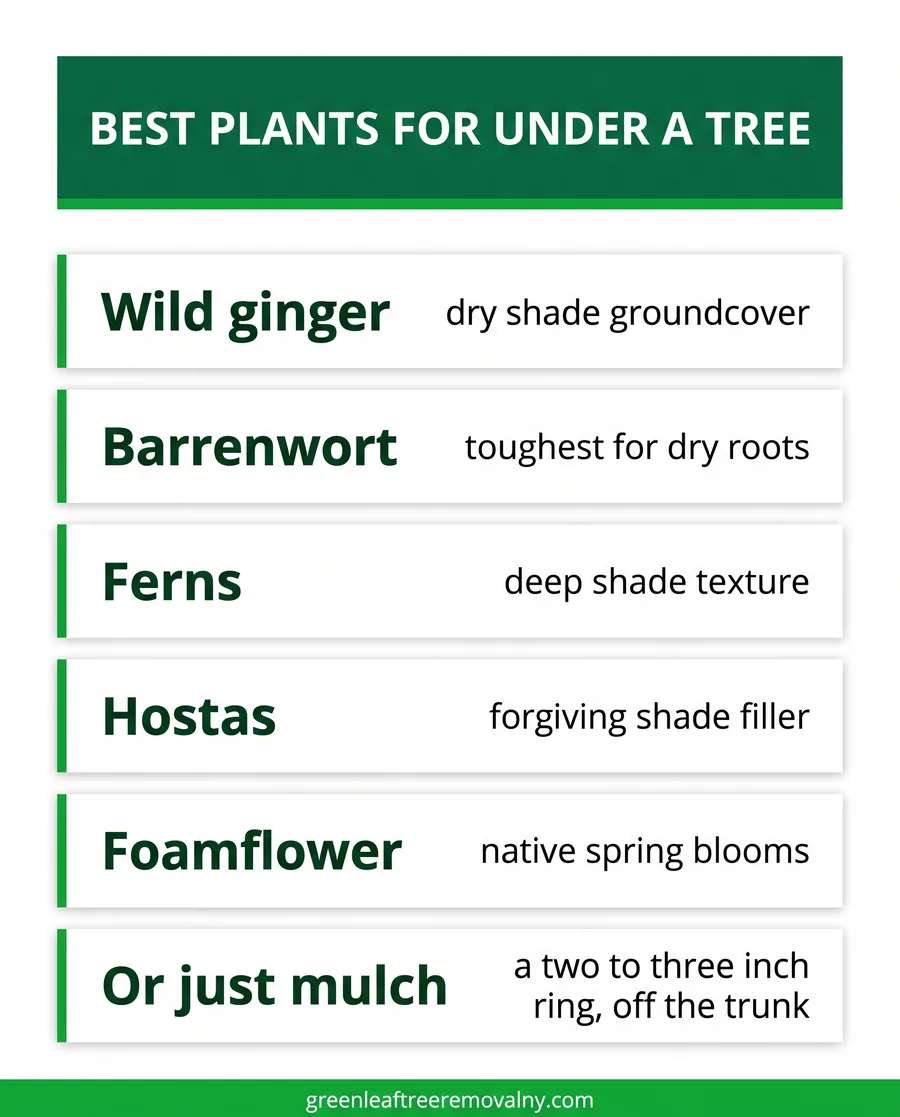
| Wild ginger | Groundcover | Full to part shade | Native, spreads into a lush carpet, tolerates dry shade |
| Foamflower | Perennial | Part to full shade | Native, spring blooms, handles root competition well |
| Hostas | Perennial | Part to full shade | Classic shade filler, many sizes, very forgiving |
| Ferns (Christmas, wood) | Perennial | Full shade | Thrive in low light, add texture, native options abound |
| Barrenwort (epimedium) | Groundcover | Dry shade | One of the best for tough, dry root zones |
| Astilbe | Perennial | Part shade | Feathery summer color where a little light reaches |
| Woodland phlox | Perennial | Part shade | Native spring color and gentle spread |
If your tree casts truly deep shade, lean on the dry-shade champions like barrenwort, wild ginger, and ferns. Where a canopy lets some light filter through, you have more room to play with color from foamflower, astilbe, and woodland phlox. Native trees and their companions tend to pair naturally, which is one reason our guide to native New York City trees is a good next read.
What to skip, and the mulch alternative
Just as important as the winners are the plants that will only frustrate you. Skip sun-loving annuals, thirsty vegetables, and turf grass under a dense canopy, they simply cannot get enough light or water to compete. Aggressive groundcovers like English ivy and periwinkle will grow, but they climb trunks and escape into the wider yard, so many gardeners regret them.
Did you know
Sometimes the best thing to ‘plant’ under a tree is nothing at all. A neat, two to three inch ring of wood-chip mulch kept a few inches away from the trunk conserves moisture, feeds the soil as it breaks down, and protects the roots from mower and trimmer damage. It is the lowest-effort, most tree-friendly finish there is.
Mulch also solves the classic problem of grass that refuses to grow in shade. Rather than reseeding a bare patch every year, many homeowners across Queens, Nassau, and Westchester simply expand the mulch ring outward and tuck a few shade perennials into it. For the science on why mulch beats turf around trees, the International Society of Arboriculture has a clear, non-commercial guide to proper mulching, and a companion piece on trees and turf worth a look.
How to plant under a tree without harming it
Digging and planting near tree roots carries some risk to the tree, and every species and site is different. The steps below are general guidance, not a diagnosis for your specific tree. If a tree is already stressed, hollow, or you are unsure how much digging it can handle, consult a certified arborist first. GreenLeaf Tree Care is not liable for outcomes from actions taken based on this article.
- Watch the light for a day. Note how many hours of sun the spot gets and whether it is dappled or deep shade, then choose plants to match.
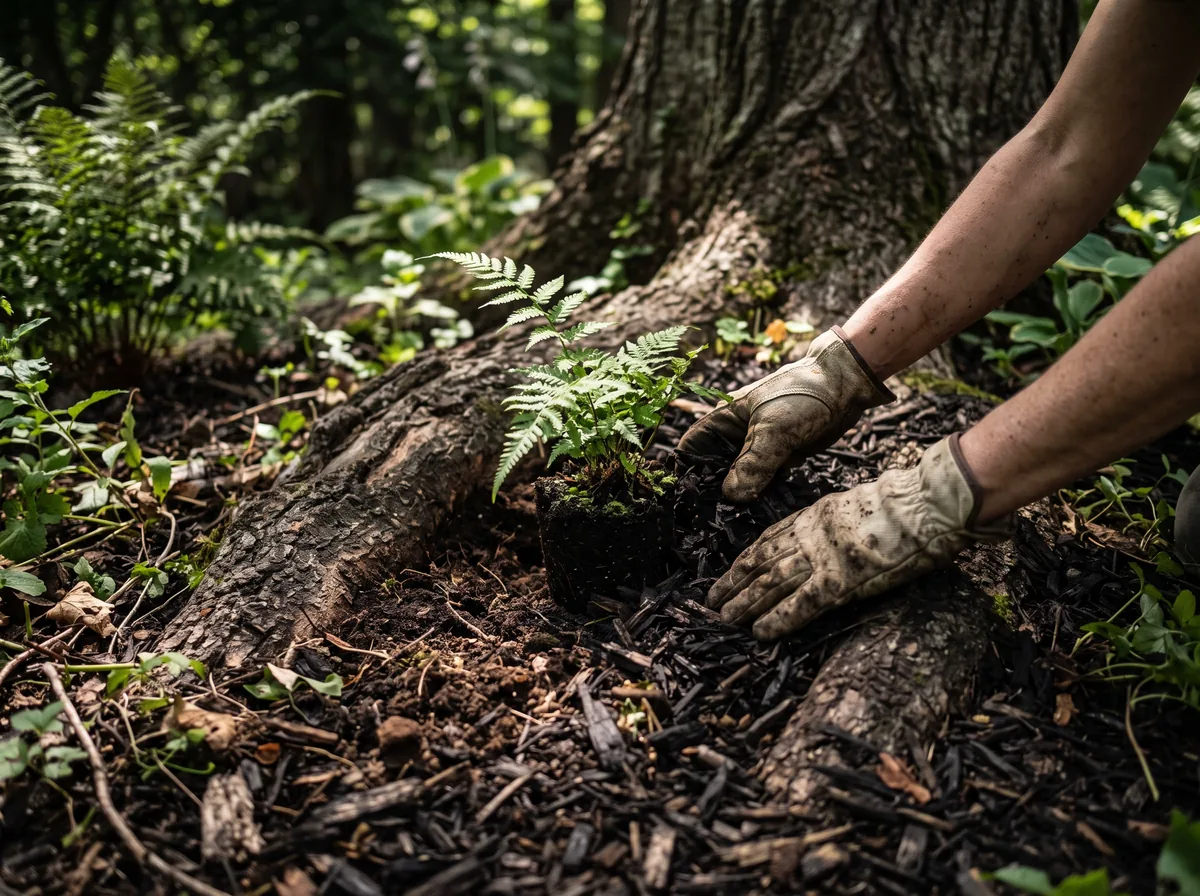
- Start with small plants. Plugs and quart-size perennials need small holes, which means far less root disturbance.
- Dig gently between roots. Loosen soil by hand or with a hand trowel, and if you hit a root thicker than your thumb, shift over.
- Do not add a soil layer. Plant into the existing grade. Backfill only the individual holes, not the whole area.
- Water in well. Soak each new plant at planting and keep the area consistently moist through the first growing season.
- Mulch lightly. Add a two to three inch layer of wood chips over the bed, pulled back a few inches from both the plant stems and the tree trunk.
- Be patient. Underplantings look sparse at first. Give them a full season to fill in before you judge the result.
Pro tip
Plant in fall or early spring, not the middle of a hot New York City summer. Cooler, wetter weather lets new roots establish before they have to compete with the tree for water during peak heat.
“Spent three summers trying to grow grass under our oak and gave up. Switched to ferns, wild ginger, and a mulch ring and it looks better than the lawn ever did.”
Homeowner, Westchester
Download the free quick guide
A one-page cheat sheet of shade plants and root-safe planting steps for under your trees.
Frequently Asked Questions
Want help turning that bare patch under your shade tree into a healthy, low-maintenance bed, or wondering whether your tree could handle a light canopy thinning to let more light in? GreenLeaf Tree Care works with homeowners across Manhattan, the Bronx, and Westchester. Reach out and we will help you build around your trees the right way.