

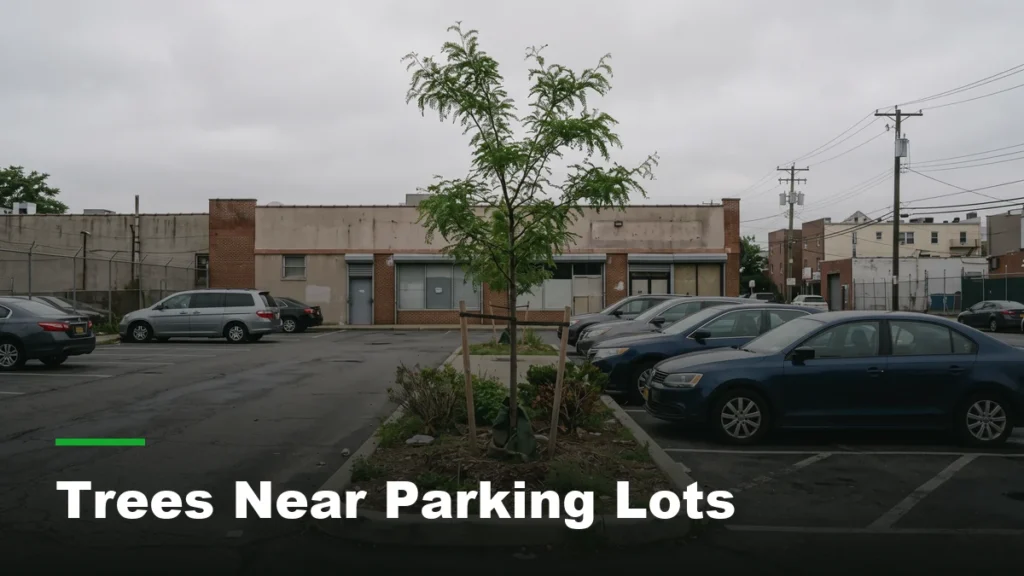
If you manage a property with island or perimeter plantings, or you are wondering why the tree by your own driveway never caught up to the one in the yard, this is the case worth walking through: what is actually different about that location, and what narrows the gap.
The comparison that explains most of it
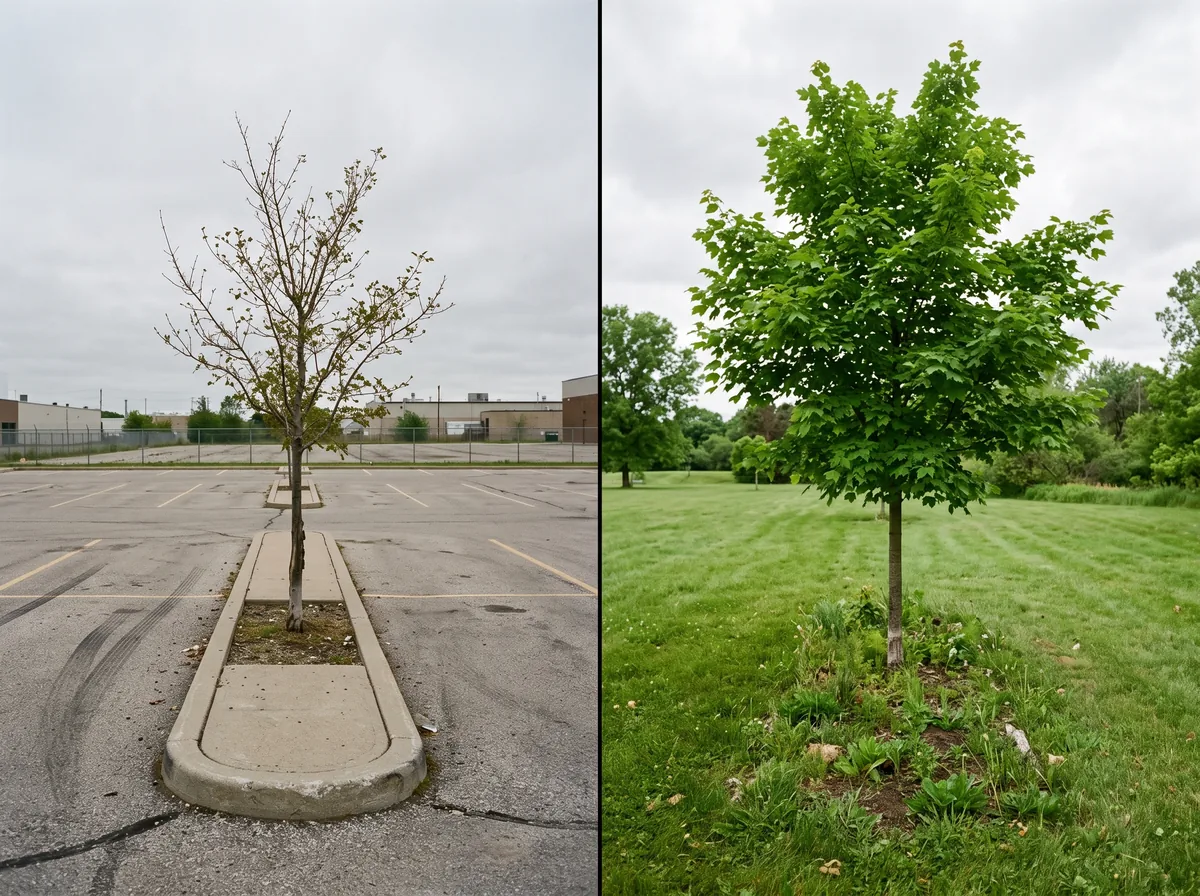
Start with what was identical between the two locusts: species, age at planting, sun exposure, and watering schedule for the first season. What was not identical was everything under the soil surface. The sidewalk tree’s roots had a continuous run of unpaved soil beneath the adjoining lawn strip. The parking island tree had roughly six feet of rootable soil in every direction before hitting compacted subgrade under the asphalt, and that subgrade does not soften with age the way a garden bed does.
This is the pattern behind most trees near parking lots that seem to plateau instead of thrive: the visible planting island looks generous, but the usable root volume underneath it is a fraction of what the same species gets in an open yard.
Did you know
The International Society of Arboriculture’s soil management guidance notes that compacted soil around pavement can reduce both the oxygen and water available to roots, since compaction squeezes out the pore space roots and soil organisms depend on. It is one of the most common, and most overlooked, stress factors on trees planted near pavement.
What is actually different below the pavement
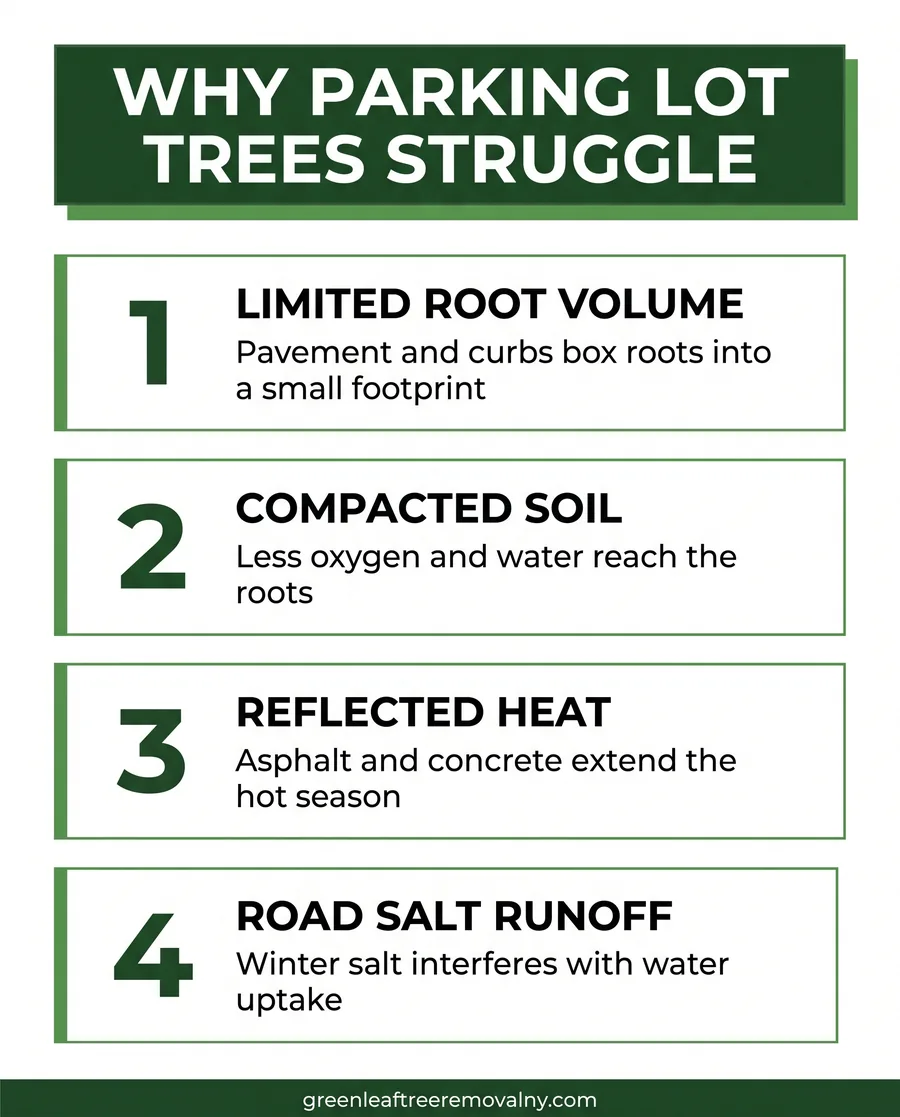
Three things usually separate a parking lot planting island from an open lawn. First, rootable soil volume: pavement, curbs, and underground utility lines box the roots into a much smaller footprint than the same species would use if left alone. Second, compaction: heavy equipment during construction, and vehicles parking close to the island edge afterward, press the soil particles together and reduce the air pockets roots need. Third, drainage: a shallow island bed can either dry out fast in summer heat or collect runoff from surrounding pavement with nowhere for it to go, depending on the grading.
None of these three problems announce themselves the way a pest infestation does. They show up slowly, as a canopy that grows a little less each year, foliage that looks slightly undersized for the species, or branches that only fill out low on the trunk while the top stays sparse. By the time the difference is obvious next to a healthier sibling tree, the root system has usually been working against the same limits for years.
Heat, reflection, and a longer stressful season
Asphalt and concrete both absorb heat through the day and radiate it back well after sunset, which means a tree standing in a parking island experiences a longer, hotter stretch of summer stress than the same species a few feet away on grass. Reflected light and heat off pale concrete curbs can also push leaf surface temperatures higher on the side of the canopy facing the lot, sometimes visible as scorched or curled leaf edges on just that side of the tree.
Road salt used on the lot in winter adds a second, seasonal layer to the same problem. Meltwater carrying salt runs off pavement into the planting bed, and salt in the soil interferes with a root’s ability to take up water even when moisture is otherwise available. A parking lot tree effectively deals with both a harsher summer and a harsher winter than a tree planted in open ground.
Pro tip
If you manage a property with parking island trees, walk the islands after a snow event and note which ones sit closest to plow piles or salted walkways. That single observation often explains a struggling tree faster than anything visible above ground.
What narrows the gap for a parking lot tree
For trees near parking lots specifically, species selection matters more here than almost anywhere else on a property, since some trees genuinely tolerate compacted, salt exposed soil better than others. Structural soil or suspended pavement systems installed at planting, which give roots a path to expand under adjoining walkways instead of stopping at a curb, make a measurable difference over the tree’s life, though retrofitting an existing island is a much bigger project than planning for it up front.
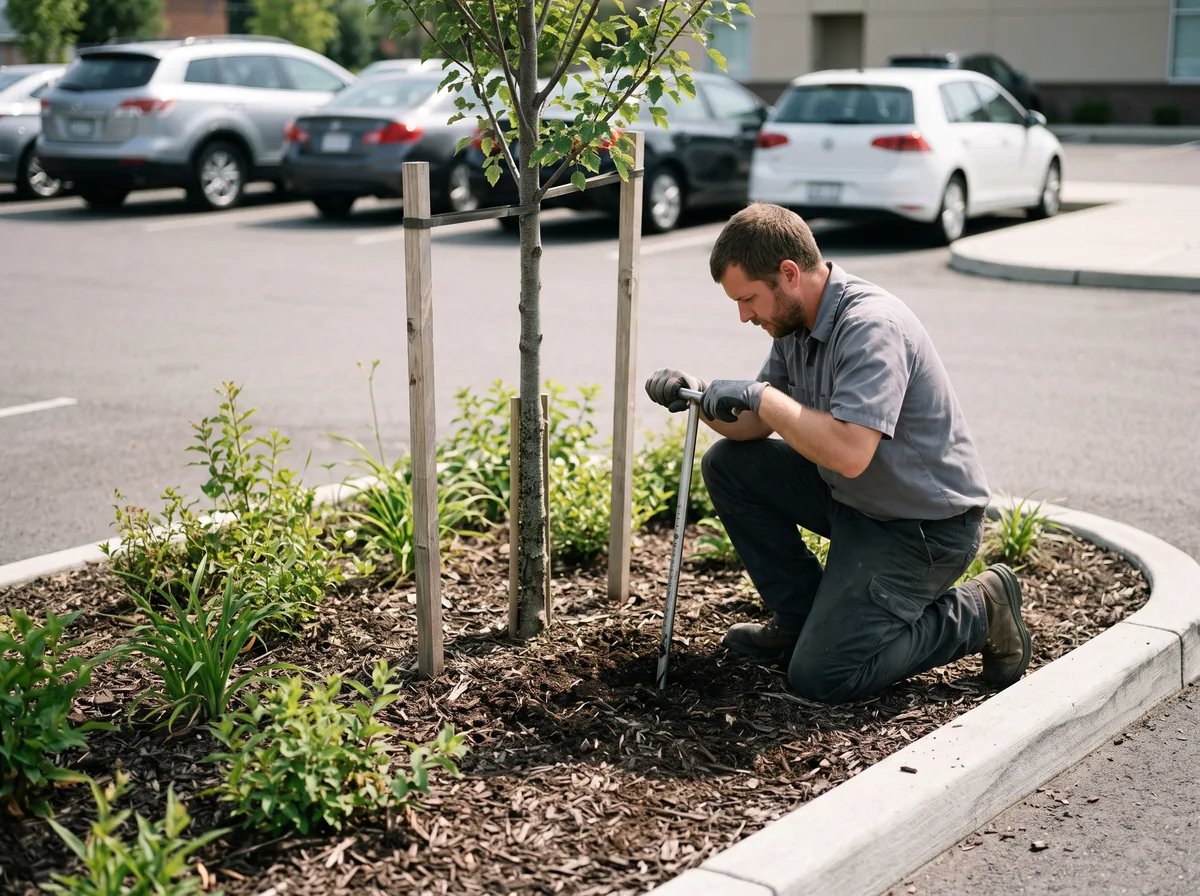
For an established tree that is already showing the pattern, targeted soil aeration and mulching service around the base can improve conditions without disturbing the roots, and it is worth pairing with a look at the drainage grading around the island itself. For a tree in Queens or another borough that seems to be losing the race entirely, a full site evaluation for that location is a reasonable next step before investing more in a spot that may never support that species well.
Good to know
This article describes general patterns seen in parking lot and island plantings, not an assessment of any specific tree or property. Whether compaction, salt exposure, or root volume is the main factor for a given tree depends on its species, age, and site conditions. Have a certified arborist evaluate a struggling tree before deciding on treatment, replacement, or removal.
Download the free quick guide
A printable checklist for evaluating a planting island before you plant, plus what to watch for on trees already in the ground.
Frequently asked questions
How long does it usually take to notice a parking lot tree is struggling?
It often takes a few growing seasons rather than one, since the early symptoms are subtle: slightly shorter annual growth, leaves that look a bit undersized, or a canopy that fills in unevenly. The clearest sign tends to show up when a comparable tree elsewhere on the property, planted around the same time, visibly pulls ahead. That side by side comparison, more than any single symptom, is usually what prompts a closer look.
Can improving the soil later help a tree that is already struggling?
In many cases, yes, particularly with aeration and mulching around the root zone to improve oxygen and water movement into compacted soil. How much it helps depends on how long the tree has been under stress and how much usable root volume is actually available in that spot. A certified arborist can evaluate whether soil improvement, a change in watering, or relocating future plantings to a better spot makes the most sense for a given tree.
Are some tree species better suited to parking lot conditions than others?
Yes, and species selection is one of the most effective decisions made before a tree ever goes in the ground. Some species handle compacted soil, heat, and salt exposure noticeably better than others, while more sensitive species tend to show the struggling pattern described here much sooner. A design that pairs the right species with the actual soil volume available tends to hold up far better over time than retrofitting a poor match later.
Does road salt really make that much difference to a nearby tree?
It can be a meaningful factor, particularly for trees close to areas where plowed snow piles up or where de-icing salt concentrates in runoff. Salt in the soil interferes with a root’s ability to take up water, which compounds whatever heat and compaction stress the tree is already dealing with during the growing season. Trees positioned away from salt runoff paths generally have an easier time than ones sitting directly in its path.
Should a struggling parking lot tree just be replaced with a new one?
Not automatically. If the underlying site conditions, compaction, limited root volume, or drainage, have not changed, a replacement tree of the same species in the same spot is likely to follow the same pattern. It is usually worth having a certified arborist evaluate the site itself, not just the struggling tree, before deciding whether to treat, replace with a better suited species, or address the planting conditions first.
The verdict on trees near parking lots
The two locusts from the opening never had an unfair fight so much as a mismatched one. Trees near parking lots are not doomed to struggle, but they are working against a smaller root zone, hotter summers, and salted winters that a sidewalk or yard tree simply does not face. Recognizing that early, at the planting stage or the first sign of slower growth, is what actually changes the outcome.
If a tree near your own lot or driveway has been falling behind for a season or two, book a visit from our arborists and we will look at the soil, the drainage, and the tree together before recommending anything.