

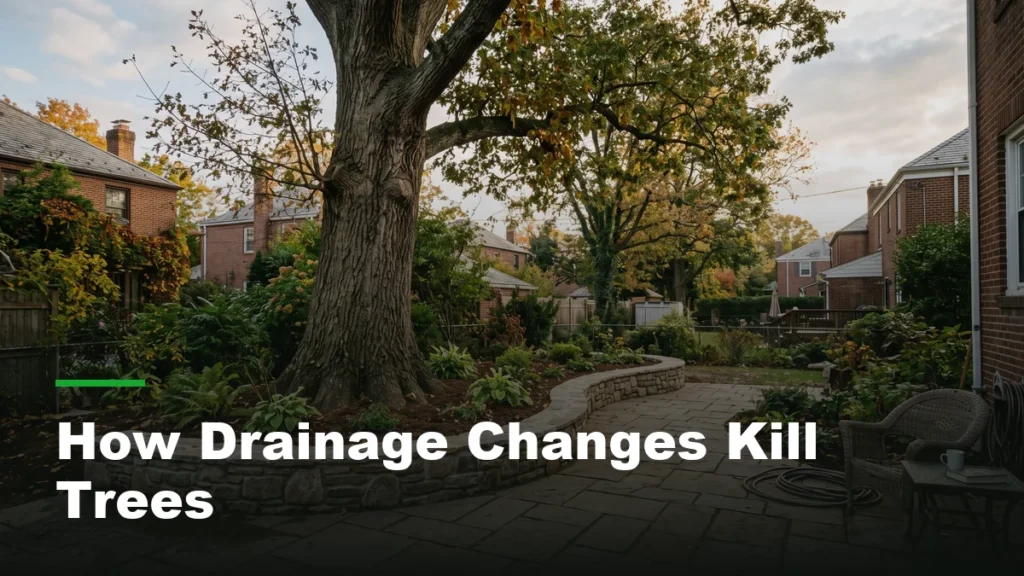
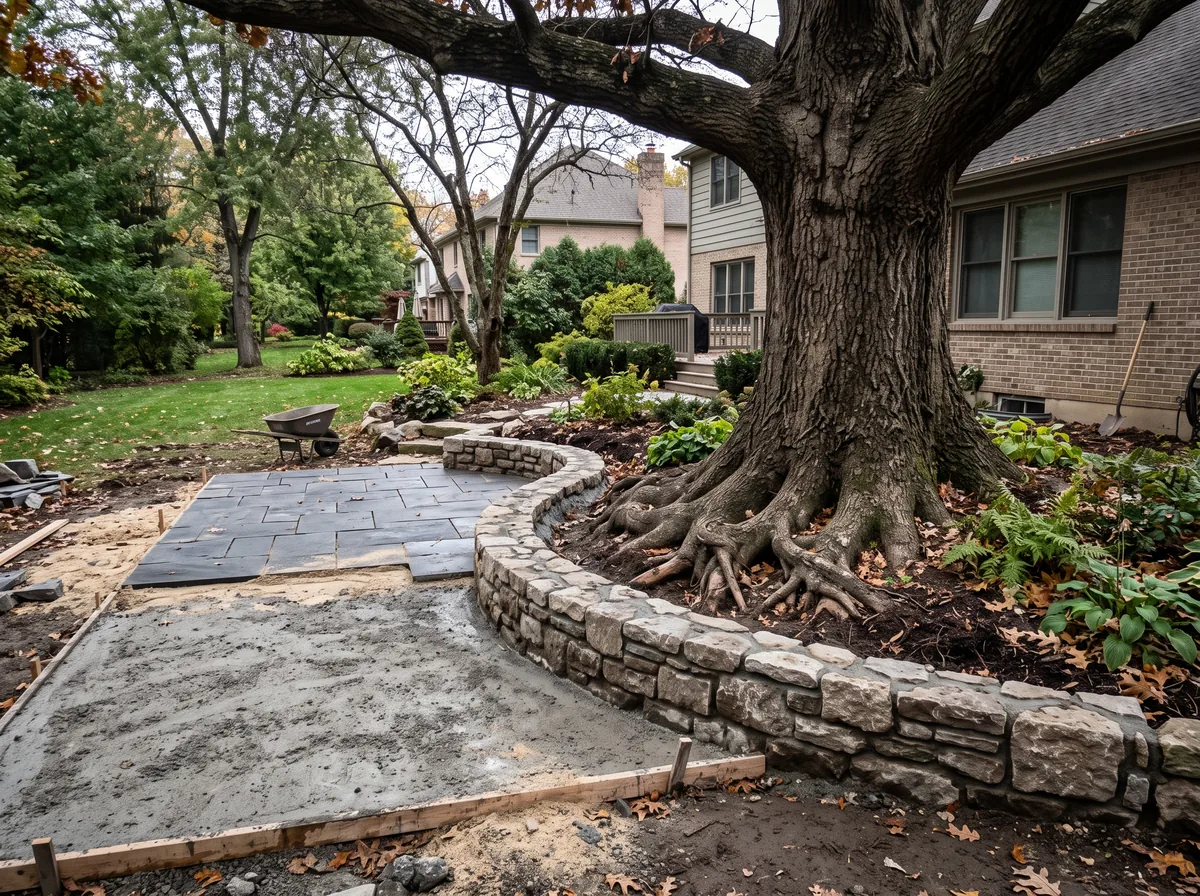
A homeowner in Forest Hills added a paved patio and a new retaining wall along the back of her yard two summers ago, and the sixty-year-old oak near the property line, the same one her original site evaluation had called healthy, looked fine right up until this spring, when half its canopy came in noticeably thinner than the other half. Nobody touched the tree nor compacted its root zone directly. What changed was where the water went after every rain, and that single shift is enough on its own to explain how drainage changes kill trees that otherwise looked completely stable for decades.
This is one of the least understood threats to a mature tree, because the cause and the symptom show up so far apart in time. A regrading project, a new driveway, or even a neighbor’s land clearing work next door can quietly redirect water toward or away from a tree’s roots, and the tree itself often does not show the consequences for a full season or two.
Why tree roots depend on stable drainage
Most of a mature tree’s fine feeder roots, the ones actually absorbing water and nutrients, sit in the top eighteen to twenty four inches of soil and spread well beyond the edge of the canopy above them. That root system develops over decades to match a specific moisture pattern: how fast water drains after rain, how deep the water table sits, and how long the soil stays saturated before drying out again. A tree does not adapt that pattern quickly. It adapts over years, the same way it grew into it in the first place.
Change the drainage suddenly, by adding pavement that used to be lawn, regrading a slope, or installing a French drain that redirects water somewhere new, and the root system is left trying to function in conditions it never developed for. That mismatch is the actual mechanism behind how drainage changes kill trees that look outwardly healthy right up until they are not. NYC Parks’ own guidance on stewarding established trees points to stable soil and moisture conditions as central to keeping a mature city tree healthy over time, which is exactly what a sudden drainage change disrupts.
How drainage changes near a tree can slowly kill it
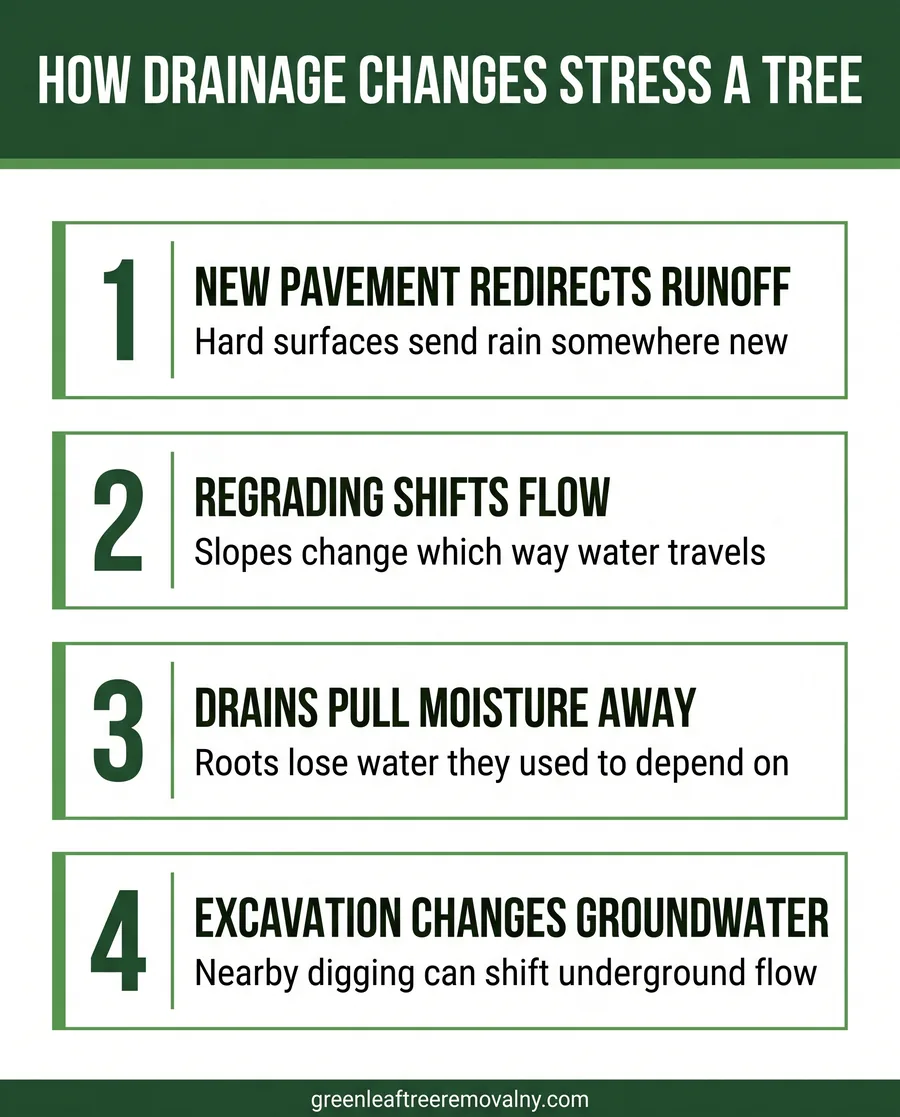
A handful of common projects are behind most cases of drainage-related tree stress. New pavement or a poured patio replaces soil that used to absorb rain with a hard surface that sheds it somewhere else entirely, often directly toward the base of a nearby tree. Regrading a slope changes which direction water naturally travels across a property, sometimes concentrating runoff in a spot that used to stay relatively dry. A new French drain, downspout extension, or retaining wall can just as easily pull water away from roots that had come to depend on it.
Construction nearby matters too, even when it never touches the tree directly. Excavation for a foundation, pool, or utility line can intercept groundwater flow below the surface, changing how much moisture reaches roots that sit well outside the excavation itself.
Red flag
Standing water that pools around a trunk for more than a day or two after rain, or soil that stays visibly saturated for a week or more, points toward a drainage change worth addressing quickly. Roots need oxygen as much as water, and prolonged saturation can suffocate them faster than most homeowners expect. Do not wait for canopy symptoms to show up before having the drainage looked at.
Warning signs drainage changes are affecting a tree
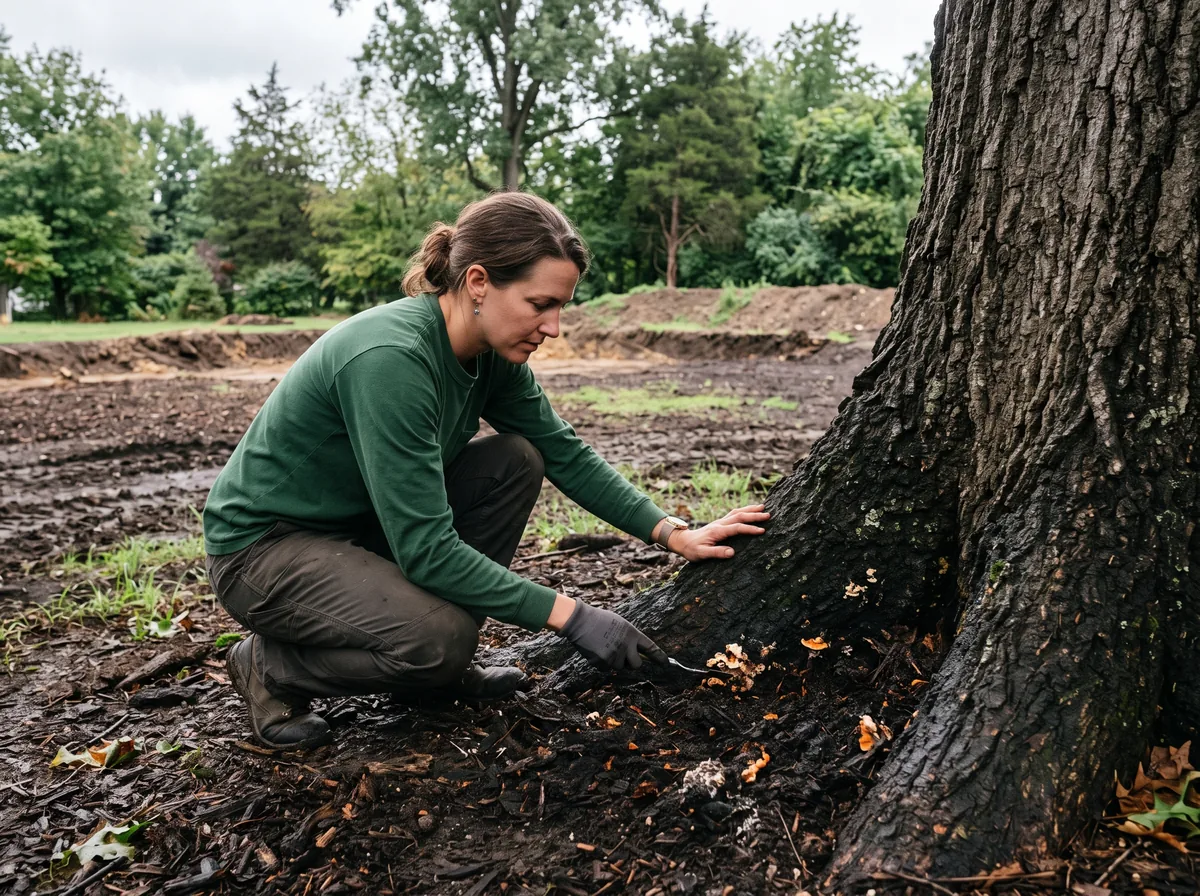
Because the response is slow, the signs tend to show up in pieces rather than all at once. Watch for a canopy that thins unevenly, often on the side closest to the change, new leaf growth concentrated low on the trunk instead of throughout the crown, smaller than normal leaves, or branch dieback starting at the tips. Fungal growth at the base of the trunk, a sign the soil has stayed wet longer than the tree can tolerate, is another pattern worth photographing and dating so you have a record if the tree continues to decline.
None of these signs point exclusively to drainage on their own. That is exactly why timing matters: if the symptoms started within a year or two of a paving, regrading, or excavation project nearby, drainage belongs near the top of the list of explanations, not an afterthought.
Pro tip
Before any regrading, paving, or excavation project near a mature tree, walk the site after a heavy rain and note where water currently pools and where it drains away. That baseline makes it far easier to tell, months later, whether the new construction actually changed the pattern around the tree’s roots.
Too much water versus too little
The two failure modes look different, but both are how drainage changes kill trees over time, and both come from the same underlying cause. Too much water, from redirected runoff or a blocked drainage path, saturates the soil and starves roots of oxygen, which can show up as fungal growth, bark that stays damp, or a general decline in vigor. Too little water, when a drainage change pulls moisture away from a root zone that used to receive it, produces the more familiar signs of drought stress: wilting in dry weather, early fall color, and smaller than usual leaves, even when nearby lawn is getting watered normally.
Either direction is easier to address early than late, which is why a root zone and soil condition check after any nearby drainage change is worth scheduling as soon as you notice a shift, rather than waiting to see whether the tree adjusts on its own.
Good to know
This article describes the general pattern behind how drainage changes kill trees over time, not a diagnosis of any specific tree or property. Whether a particular tree is affected, and how seriously, depends on its species, root condition, and the extent of the drainage change involved. Have a certified arborist evaluate a tree you are concerned about before deciding on treatment or removal.
Download the free quick guide
A printable guide to protecting root zones during a paving, regrading, or excavation project, plus what to watch for afterward.
What to do next
If you are planning a project that will change grading or add pavement near a mature tree, map where water currently goes before construction starts and share that with your contractor so the new design routes runoff away from, not toward, the root zone.
If a tree already looks off after a nearby drainage change, photograph the canopy now so you have a comparison point, check how long water sits near the trunk after the next rain, and book a visit from our arborists before the tree has had a second full season to react to conditions it was never built for. Caught early, drainage changes rarely kill trees outright, and the sooner the pattern is corrected, the better a stressed tree’s chances of recovering.
Frequently asked questions
How long does it take before drainage changes kill trees outright?
It varies a lot by species and by how significant the change was, but a season or two is typical rather than an immediate reaction. A tree draws on stored reserves for a while even under stress, which is part of why the connection to a paving or regrading project done a year earlier is easy to miss. Keeping a rough timeline of nearby construction work makes it much easier to connect the dots if a tree starts declining later.
Can adding a French drain near a tree actually hurt it?
It can, if the drain pulls moisture away from a root zone that had come to depend on the water it was intercepting. This is not a reason to avoid drainage improvements around a property, since standing water causes its own problems, but it is a reason to plan drain routing with the location of mature trees in mind rather than as an afterthought. A landscape or drainage contractor should be able to route around a root zone with some planning.
Does this mainly affect old trees, or can younger trees be affected too?
Both, though the pattern tends to be more visible in mature trees with extensive, well established root systems that took decades to develop around a specific moisture pattern. Younger trees have somewhat more flexibility to adapt as they continue developing roots, but a significant drainage change during establishment can still set a young tree back noticeably, particularly in its first few years in the ground.
What should I tell a landscaper or contractor before a paving project?
Point out any mature trees on or near the work area and ask specifically where the new design will direct runoff. A brief conversation about grading and drainage before pavement goes down is far easier than trying to redirect water after the fact. It is also worth asking whether the project plans to compact soil anywhere within the tree’s root zone, since compaction and drainage changes often happen together.
Is there any way to reverse the damage once a tree starts declining?
Sometimes, particularly if the drainage issue is identified and corrected relatively early and the tree’s root system has not been under stress for multiple seasons. Options like adjusting grading, installing additional drainage, or aerating compacted soil can help a stressed tree recover in less severe cases. A certified arborist needs to assess the specific tree and the extent of the change before recommending a path forward.